The $50 ticket that starts September 8: what your trash bin has to look like now
Your old can with the bungee cord was fine for two years. It isn't anymore — but your recycling bin is off the hook.
By Aspen Yang · August 21, 2026 · 5 min read
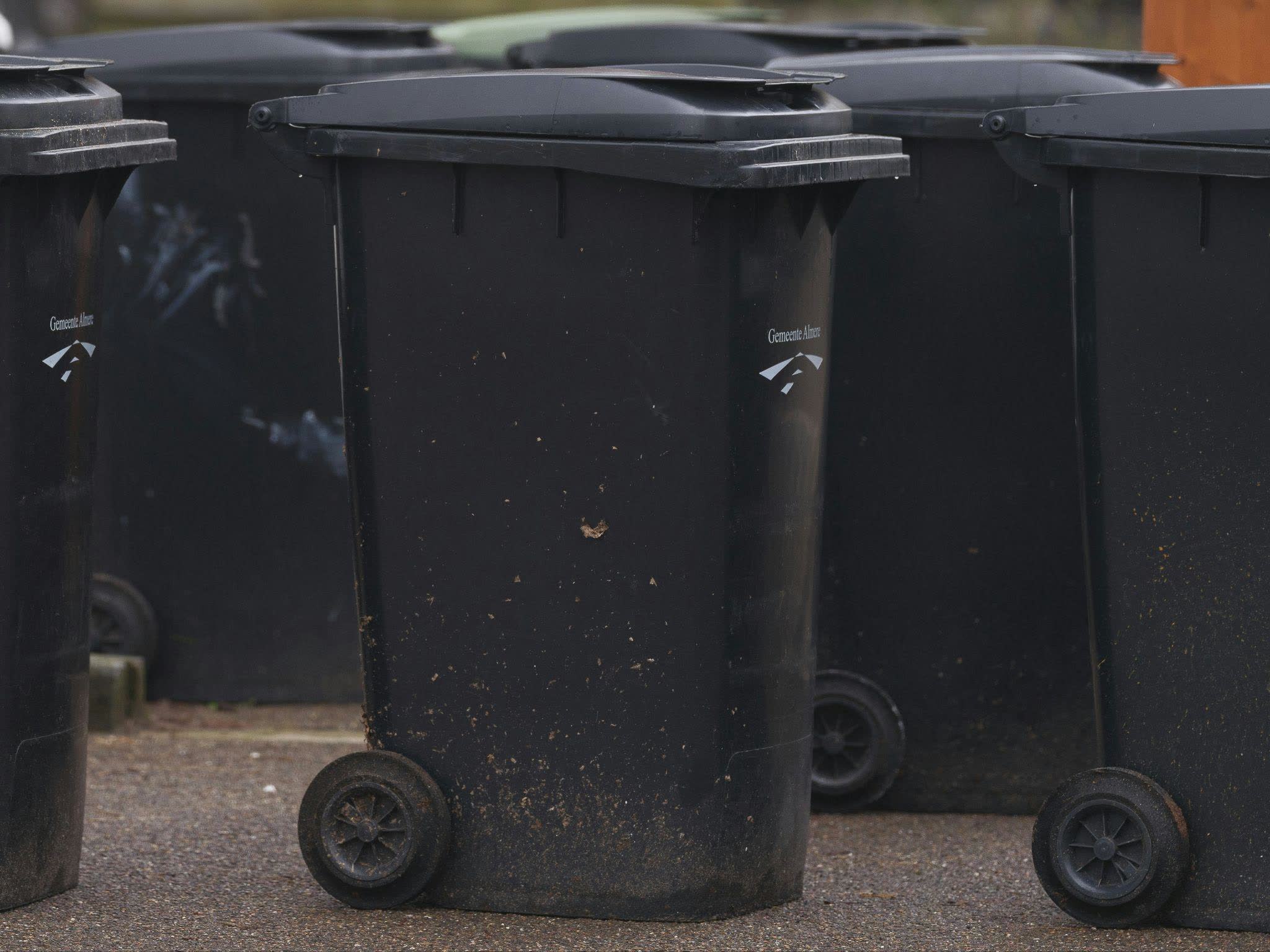
NEW YORK, Aug. 21 —If you own a house, a two-family, or anything up to nine apartments in this city, you have about two and a half weeks before a sanitation worker can write you a ticket over a garbage can.
Enforcement of the official NYC Bin rule begins Tuesday, September 8. Since June 1 the rule has technically been in effect — 1-to-9-unit properties are supposed to be putting trash out in the city's own gray bin — but the Sanitation Department has spent the summer handing out warnings instead of summonses. That grace period ends September 7.
The first thing to know is what hasn't changed. The fines remain $50 the first time, $100 the second, $200 for the third and every one after that. And you've already been required to use a lidded bin of 55 gallons or less since November 2024. What changes on September 8 is narrower than most people think: not whether you use a bin, but which bin counts. The generic can from the hardware store, the one that's served you fine for two winters, stops being compliant.
The second thing to know is the part nobody seems to have heard: you do not need a new recycling bin. Sanitation is explicit that recyclables — plastic, glass, metal, cartons, paper — don't have to go out in a bin at all. Clear bags are still fine. Compost does have to be in a lidded container of 55 gallons or less, labeled, separate from the trash — but it doesn't have to be an official one either. Matching blue, green and brown bins are sold alongside the gray one, and plenty of people are buying them, but only the gray trash bin is required.
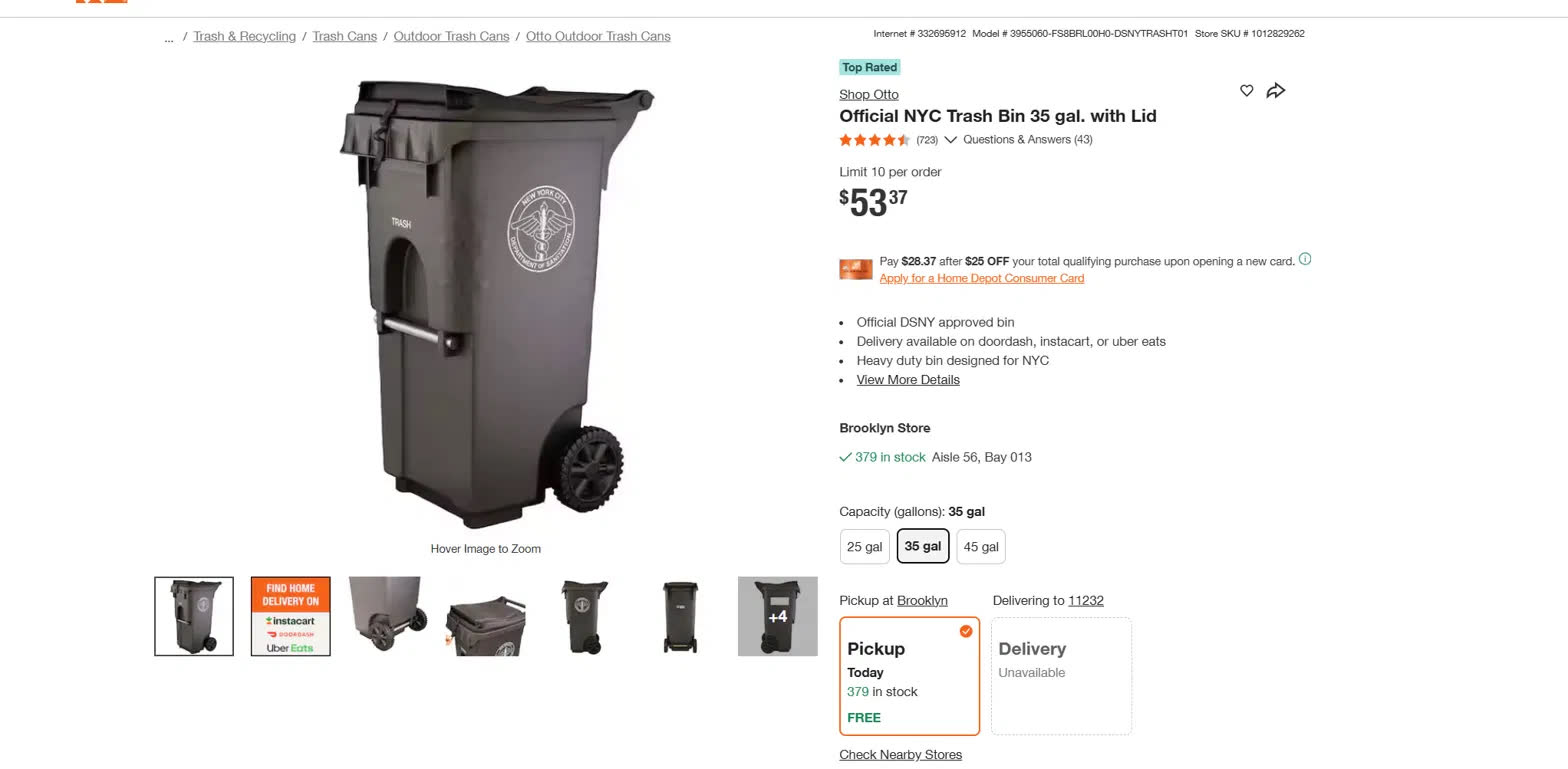
On price, the city is being coy. DSNY no longer posts a number. What it will say is that its procurement specs required the vendor to keep the most common size at roughly $50, and that the bin remains the cheapest of its quality on the market. On Friday morning, the official 35-gallon bin — the size Sanitation recommends for most single-family houses — listed at $53.37 at the Brooklyn Home Depot, with hundreds in stock for same-day pickup. The 45-gallon, recommended for buildings with several units, listed at $62.77 and showed limited stock at the same store. Three trash sizes exist: 25, 35 and 45 gallons. Prices and stock vary by store and by day.
There is also money on the table that expires the same week. The Finance Department is reimbursing owners of one- and two-family homes who got STAR or Enhanced STAR in 2024 or 2025 for the cost of one 45-gallon bin. Here the city is contradicting itself: Finance says the deadline to request it is September 8, while Sanitation's own FAQ says the reimbursement window was extended through September 7. One day apart, on the same benefit, from the same government. Neither agency has said which date governs.
The scale here is why this is a citywide story and not a nuisance item. Buildings with 1 to 9 units are about 765,000 properties, by the city's count — roughly 95 percent of all residential buildings in New York. More than a million official bins have been bought. Sanitation credits containerization with a run of monthly declines in rat sightings reported to 311, a streak it last touted publicly in March — a year-over-year comparison, worth noting, not a controlled study.
And the reason enforcement slipped to September in the first place is that a lot of New Yorkers couldn't get the thing they were being told to buy. Councilmember Simcha Felder and a bipartisan group of colleagues pressed the administration to hold off, arguing residents had spent months trying and failing to obtain bins. In March, Sanitation said a few thousand orders were still outstanding and that everyone who had ordered would have a bin by the end of that month. Staten Island Councilmember Frank Morano, whose office fielded complaints, has said the department told him at one point that thousands of orders were affected. He asked Comptroller Mark Levine to look at how the delivery contract was awarded; Levine's office would not say at the time whether it was doing so.
What has changed since then is the company at the other end of the mandate. Duramax Holdings, which does business as Otto Environmental Systems and holds the city's contract to make and sell the bins, was pushed into involuntary Chapter 7 bankruptcy in May by suppliers claiming unpaid debts. The company says the city structured the program in a way that left it carrying all the risk — New Yorkers buy the bins directly from the vendor, not from the city — and has told officials it may sue, though no suit had been filed as of mid-August. Sanitation disputes the characterization, says the contract set production capacity targets rather than promising sales, and says the bankruptcy changes nothing about supply. On the shelves, at least for now, it doesn't appear to: the Brooklyn store had hundreds of the most common size in stock Friday.
Sanitation says it has issued tens of thousands of warnings this summer and has no plans to delay again. Morano's answer is that the city can't fine people for failing to comply with a mandate when its own vendor situation makes compliance uncertain, and he wants a backup supplier lined up.
Which leaves the open question for September 8. The city has not said what happens to a homeowner who paid, waited, never received a bin, and is standing at the curb that morning with the only can they own.