A New Generation Keeps Yiddish Theater Alive on the Lower East Side
Young producers are reimagining century-old plays with contemporary staging and outreach to multilingual audiences.
By Aaron Feldman · April 13, 2026 · 4 min read
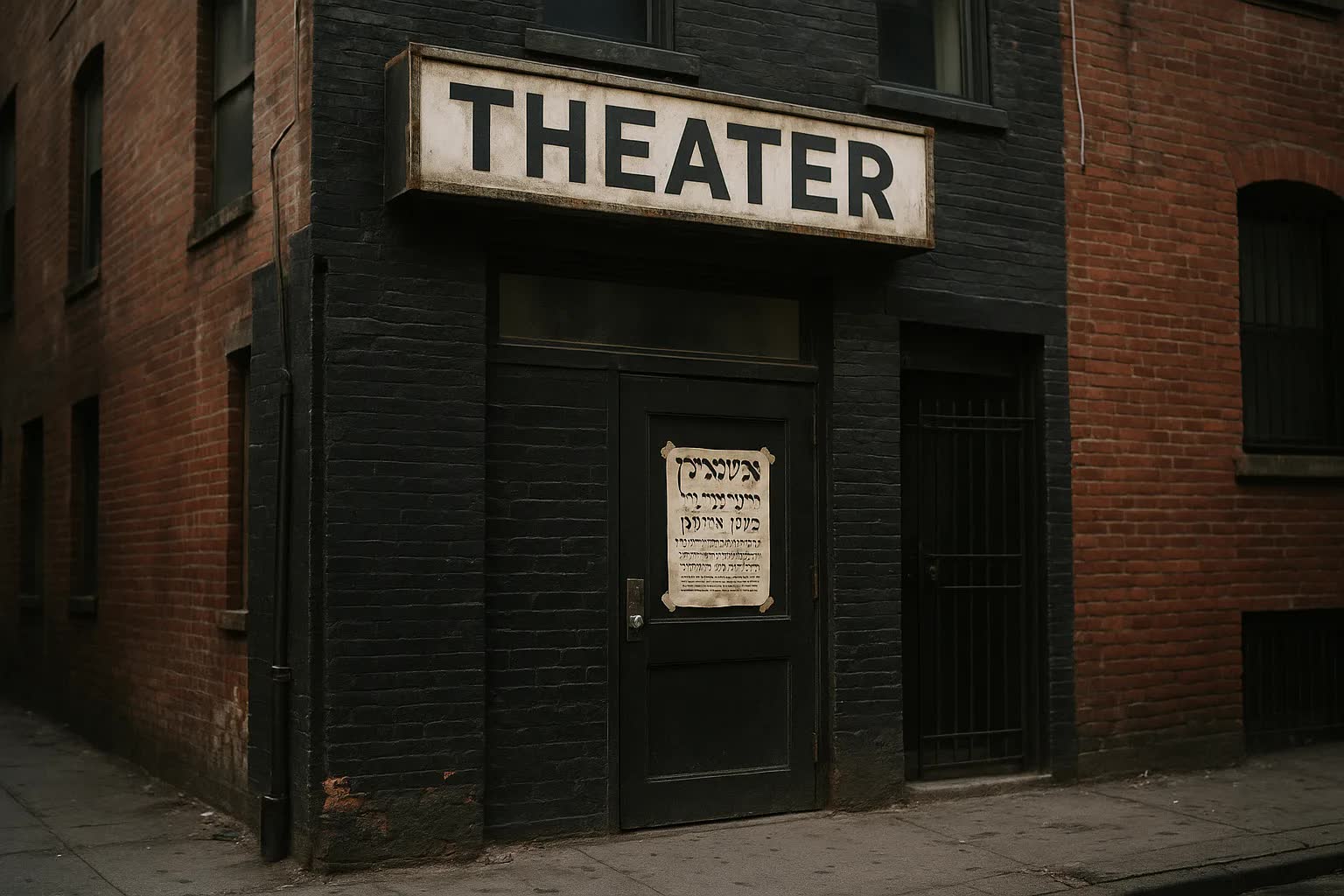
NEW YORK — On a rain-slick evening near the corner of Orchard and Hester Streets, a half-dozen young actors filed into a former garment factory turned black-box theater to rehearse a century-old Yiddish play rewritten with a drum kit, projected English surtitles and an original hip-hop score; the scene encapsulates a larger surge on the Lower East Side in which a new generation of producers is keeping Yiddish theater alive by reimagining its texts for multilingual, multiethnic crowds while anchoring performances in neighborhood streets and historic institutions.
A century ago the two dozen theaters that lined Second Avenue and its side streets pulsed with Yiddish-language melodrama, comedy and social critique; over the decades migration, assimilation and the physical erasure of Jewish working-class blocks reduced that presence to a handful of venues and museum exhibitions. In recent years, a younger cohort of directors, producers and translators has taken that history as both a responsibility and a provocation: how to honor the original voice while making the material intelligible and urgent for Ludlow, the Essex Street Market crowd and the families who still live above the storefronts.
At the heart of the movement are companies like the New Yiddish Repertory and the Orchard Street Players, which stage site-specific productions in former tenement walk-ups, the basement of a Lower East Side synagogue and a pop-up storefront theater at 120 Orchard. "We want people who grew up in this neighborhood to see their grandparents onstage and also their kids on TikTok," said Miriam Katz, artistic director of the New Yiddish Repertory. "That means bringing fresh staging, technology and translation into conversation with the originals — not replacing them."
Producers have leaned heavily on translation and accessibility work to reach multilingual audiences. Performances commonly employ simultaneous English surtitles, Spanish-language program notes and community talkbacks with Mandarin interpreters for newer immigrant residents near East Broadway and Seward Park. Partnerships with local schools and nonprofits are increasingly central: rehearsal time is shared with the Hester Street Arts School and neighborhood senior centers, and matinee programs target bilingual elementary classes from nearby schools and afterschool programs on Ludlow and Eldridge Streets.
The numbers underline a tangible change: last season, Lower East Side companies mounted 18 full productions and 36 staged readings, with an estimated combined audience of 12,400 people — up 28 percent from three years earlier. Companies report that roughly 42 percent of ticket buyers are under 35, and that 64 percent of performances offered some form of translation or multilingual engagement. Budgets remain modest: the average annual operating budget for an emerging Yiddish troupe on the LES is about $135,000, with earned revenue covering roughly 40 percent of costs and philanthropic grants making up the rest.
Physical space and the economics of the neighborhood shape what gets produced and where. Small black-box rooms along Eldridge and the converted storefront at 120 Orchard benefit from relatively lower rents compared with Chelsea or the Theater District, but producers said those margins are shrinking as new residential developments push up prices on side streets. "We occupy spaces that are part performance venue, part community anchor," said Daniel Rosen, executive director of the Orchard Street Players. "When a landlord raises the rent, you're not just losing rehearsal space, you're losing a place where folks gather to speak their language and tell their histories."
Artistic choices reflect an explicit desire to bridge generations. Casting often mixes native Yiddish speakers from families who have preserved the tongue with younger actors who learned key phrases for a role; directors work with dialect coaches and music arrangers to fuse classic klezmer with contemporary rhythms. Workshops in oral history have been a consistent generator of material: elders interviewed at the Tenement Museum and in apartment living rooms have provided dialogue, songs and community disputes that feed into new scripts and site-specific staging along Orchard and Broome Streets.
That creative renewal, however, has prompted debate over authenticity and adaptation. Some older community members and language purists lament the truncation of traditional forms and the insertion of modern idioms; others celebrate the increased attention to Yiddish culture that might otherwise have remained museum-bound. An anonymous longtime Yiddish teacher who has consulted on several productions said, "We don't want to fossilize the language, but we also don't want to watch it become a quick museum piece. The balance is uneasy, but at least the balance is being argued in public again."
Funders and civic institutions have taken notice. Small grants from local cultural funds — often under $25,000 each — seed projects that draw additional support from community benefit agreements and crowd-sourced subscriptions; a city arts office recently funded a borough-wide Yiddish workshop series aimed at public school teachers in Manhattan and Brooklyn. Audiences, too, are evolving: a typical run might include older native speakers in the balcony, young bilingual couples in the orchestra and school groups in the matinee — an audience ecology that producers hope can sustain the work financially and culturally.
Looking ahead, LES troupes plan to broaden their reach beyond the neighborhood by developing touring adaptations for school auditoriums in Queens and the Bronx, expanding streaming offerings for diaspora audiences and deepening translation initiatives into Spanish and Mandarin. "This is about more than nostalgia," Katz said. "It's about a living theater that can change how people of different generations and languages talk to one another — and the Lower East Side remains the best place in the city to keep that conversation going."