A New Wave of Location Shoots Is Putting Outer Boroughs on Screen
Filmmakers are increasingly choosing Queens, the Bronx and Staten Island for major shoots, bringing economic opportunities and neighborhood friction.
By Aaron Feldman · February 11, 2026 · 4 min read
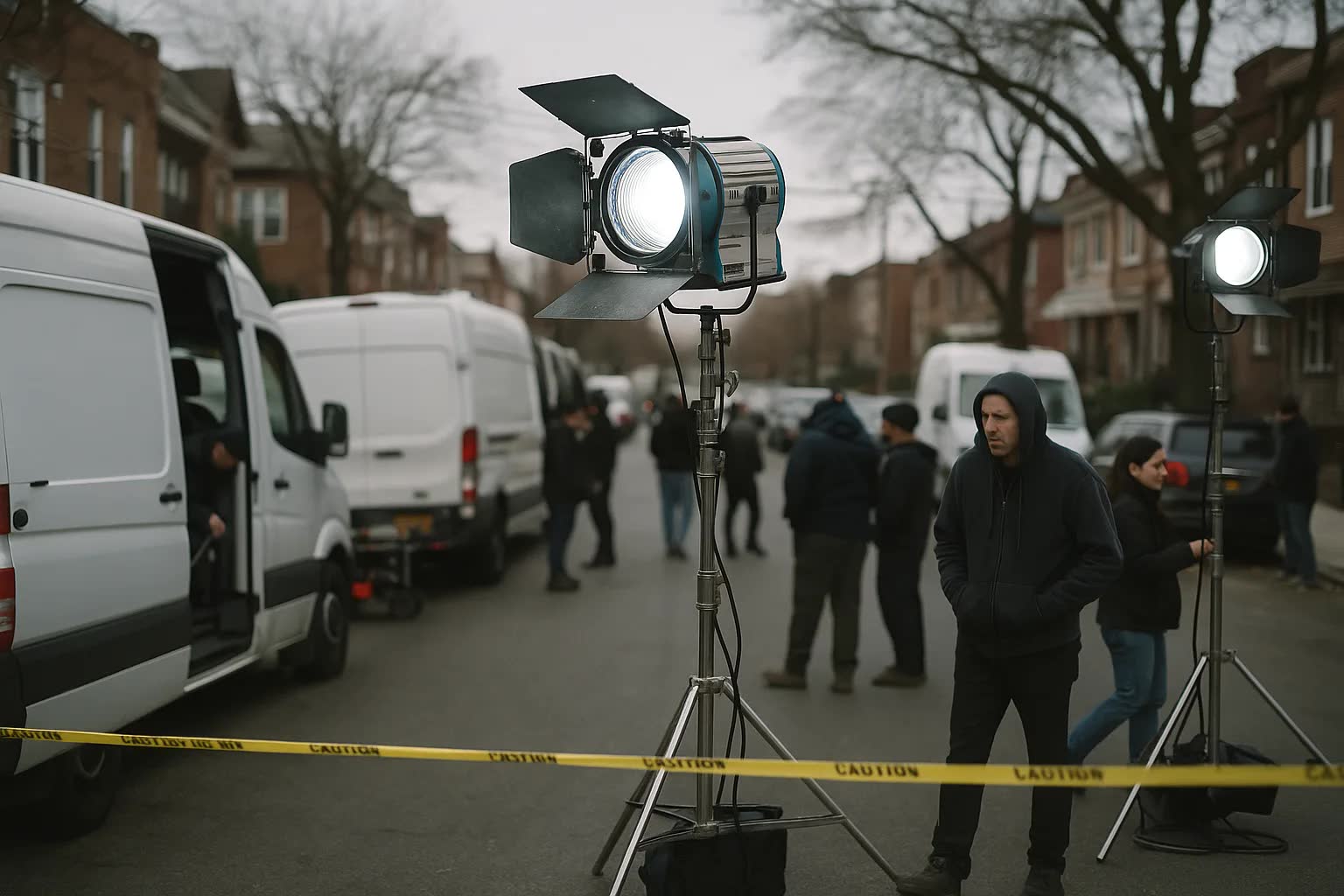
The new wave of location shoots rolling through New York this winter is turning thoroughfares in Queens, the Bronx and Staten Island into working sets, bringing a mix of income, attention and disruption to neighborhoods long left on the margins of the city’s entertainment economy.
On a rain-slick Tuesday morning near Flushing Meadows–Corona Park, a line of production trucks idled along Roosevelt Avenue, electricians stringing cables past a bakers’ storefront while a generator hummed across from Citi Field. In Astoria, an HBO-style drama took over 30th Avenue for three days to film a bustling subway exit scene; in the Bronx, a period piece recreated a 1970s Grand Concourse storefront on a block usually dominated by bodegas and tire shops.
For some business owners, the crews are a welcome source of revenue. "When they film in front of the deli we get catering orders and dozens of crew members who come inside for coffee — it’s real money, especially in slow seasons," said Jamal Ortiz, owner of Santos Deli on 30th Avenue in Astoria. "But it’s also disruptive: deliveries don’t arrive, parking disappears and some customers won’t come out while they’re rolling. There’s a trade-off, and it should be managed so it doesn’t hurt neighbors."
Location scouts and production managers say the change is deliberate: Manhattan has become pricier and more restrained, while outer-borough streets offer architectural variety and fewer permit headaches. "We’re chasing authenticity — the scale of Jackson Heights’ tenements, the industrial edges of Hunts Point, the waterfront views in St. George — and we can do that without building expensive sets," said Leah Morales, senior location manager at Horizon Studios. "The boroughs give us textures we can’t replicate on a soundstage, and increasingly the city’s permitting process is set up to encourage that."
Behind the scenes, the numbers tell a clear story. City data compiled by a consortium of location offices and independent permit analysts shows that film and television permits for outer-borough sites climbed from 1,720 in 2022 to 2,850 in 2025, an increase of about 66 percent; Queens alone accounted for roughly 790 permits in 2025, up nearly 50 percent from three years earlier. The Bronx recorded 420 permits last year, Staten Island jumped from 35 to 140 — a 300 percent rise — and productions reported an estimated $187 million in direct local spending in 2025, including $48 million on local rentals and catering and about 3,400 temporary hires across grips, drivers and craft services.
The influx has sharpened debates at community board meetings from Woodside to Pelham Bay. Residents in Fordham mounted objections after repeated overnight shoots closed stretches of Fordham Road, citing lost parking and noise; the Owners of a block of brownstones on Crotona Park South said repeated period shoots have forced them to repaint facades and displace long-standing parking rhythms. Community advocates also warn of longer-term pressures, noting that an influx of location-specific investment can presage rising rents and commercial turnover along corridors that have historically been affordable.
City and industry officials say they are trying to balance opportunity with neighborhood protection. The newly formed Outer Boroughs Film Coalition, which coordinates between location managers and community boards, now requires productions to appoint a community liaison, provide a compensation plan for disrupted businesses and abide by stricter parking-stall and truck staging limits. "We want to make sure filming benefits the community directly — not just the production company — by hiring locally and limiting disruption," said Mariana Vega, executive director of the Outer Boroughs Film Coalition. "We’re pushing for enforceable guarantees so residents see the upside."
On Staten Island, the change is visible along the St. George waterfront, where a streaming-service romantic comedy used the Staten Island Ferry terminal as a backdrop and paid for extra ferry runs to keep schedules on track. Small businesses such as Pier 1 Cafe on Victory Boulevard reported a 30 percent sales bump during the week of shooting, while residents complained of idling trucks on Hylan Boulevard. At Snug Harbor, a historic park and cultural center, a boutique historical drama brought crews into the landscaped grounds and paid a location fee that the center earmarked for educational programs.
Filmmakers and local leaders are also investing in infrastructure intended to anchor production long-term. Plans for new mid-size soundstages — proposals include Luna Soundstage in Long Island City and Harborview Stages in Stapleton — are moving through zoning reviews, and nonprofit training programs in Astoria and the South Bronx aim to convert temporary hires into career technicians. Still, skeptics worry that without careful rules the growth could accelerate displacement. "If we don’t couple production growth with workforce development and neighborhood protections, we’ll export the jobs and import the costs," said Dr. Hye-Jin Park, director of the Bronx Labor and Cultural Initiative.
City film offices say they will pilot a Neighborhood Filming Compact this summer to formalize community benefits — including a standardized local-hire minimum, capped truck staging times and a low-cost fund for small businesses hit by closures — and leaders on both sides say the next year will be decisive. If the momentum holds, the cameras rolling now could be the first frames of a broader cultural economy taking root in boroughs that for decades stood largely offscreen.