Advocates Sue to Accelerate Subway Accessibility Upgrades
Disability rights groups filed suit to compel the MTA to speed elevator repairs and station renovations across the system.
By Julian Alvarez · March 6, 2026 · 4 min read
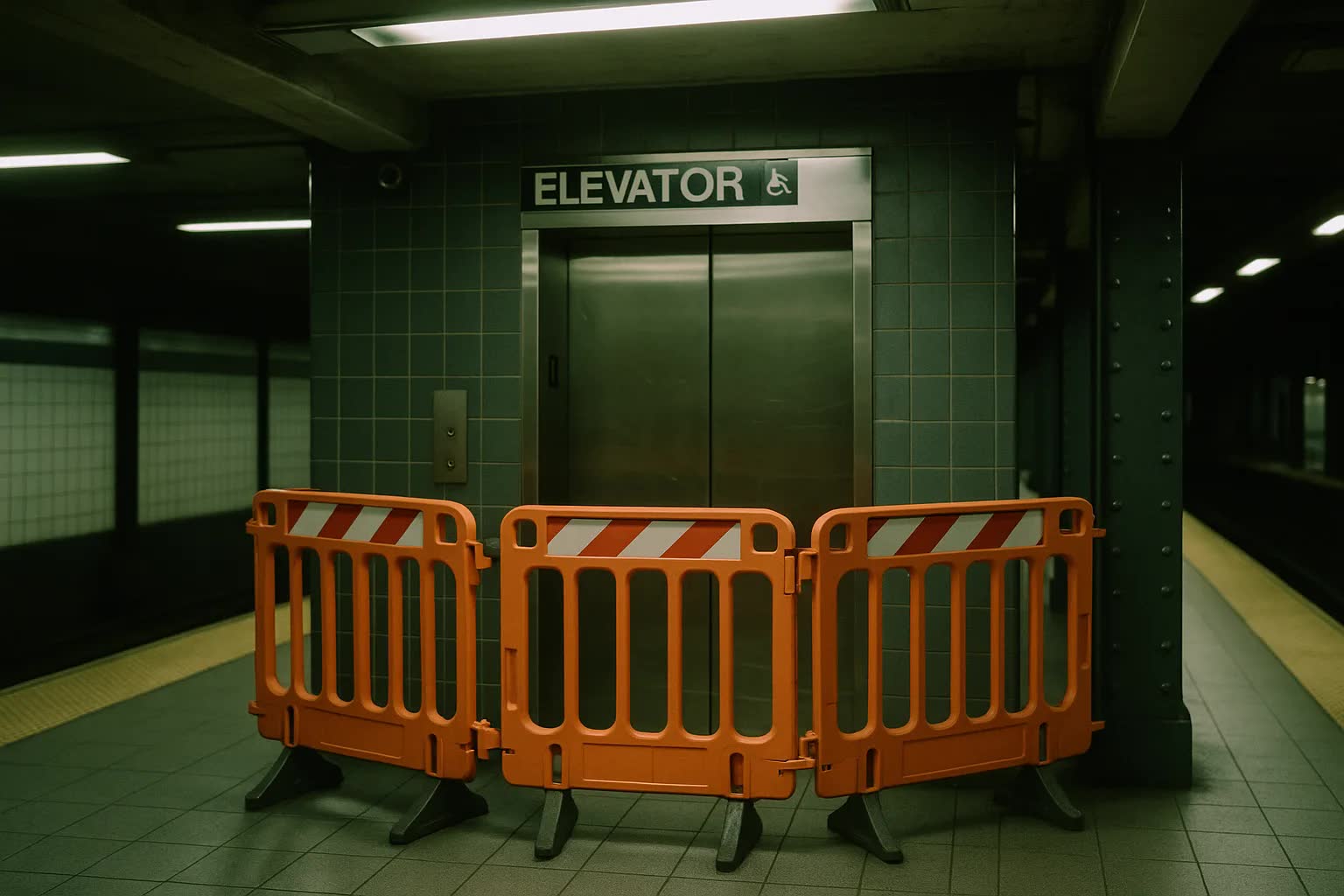
New York commuters who rely on elevators and ramps are the center of a new federal lawsuit aimed at forcing the Metropolitan Transportation Authority to speed repairs and complete station renovations, a legal move that plaintiffs say exposes the daily barriers faced by people with disabilities across the five boroughs from East Harlem to Sunset Park and Astoria to the Lower East Side.
Plaintiffs Disability Rights Now and the Disabled Riders Coalition filed suit Wednesday in Manhattan federal court seeking a court order to compel the MTA to publish aggressive, enforceable timetables for elevator repairs, prioritize permanent station upgrades over piecemeal fixes, install temporary accessible alternatives where repairs will take months, and accept appointment of an independent accessibility monitor to oversee compliance.
The complaint lays out the scale of the problem in stark numbers: the MTA’s subway system includes 472 stations, of which plaintiffs say 158 remain without full accessible routes; there are roughly 1,260 elevators and escalators systemwide, plaintiffs allege, and as of late February 2026 some 176 elevators had been out of service for more than 30 days; the groups estimate a backlog of 212 stations that need new elevators or major renovations and put the cost to bring the system to 90% accessibility at about $4.9 billion, figures that underpin their urgent demand for court-ordered timelines and oversight.
“We are not asking for charity — we are asking for the basic right to move freely in our own city,” said Maria Santos, executive director of AccessNYC and a lead organizer for the Disabled Riders Coalition, after filing papers on behalf of two named riders and dozens of unnamed plaintiffs. “People with mobility impairments should not have to miss medical appointments, jobs or family events because an elevator has been broken for months.”
An MTA spokesperson, Alex Rivera, said the authority is committed to accessibility but characterized the lawsuit as an imperfect view of a complex operational reality. “We are investing billions through our capital program and have prioritized scores of projects in neighborhoods across the city,” Rivera said in a written statement. “We recognize the frustration of riders and continue to work to shorten repair times, increase spare parts inventory and accelerate station upgrades when funding and logistics allow.”
Still, one senior MTA planner who requested anonymity acknowledged to reporters that the agency’s internal planning has been hobbled by aging equipment, a small pool of qualified contractors, and supply-chain bottlenecks for custom parts. “We sometimes can’t get replacement lifts or motors for months, and contract windows for major renovations are long,” the planner said. “A court timetable would force us to reallocate staff and money, but it would also expose how much renovation we deferred for years.”
To illustrate the human stakes, the complaint details riders’ experiences at particular stations: at 14th Street–Union Square, an elevator outage last summer forced a Queens commuter who uses a cane to walk several blocks to another station; at Jay Street–MetroTech in Brooklyn an elevator has been repeatedly out of service during morning rush hours, forcing passengers with strollers and walkers to arrive earlier to avoid crowds; in northern Manhattan, plaintiffs describe the 125th Street corridor as a patchwork of accessible and inaccessible transfers that add an hour to some trips. Local advocates in Flushing and Sunset Park say that when elevators fail at transfer hubs near schools and senior centers, entire blocks become functionally cut off for residents with mobility challenges.
The suit asks the court for specific remedies: a binding schedule that would aim to reduce long-term elevator outages by 75% within 12 months, new contract terms to shorten procurement timelines, and the appointment of an independent federal monitor with authority to recommend emergency measures such as shuttle buses with wheelchair lifts when elevators will be out more than 72 hours. Legal experts who reviewed the complaint for NYDailyWatch said the plaintiffs’ request for injunctive relief faces a high bar but that courts have in recent years been willing to require public agencies to comply with enforceable remediation plans when systemic ADA violations are shown.
City advocates and several community groups from neighborhoods across the city rallied outside the federal courthouse after the filing, calling on the MTA to move beyond promises. “I miss work when elevators are broken,” said Isaac Freeman, 42, a plaintiff who uses a wheelchair and lives on Adam Clayton Powell Jr. Boulevard in Harlem. “This isn’t just about convenience. It is about dignity and being able to make a living.” The lawsuit names another rider, Laila Chen, 68, a retired teacher from Flushing who says she has repeatedly missed medical appointments because of prolonged elevator outages at stations linking the No. 7 line to bus services.
A judge has scheduled an initial status conference for May 14, and both sides indicated they will present proposals for next steps. Advocates say they will push for a trial on the merits if the MTA does not agree to an immediate remedial plan; the MTA, for its part, has signaled it will submit updated repair timetables in early April and continue to point to capital funding and staffing constraints. If the court adopts tight deadlines, the authority would likely have to accelerate hiring, expand contracts for elevator maintenance providers and create a transparent public dashboard on elevator status — outcomes that could quickly reshape how subway accessibility is managed in New York City.