Affordable Housing Plan Hits Opposition in East New York
Residents and community groups say the city's proposal favors market-rate developers and risks displacing long-time renters.
By Kira Sato · December 9, 2025 · 4 min read
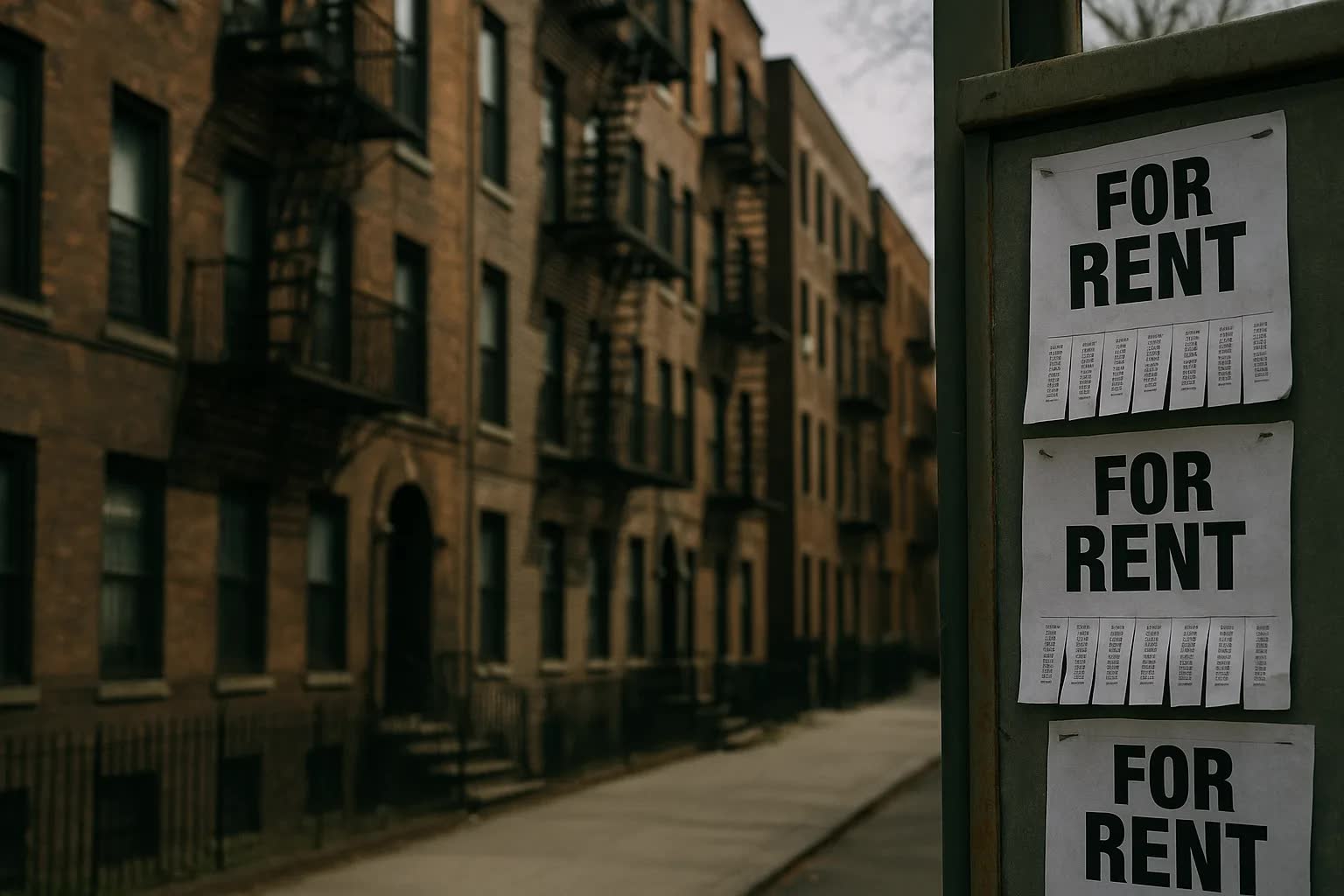
East New York residents packed a church basement on Pitkin Avenue on Monday to lambaste a city housing plan they say will accelerate displacement in a neighborhood already reshaped by rising rents and new construction between Broadway Junction and the Brooklyn-Queens border. The proposal, unveiled last month, would rezone three city-owned sites around Van Sinderen Avenue and Sutter Avenue for mixed-income development, but community leaders say the terms overwhelmingly favor market-rate builders and offer too few protections for long-time renters who fear being pushed out of homes they have held for decades.
The city's plan, drafted by the Department of Housing and Economic Development, designates parcels at 1320 Pitkin Ave., a former DOT lot near the Linden Houses and a strip mall site on Pennsylvania Avenue for development under an expedited review. City officials have promoted the scheme as a way to add density near transit hubs, citing proximity to Broadway Junction’s A, C and L lines and to bus corridors on Atlantic Avenue, but residents say that transit access will only accelerate speculative investment in adjacent blocks like Euclid Avenue and New Lots.
At a public forum at the Irving Johnson Community Center, Maria Alvarez, co-founder of East New York Tenants Alliance, criticized the city for consulting developers more than the people who live in the neighborhood. "We were not asked if we wanted luxury condos or tax breaks for out-of-town developers," Alvarez said. "This plan punts on affordability and puts our neighbors' homes at immediate risk." Alvarez pointed to a string of storefront closures along Pitkin and argued that the proposal would compound pressures on small landlords who are already cash-strapped.
City officials defended the proposal as pragmatic. "This plan will deliver housing at a scale East New York needs and links investment to job training and local hiring," said a Department of Housing spokesperson in a written statement. But a senior city housing planner who requested anonymity acknowledged to reporters in the crowd that the package relies heavily on market-rate units to cross-finance the affordable component. "Without leveraging private capital, we wouldn't be able to underwrite the deeper affordability some advocates want," the planner said.
The numbers undergirding the debate make the trade-offs plain. The city estimates the three sites could yield roughly 1,200 residential units, of which about 300 would be officially designated as affordable under the proposed zoning rules — roughly 25 percent — and approximately 150 of those would be set aside for households at or below 60 percent of area median income (AMI). The remainder — roughly 900 units — would be market-rate, and city documents show developers would be eligible for roughly $250 million in tax abatements and a 99-year ground lease on one municipal lot. The plan projects 200 construction jobs during phased development and 100 permanent jobs tied to ground-floor retail.
Advocates seized on the math to warn of displacement. East New York has seen rents rise faster than many other Brooklyn neighborhoods: neighborhood-level data compiled by local groups show median asking rents climbed by an estimated 22 percent between 2020 and 2024 on blocks east of Atlantic Avenue, and cash sales of small multifamily buildings rose by 35 percent in that span. Tenants at several walk-up buildings near New Lots Avenue said they have received repeated buyout offers, and a handful of small grocers along Pitkin Avenue said they face untenable rent increases from landlords seeking to reposition properties for higher returns.
Developers and construction trade advocates counter that the project includes community benefits that will help local families. "Harborstone Development is committed to hiring locally and building housing this community needs," said Ethan Morales, vice president of Harborstone Development, the private partner slated to lead one of the parcels. "We will create apprenticeship pathways for young people in East New York and reserve ground-floor retail for neighborhood operators where feasible." Morales said Harborstone would commit $5 million toward a local workforce fund, though affordable housing advocates questioned how enforceable those commitments would be.
Community groups have offered alternatives, urging the city to require deeper affordability and to explore a community land trust model that could permanently remove key sites from speculative markets. "What we need is a guarantee that units will stay affordable for 50, 75 years — not a brief subsidy that evaporates when the tax abatement ends," said Jamal Reid, director of the Cypress Hills Community Coalition. Reid's group is pressing for 50 percent of new units to be reserved for households at or below 80 percent of AMI and for the city to prioritize current East New York residents in any lottery or preference system.
The dispute has also opened a broader political conversation about how New York balances growth with preservation in fast-changing neighborhoods. Borough-level advocates say the plan will face review at a public hearing at the City Planning Commission next month, with a likely City Council vote in the first quarter of next year. Local small-business owners and tenants plan a march to the borough president's office as commissioners weigh stipulations, and developers say they are ready to negotiate community benefits agreements while warning that stricter affordability mandates could make their projects financially unworkable. Whatever path the plan takes, residents and officials agree it will reshape East New York's built environment for years to come.
In the weeks ahead, attention will focus on whether the city alters the proposal to add deeper, longer-term affordability or whether developers press forward under the current rubric, and organizers say more protests are planned before the City Planning Commission hearing. Whatever emerges from the negotiation — tougher affordability requirements, a revised financing package or a scaled-back plan — the debate is likely to be a test case for how New York manages municipal land in neighborhoods confronting rapid change.