After PATH Changes, NJ Commuters Rebuild Morning Routines
Rising remote work and altered timetables have pushed Ridgefield and Hoboken riders to adopt hybrid schedules, new pick-up spots and bike-and-ride strategies.
By Malik Johnson · January 11, 2026 · 4 min read
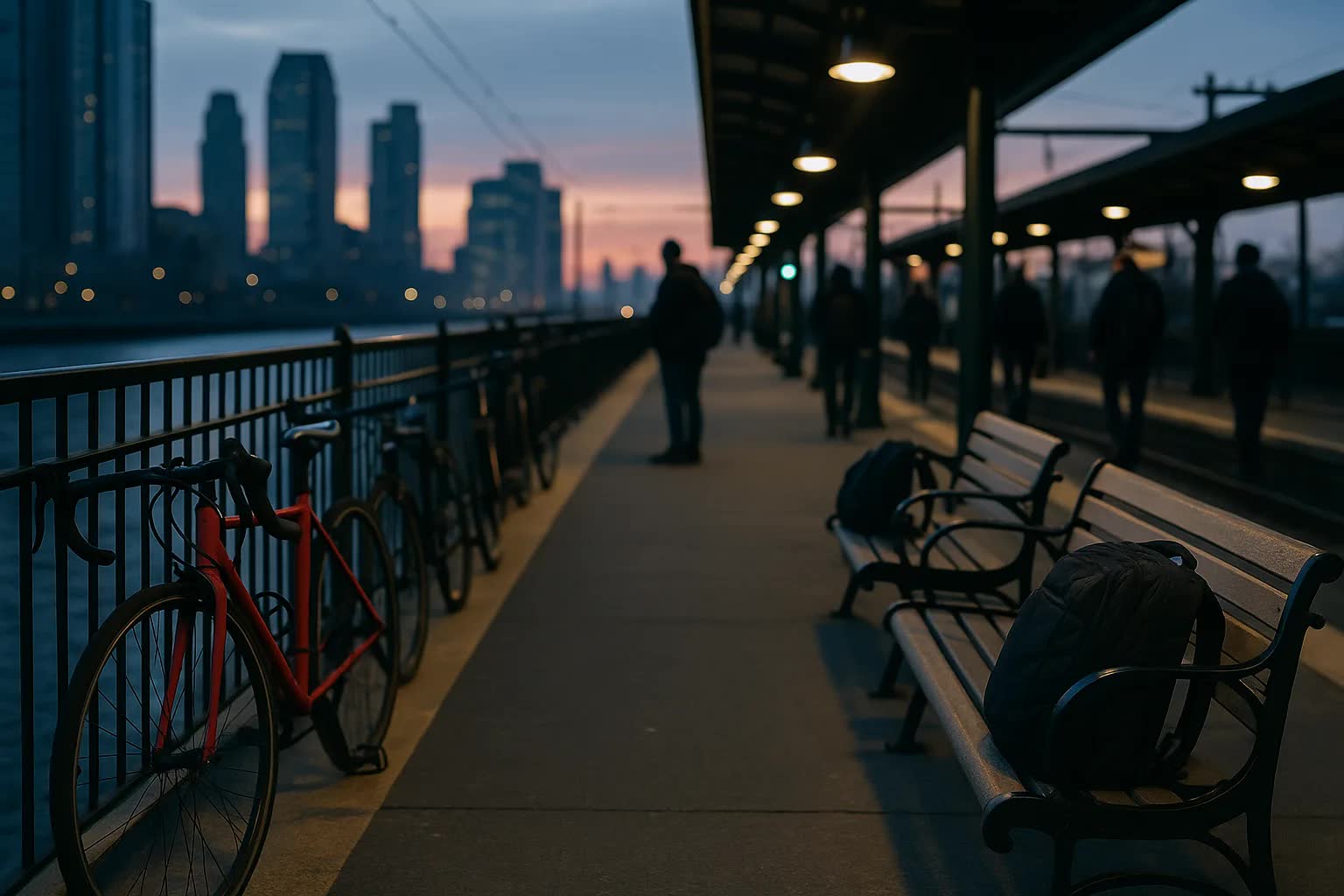
NEW YORK — A few weeks into the PATH timetable overhaul, Manhattan-bound commuters from Hoboken and Ridgefield say the old rhythm of 7:30 a.m. trains and predictable sidewalk crowds has given way to improvised routes, staggered start times and a scramble for secure bike racks around Christopher Street and 14th Street. What began as a service tweak by the agency has rippled across neighborhoods, forcing office workers, nurses and retail staff to rebuild morning routines that once revolved around a single turnstile and a fixed 33rd Street arrival time.
The Port Authority’s December adjustments trimmed some peak-period trains and shifted frequency to better match midday demand, officials said, but commuters contend the timing was less than precise for those who work traditional 9-to-5s in Midtown. On the Hoboken line, peak trains that previously ran roughly every five minutes during the busiest stretches now average every seven to nine minutes; on the Journal Square route, passengers report altered first-ride patterns into Lower Manhattan and Midtown. For many, the change has made a last-mile decision — walk, bike, shuttle or wait — their new daily calculus.
In Ridgefield, a town of modest rowhouses a 25-minute shuttle ride from the Riveredge PATH feeder, teachers and healthcare workers have staggered shifts and established informal carpools. In Hoboken’s Washington Street corridor, the morning flow has redistributed to side streets, with pickups at Church Square Park and near the Hoboken Terminal entrance rather than the usual cafe corners. Riders say the effect is not merely logistical; it is social, changing where they stop for coffee, which bike shop they trust for repairs and even the time they walk their dogs before heading in.
“We’ve doubled our morning tune-ups because more people are bringing their bikes to the shop before 8 a.m.,” said Marcus Baines, owner of Pedal & Path, a bike repair and retail shop on Observer Highway in Hoboken. “People used to roll in after work. Now the first three hours of the day are all about getting commuters on the road — securing lights, checking brakes, fitting baskets. It’s a real shift in demand and it’s happening block by block.”
Data collected by two community surveys and a transit advocacy group this month illustrate the scale of the change: 43 percent of regular PATH riders in Hoboken and Ridgefield report altering their departure time by at least 30 minutes, 37 percent now incorporate cycling into part of their commute, and average door-to-desk times for Ridgefield riders rose from about 52 minutes in 2019 to an estimated 63 minutes in December 2025. PATH service logs reviewed by a local commuter association show peak-hour train frequency down as much as 25 percent on some Hoboken-to-33rd runs, while weekday ridership systemwide remained approximately 18 percent below pre-pandemic levels.
Teresa Alvarez, a second-grade teacher at Ridgefield Public Schools who lives near Bergen Boulevard, said the new pattern has practical consequences for families. “I used to leave at 7:05, grab the 7:15 shuttle and be in my classroom by 8:10,” she said. “Now I leave at 6:35, drop my son at the daycare that’s nearer to the new pick-up spot on Kinderkamack Road, and get to school with twenty minutes to spare. It’s workable, but it’s an hour of my morning that’s been redesigned.”
Agency insiders say some of the changes were deliberate responses to long-term trends in remote work and uneven peak demand, but they acknowledged the communications around timing could have been clearer. “We did a lot of modeling to reduce crowding during midday while maintaining capacity, but the initial rollout didn’t fully anticipate the micro-movements people would make in neighborhoods,” said a senior PATH operations planner who requested anonymity to speak candidly about implementation. “We’re watching origin-destination data and adjusting stop-level dispatching as we go.”
Neighborhood leaders and small businesses have stepped in with interim solutions: pop-up bike corrals near the Grove Street and Christopher Street approaches, expanded curbside drop-off windows at the La Collina block in Hoboken’s northwest ward, and informal shuttle partnerships staple to Ridgefield’s commuter lots. Developers of a new mixed-use building on River Street have even allowed a private shuttle service, Riverline Rides, to use their loading zone between 6:30 and 9 a.m. for a modest fee, reducing sidewalk crowding and giving riders an option when trains are tight.
Tech-driven microtransit has filled some gaps. “Our midday bookings jumped 64 percent since December,” said Asha Mehta, operations manager for Riverline Rides, a privately run shuttle startup that now operates two routes between Ridgefield commuter lots and Journal Square. “Commuters want predictability. They’ll pay $3 to $5 to avoid an uncertain wait and a missed connection. We’re not replacing PATH, but we’re smoothing the starts and ends of people’s days.”
Looking ahead, commuters and transit planners expect this period to be less a temporary disruption than a transitional phase in which morning rhythms will continue to evolve. The Port Authority has scheduled another public briefing in March, and local municipalities are discussing permanent bike parking and revised curb rules around major PATH access points. For riders from Hoboken and Ridgefield, the working assumption is that morning routines will remain hybrid — part transit, part private mobility, and part neighborhood improvisation — as the region searches for a new balance between flexible schedules and steady service.