Algae Bloom Closes Kayak Launches Along the East River
Recreational operators and parks officials scramble to respond after an unusual bloom makes waters unsafe for paddle programs.
By Malik Johnson · February 4, 2026 · 4 min read
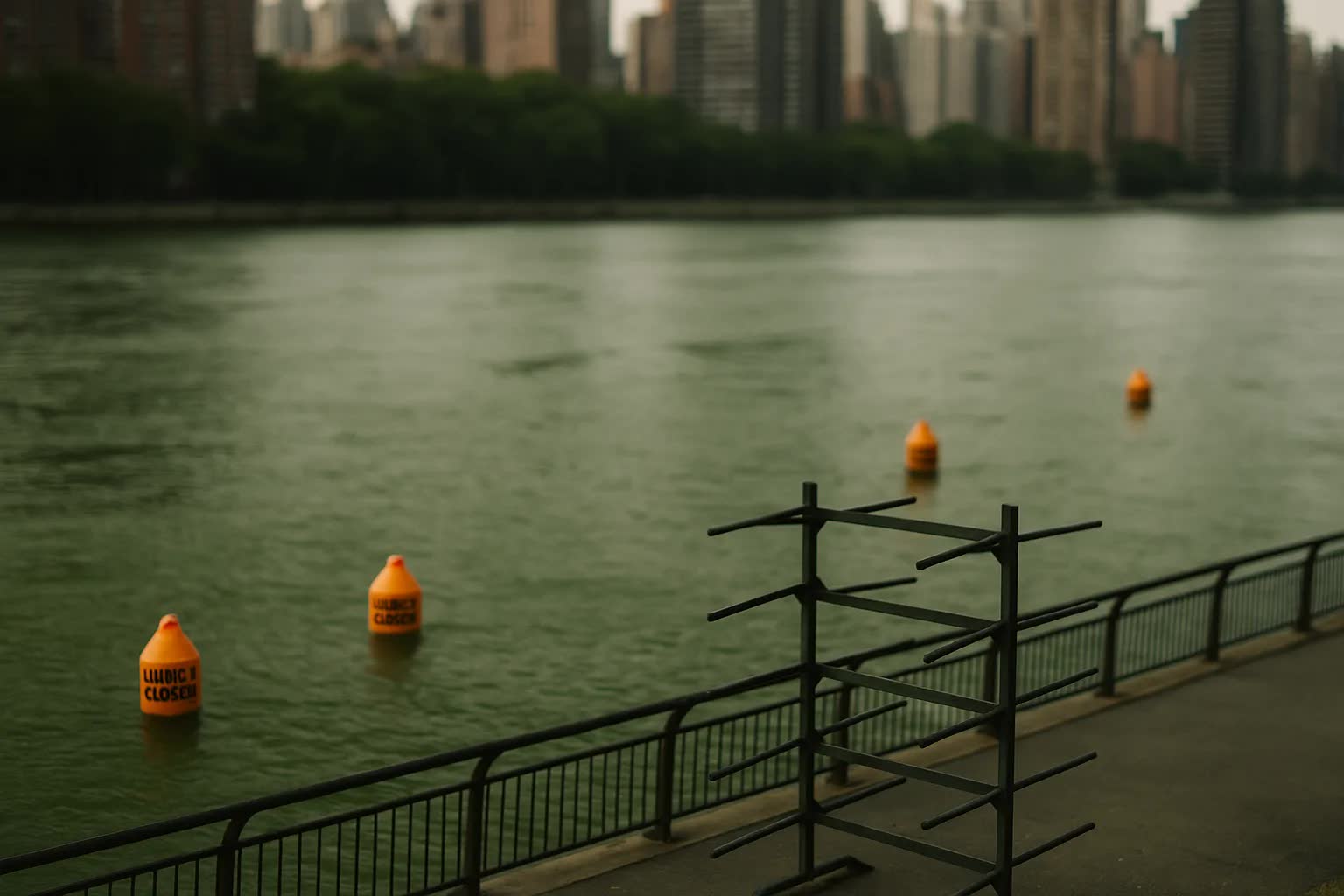
NEW YORK — Kayak launches up and down the East River were closed Wednesday after city and state water-quality tests found an unusual algal bloom that officials said made the water unsafe for paddling programs, forcing community boathouses, commercial outfitters and parks staff to suspend activities from the South Street Seaport to Gantry Plaza State Park in Long Island City.
The bloom, first reported by volunteer paddlers and boathouse staff late last week, appeared as a thick, olive-green slick concentrated along bulkheads and in the calm eddies near the Roosevelt Island ferry slip and the East 34th Street waterfront, according to on-the-ground observers and social media posts by neighborhood groups in the East Village and Midtown East. Residents in Astoria and Greenpoint also reported a faint musty odor and patches of iridescent scum drifting near the piers beneath the Queensboro Bridge.
Operators who run day-to-day programs said they had no choice but to halt classes that teach thousands of New Yorkers how to safely navigate the river all year. "We can't put people, especially kids, into water that is visually and chemically compromised," said Marta Delgado, director of East River Paddle Co., which runs launches at the South Street Seaport and on the Lower East Side. "Our instructors are heartbroken — this is the heart of our winter curriculum — but safety comes first and there's just too much uncertainty right now."
City data released by the Parks Department and the Department of Environmental Protection on Wednesday put the scope of the shutdown in stark numbers: 12 city-licensed kayak launches along the East River corridor have been temporarily closed, seven community boathouses and six commercial operators suspended operations, and approximately 480 scheduled public sessions were canceled this week, affecting roughly 3,100 registrations. Field samples collected by DEP technicians showed concentrations of microcystin at 3.7 micrograms per liter in several hot spots, dissolved oxygen levels dipping as low as 4.2 milligrams per liter, and surface water temperatures ranging from 8.5 to 10.2 degrees Celsius, readings that the agencies said exceed thresholds for safe, direct-contact recreational use.
Experts said a convergence of factors likely set the stage for the bloom. "We're seeing pockets of warm, stagnating water, elevated nutrient loads, and recent tidal patterns that have kept that material from dispersing," said Dr. Aaron Kim, an estuarine ecologist at the Queensborough Institute for Urban Waters. "In an urban estuary like the East River, even relatively small inputs — a combined sewer overflow during a rain event, or concentrated runoff from the FDR Drive corridor — can tip a system toward a bloom. The toxins produced can cause skin irritation and respiratory symptoms in people exposed to spray or aerosols."
City agencies moved quickly to post advisory signs at affected piers and to notify permit holders. NYC Parks said it had deployed inspectors to all formal launch sites and would increase sampling frequency to daily for the next week; DEP said it was coordinating with state labs for confirmatory testing. "We're taking every precaution to protect the public and our staff," said Renee Alvarez, deputy director of Manhattan Parks, who oversees waterfront programming. "We will not reopen launches until multiple, independent tests show levels have returned to safe thresholds."
The closures hit community programs and neighborhood economies alike. Youth curriculum run by the Lower East Side Kayak Collective and school partnerships in Long Island City and Astoria were postponed, and restaurants that depend on paddler traffic near South Street Seaport reported quieter-than-usual lunch service. "We teach a lot of kids from nearby P.S. 20 and their parents depend on that weekly routine," said Cassidy Long, program coordinator at the Roosevelt Island Community Boathouse. "We're trying to shift lessons indoors where possible, but you can't replace time on the water. Families are frustrated and instructors are out of work for the time being."
Paddlers who use the river year-round described an environment they said felt out of step with winter conditions: clusters of dead or struggling fish near the East 34th bulkhead, a faint petroleum sheen in places, and a persistent slime that stuck to gear. Neighborhood listservs in Williamsburg and the East Village circulated photos of slicks trapped behind marina fingers and of brownish mats pressed against pilings, prompting rapid response from volunteer cleanups coordinated through local boathouses and the community relations arm of the South Street Seaport merchants association.
Scientists and advocates said the episode underscored longer-term vulnerabilities in the estuary that could worsen as the climate warms. "Warmer winters and more variable storm timing are creating new windows of opportunity for blooms in places that historically didn't see them as often," Kim said. Advocates for infrastructure investment pointed to aging combined sewer systems and stormwater outfalls as recurring drivers of nutrient-rich discharges; community groups called for expanded real-time monitoring and more frequent sampling throughout the year to detect emerging blooms earlier.
City agencies said they would update the public with new test results within 10 days and that reopening of affected launches would be phased based on clear, repeated water-quality benchmarks. Parks officials also scheduled a virtual community briefing next Tuesday to answer questions from boathouse operators and neighborhood residents. Operators said they hoped to resume a limited set of programs within weeks if test results improve, while scientists and local advocates urged that any reopening be accompanied by a longer-term plan for monitoring and infrastructure upgrades to reduce the recurrence of blooms.