Art Therapy Programs Move Into Staten Island Senior Centers
New partnerships between therapists and local artists are bringing group creative sessions to aging residents seeking social engagement.
By Isabella Morales · January 21, 2026 · 4 min read
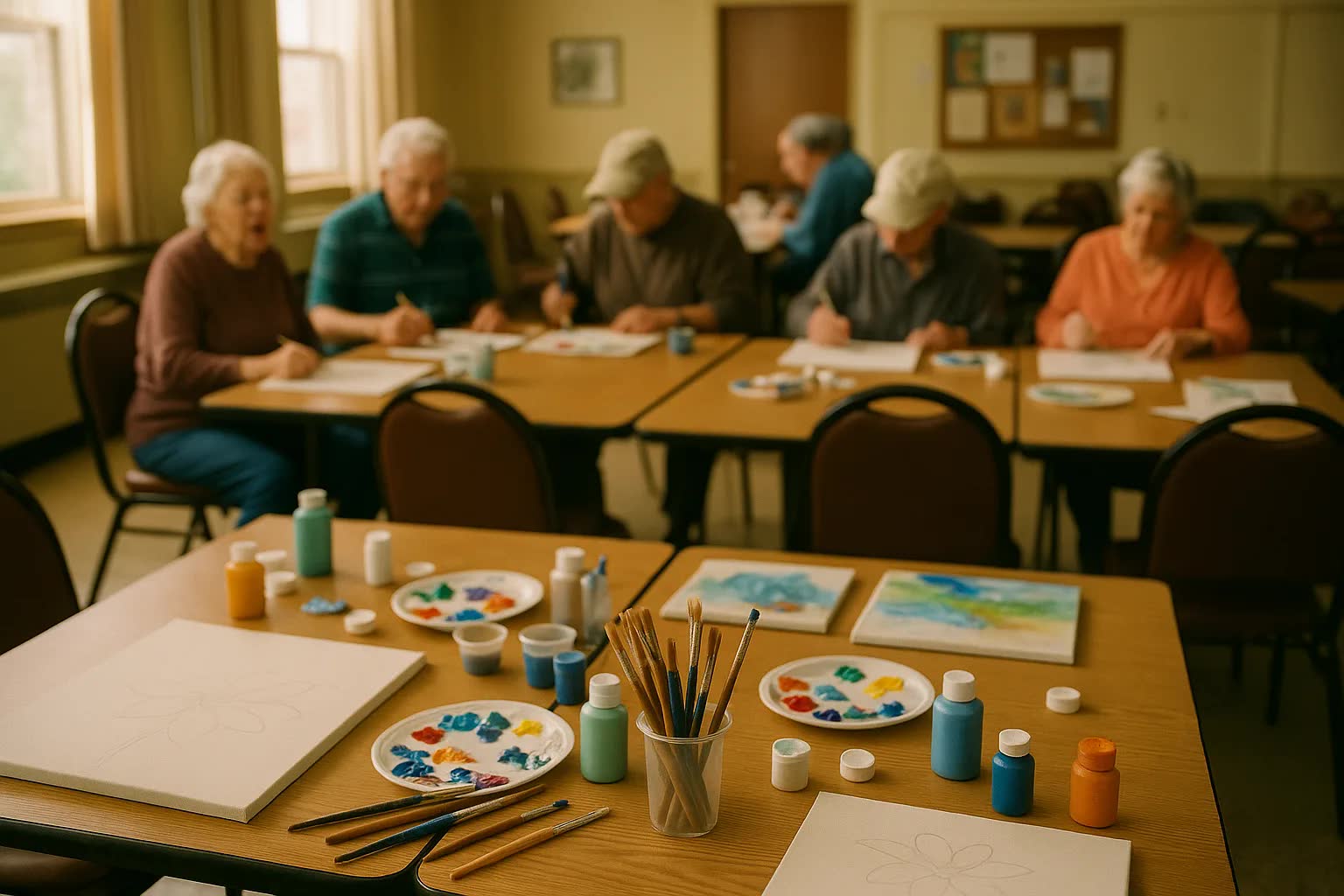
A new wave of art therapy programs is moving into senior centers across Staten Island as local therapists and artists partner with community agencies to combat isolation and boost social engagement among the borough’s aging residents, with sessions already under way at centers from St. George to Tottenville and plans to expand to neighborhood blocks near Bay Street and the Staten Island Ferry terminal.
The initiative grew out of a coalition of groups — the Staten Island Arts Alliance, Richmond Senior Services and Staten Island Community Health — which this winter began offering weekly group painting, collage and music-making sessions in center multipurpose rooms and nearby cultural spaces like Snug Harbor Cultural Center’s Sailors’ Snug galleries. Organizers say the aim is both practical and social: to give seniors new ways to interact and to connect local teaching artists with older adults who have limited access to creative programming.
At the Stapleton Senior Center on Bay Street, 76-year-old Evelyn Russo waits for the afternoon class each Thursday like it is an appointment with family. "I come for the company and the colors, and for the first time in years I’m laughing in a group again," said Russo, a retired school secretary who lives on Broad Street. Participants range from veterans who walk over from the Veterans’ Outreach Center to homebound residents who are brought to sessions by family or volunteers, organizers said.
Marta Delgado, director of community programs at the Staten Island Arts Alliance, said the programs were designed after months of neighborhood listening sessions on Victory Boulevard and Hylan Boulevard. "We wanted something that wasn’t clinical but had therapeutic ballast," Delgado said. "We hire licensed art therapists to co-lead with neighborhood artists so sessions feel familiar and safe, but also evidence-based and measurable." Delgado said the alliance matches teaching artists to centers based on language needs and mobility supports.
The rollout includes concrete targets: six senior centers across Staten Island — St. George, Tompkinsville, Stapleton, New Dorp, Great Kills and Tottenville — have launched the pilot, serving roughly 180 unique participants in group sessions that meet twice weekly for 90 minutes. Funding for the first 18 months comes from a $475,000 grant from the Richmond Community Fund and in-kind support from local businesses, with three full-time licensed art therapists and a roster of 12 teaching artists assigned boroughwide.
Health professionals involved in the work say they are already seeing changes beyond brush strokes. "We see measurable improvements in mood and communication after eight weeks," said Dr. Leonard Price, lead art therapist with Staten Island Community Health, who oversees clinical training for the program. "People who arrived withdrawn are now helping set tables and pointing out materials; caregivers report fewer behavioral flare-ups and better sleep in some cases. That doesn’t mean art therapy is a cure-all, but it is a powerful adjunct to other supports."
Logistics remain a part of the conversation. Senior centers often share space with meal programs and exercise classes, and scheduling sessions requires careful negotiation of rooms and resources on streets near the Staten Island Mall and around the Memorial Day Parade route in New Dorp. Transportation is another consideration: while centers near the St. George ferry terminal see strong walk-in turnout, centers in farther south neighborhoods like Tottenville are arranging volunteer ride networks and coordinating with local church groups to bring participants to midafternoon sessions.
Some advocates caution that enthusiasm must be matched by sustained investment and evaluation. Maria Chen, director of Richmond Senior Services, said the pilot’s early success points to a larger need in the borough but added that outcomes must be tied to long-term supports. "We need to ensure this work is not a one-off," Chen said. "There’s a difference between a festival workshop and an ongoing therapeutic series. If we’re going to reduce isolation and improve health, funders and city agencies must commit for the long haul."
Program leaders are moving toward more systematic measurement and an eventual public showcase of participants’ work. Evaluators will track attendance, mood and reported social connections over the pilot’s 18-month timeline and a public exhibition at Snug Harbor is slated for late spring, where select pieces will be displayed alongside artist statements. Organizers say the goal is to demonstrate both human impact and fiscal prudence, with hopes to scale programming across the borough and to tap citywide aging services for replication in other neighborhoods.