Artomatic Turns Empty DC Offices Into Art, Until July 31
The region's beloved open entry arts festival is again filling a vacant West End office building with the work of hundreds, free to all, and its unjuried, volunteer run experiment enters its final days.
By Siyu Xiang · July 25, 2026 · 7 min read
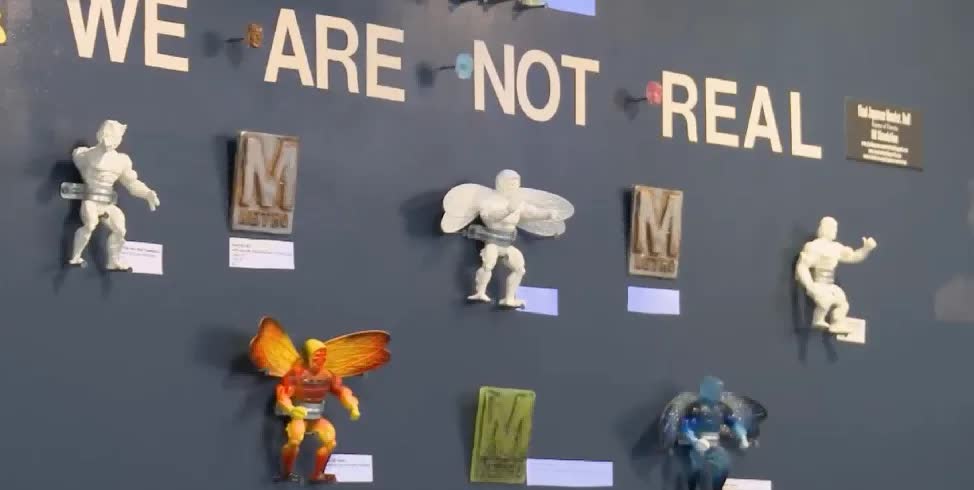
For a few more days, one of downtown Washington's empty office buildings is anything but empty. Artomatic, the sprawling arts festival that the organization itself bills as the DC region's most celebrated open entry showcase, is occupying the building at 2100 M Street NW in the city's West End, where floors of former workspace have been converted into a warren of galleries, performance stages, screening rooms, and workshop spaces. Admission is free, as it always has been, and the run closes on July 31, giving procrastinating Washingtonians less than two weeks to wander it. The organizers have scheduled a closing party on the third floor to send the edition off with music, poetry, and a potluck, a fittingly homemade finale for an event that has never pretended to be polished.
Artomatic's defining rule is that there is no gatekeeper. Founded in 1999 by the Washington artist and arts activist George Koch, the festival is non juried and open entry: any artist who registers, pays a participation fee, and works volunteer shifts gets wall space or stage time, from first time exhibitors to seasoned professionals. The nonprofit is volunteer run, and by its own description the participation fees are what cover the costs of mounting the event, which is why the public has never been charged at the door and why artists sell their work directly, keeping the proceeds. Under its longtime motto, by artists for everyone, the organization describes its mission as transforming large vacant spaces into temporary galleries and performance venues, drawing together hundreds of visual artists, musicians, performers, and other creatives for tens of thousands of visitors.
The formula depends on real estate, which is why the festival has always been nomadic and irregular. Editions ran from 1999 through 2017 at intervals of one to three years, dictated by whether a suitably large empty building could be secured, and the pandemic pushed the 2020 edition entirely online. The current venue is familiar ground: the same M Street building, a roughly 300,000 square foot former office property that once housed the Urban Institute think tank, hosted the festival's 25th anniversary edition in 2024 in partnership with the building's owners and the Golden Triangle Business Improvement District. That edition gives a sense of the event's scale in this space: organizers reported about a thousand participating visual and performing artists across multiple floors, nearly ten thousand visitors on opening weekend alone, and a projection of roughly one hundred thousand over the full run.
The experience is deliberately unlike a museum. Visitors ride elevators or climb stairwells between floors where cubicle farms once stood, encountering painting, photography, sculpture, fiber art, film screenings, live music, poetry, and interactive workshops in adjacent rooms, with the quality varying as widely as the mediums. Current listed hours run Wednesday and Thursday evenings from 5 to 9:30, Friday and Saturday from noon to midnight, and Sunday from noon to 9, with the building closed Monday and Tuesday. Organizers have historically encouraged visitors to arrive by Metro, with Farragut North, Foggy Bottom, and Dupont Circle stations all within walking distance of the M Street site, since downtown parking is limited. A weekend marketplace lets visitors buy work directly from local artists on the spot.
Artomatic's open door has never been universally admired, and an honest account should include the dissent. The festival's most famous critique came from a Washington Post art critic who, reviewing an earlier edition, judged the majority of the work mediocre or worse and argued the energy would be better spent on professional arts activity. The organizers have, in effect, always answered that the criticism misses the point: the festival is not a curated statement but a civic mechanism, a way for anyone in the region who makes things to show them, and for neighbors to see what the person down the street makes. Both positions are coherent, and a visitor can hold them simultaneously, walking past a wall that argues for the critic and, one room later, a piece that argues for the door.
What gives this edition its particular resonance is the building itself. Downtown Washington, like the cores of many American cities, is still working through a glut of vacant office space left by remote work, and Artomatic has become an accidental civic instrument for that problem: a festival that borrows emptiness and returns foot traffic, filling dead floors with light and visitors while owners await conversion or new tenants. It is a graceful use of an awkward interval, and neighborhood businesses feel the difference on festival evenings. But the model's charm is also its fragility. An event that exists only when a landlord has a large building with nothing better to do is an event whose calendar is written by the real estate market, which is why Artomatic has appeared at such irregular intervals across its 27 years, and why every edition carries a faint farewell quality even before the closing party.
The outlook question worth posing, as this run winds down, is whether the arrangement can be made less accidental. A city that will be managing surplus office space for years has an interest in institutionalizing what Artomatic improvises, whether through standing agreements that route vacant floors to cultural use between leases, or simply by treating the festival as recurring civic infrastructure rather than a happy accident. For now, the practical advice is simpler and more urgent: the doors at 2100 M Street close after July 31, the price of entry is nothing, and the only way to have an opinion in the festival's long running argument about openness and quality is to go walk the floors and form one.