Astoria Film Clubs Keep Diaspora Cinema Alive
Community-run cinemas and cultural centers in Astoria are programming Greek and Middle Eastern films to serve older residents while engaging young cinephiles.
By Mei Lin · April 4, 2026 · 4 min read
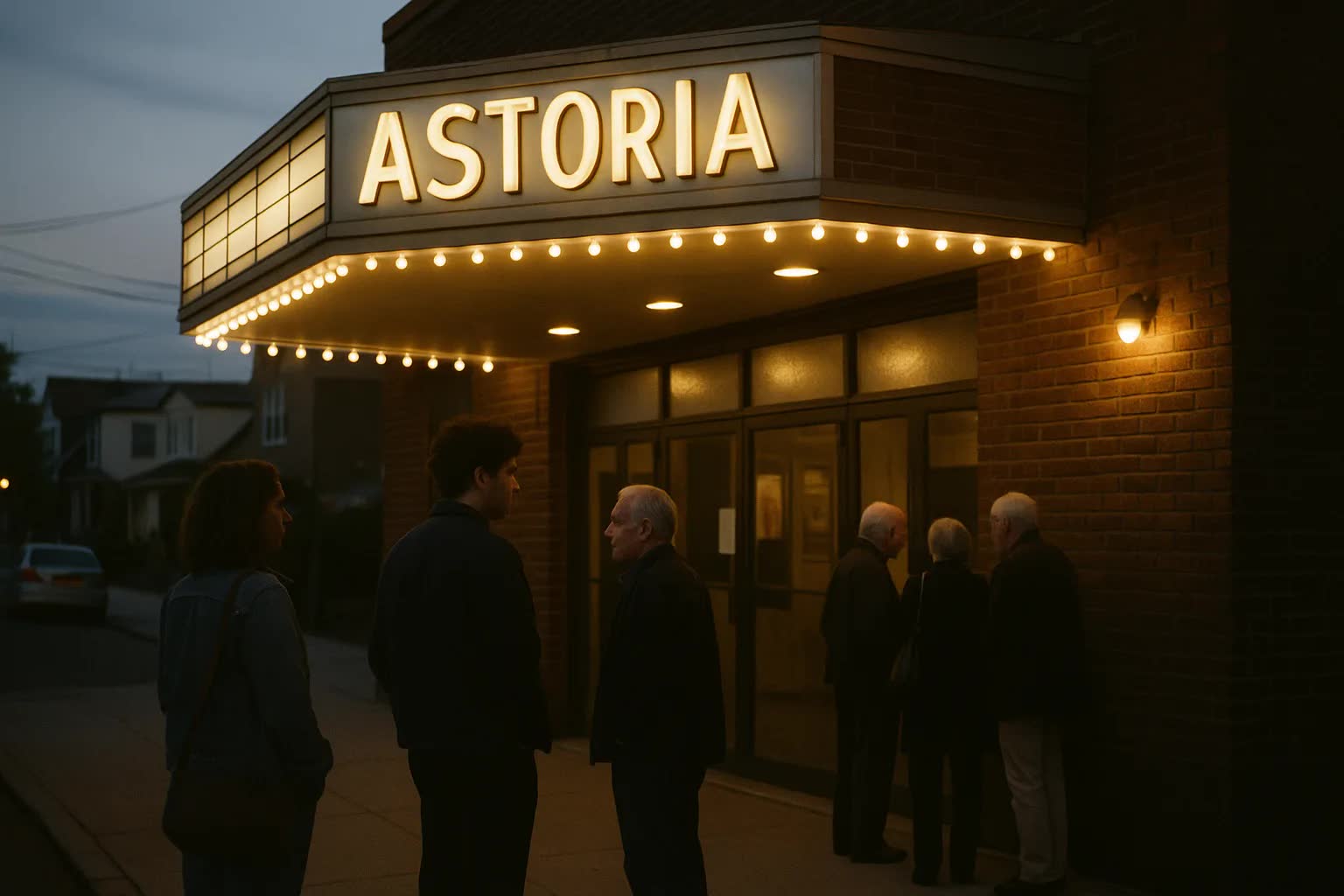
Astoria’s narrow storefronts and tree-lined blocks, long home to Greek coffee shops and Middle Eastern bakeries, are also quietly sheltering a movement: community-run cinemas and cultural centers that program Greek, Arab and broader diaspora films to keep memories alive for older residents while drawing curious young cinephiles to screenings on 30th Avenue and Ditmars Boulevard.
In converted storefronts and parish basements from Steinway Street to Broadway, small film clubs have multiplied over the last five years. The Kafenio Cinema, a former cafe on 31st Street that installed a 70-seat projector, runs Sunday matinees for retirees; the Bridge & Reel Cultural Center on 34th Avenue hosts late-night discussions and student showcases; and the Astoria Greek Film Collective organizes monthly retrospectives in the basement of St. Demetrios Hellenic House, a block from the Museum of the Moving Image.
Programming reflects the neighborhood’s layered histories: mid-20th-century Greek comedies and melodramas arrive back-to-back with new Lebanese documentaries about migration, Palestinian shorts subtitled in English, and restored Egyptian films that bring older residents to tears. Curators intentionally pair subtitled screenings with tea hours and live music, creating a social space where dialogue happens before and after the lights go down rather than just in line outside a multiplex.
“When Maria Papadopoulos brings her neighbors, she is bringing the history that was in her living room,” said Eleni Katsaros, director of the Astoria Greek Film Collective. “We are not just showing reels; we are translating a domestic archive into a public ritual so that her grandchildren, who grew up in Queens, learn the rhythms and jokes their grandparents know.”
“Young filmmakers want to see where stories begin,” said Omar Abdelrahman, programming director at Bridge & Reel Cultural Center. “We create double bills where a new Syrian-American short screens next to an older Arabic classic so the audience can see continuities and ruptures. It fosters criticism and care in equal measure.”
The scale of the effort, while modest, is measurable: the five largest groups in Astoria combined ran 48 public screenings last month and plan roughly 550 screenings over the next year, drawing an estimated 2,600 unique attendees annually. Organizers report that about 55 percent of regular attendees are 60 or older, 30 percent are between 25 and 44, and the remainder fall into teenage and 45–59 brackets. Small grants and individual donations fund about $65,000 of operating costs annually across the clubs, supplemented by 1,200 volunteer hours a year for ticketing, subtitling and concessions.
Getting older patrons to the screenings remains a practical challenge despite short walking distances from transit hubs: many residents along Astoria Boulevard prefer not to navigate stairs and long blocks. “Some stops have ramps, some don’t,” said a senior MTA planner who requested anonymity, referencing raised platforms on parts of the N and W lines and intermittent elevator outages near Queensboro Plaza. “We see a pattern where riders over 70 decline longer trips if station accessibility is uncertain, so closer-in venues win attendance.”
Younger audiences and students are an unexpected lifeline. Film students from Queens College and newly arrived filmmakers use the clubs as testing grounds for subtitled work and diaspora narratives, while neighborhood businesses report spillover trade before and after shows. Apollonia Bakery on 30th Avenue has expanded hours on screening nights, and River Styx Books, an independent shop near Broadway, stages reading-and-screening pairings that sell out faster than standalone events.
Financial pressures threaten continuity. Rising rents on Steinway Street and tightened arts grants mean volunteers increasingly shoulder costs for film rights and professional subtitling, which can run $300 to $1,200 per title depending on length and source material. One Astoria organizer said she spent a month translating and captioning an elder’s 16mm family archive to save on licensing fees and preserve the film, but acknowledged that such labor is not sustainable without stable funding. Microgrant programs have helped in the short term, but organizers are exploring membership models and revenue-sharing with local cafés to keep ticket prices between $6 and $10.
Organizers say the work is as much about civic life as it is about cinema. Negotiations over program choices — balancing conservative tastes of older viewers with the sometimes confrontational work of younger filmmakers — have become forums for intergenerational exchange, not conflict. Plans for next season include a mobile-screening van funded by a combination of council discretionary grants and local philanthropy, a partnership with the Museum of the Moving Image for a youth curator-in-residence, and an initiative to digitize and subtitle elders’ home movies for public exhibition. Those projects aim to move Astoria’s diasporic cinema into the next decade while keeping neighborhood seats full and intergenerational conversations loud.