Asylum Shelter Plan Strains Queens Neighborhoods
Local leaders and service providers clash over the placement and resources for newly converted hotel shelters housing asylum seekers in western Queens.
By Anika Bose · April 7, 2026 · 4 min read
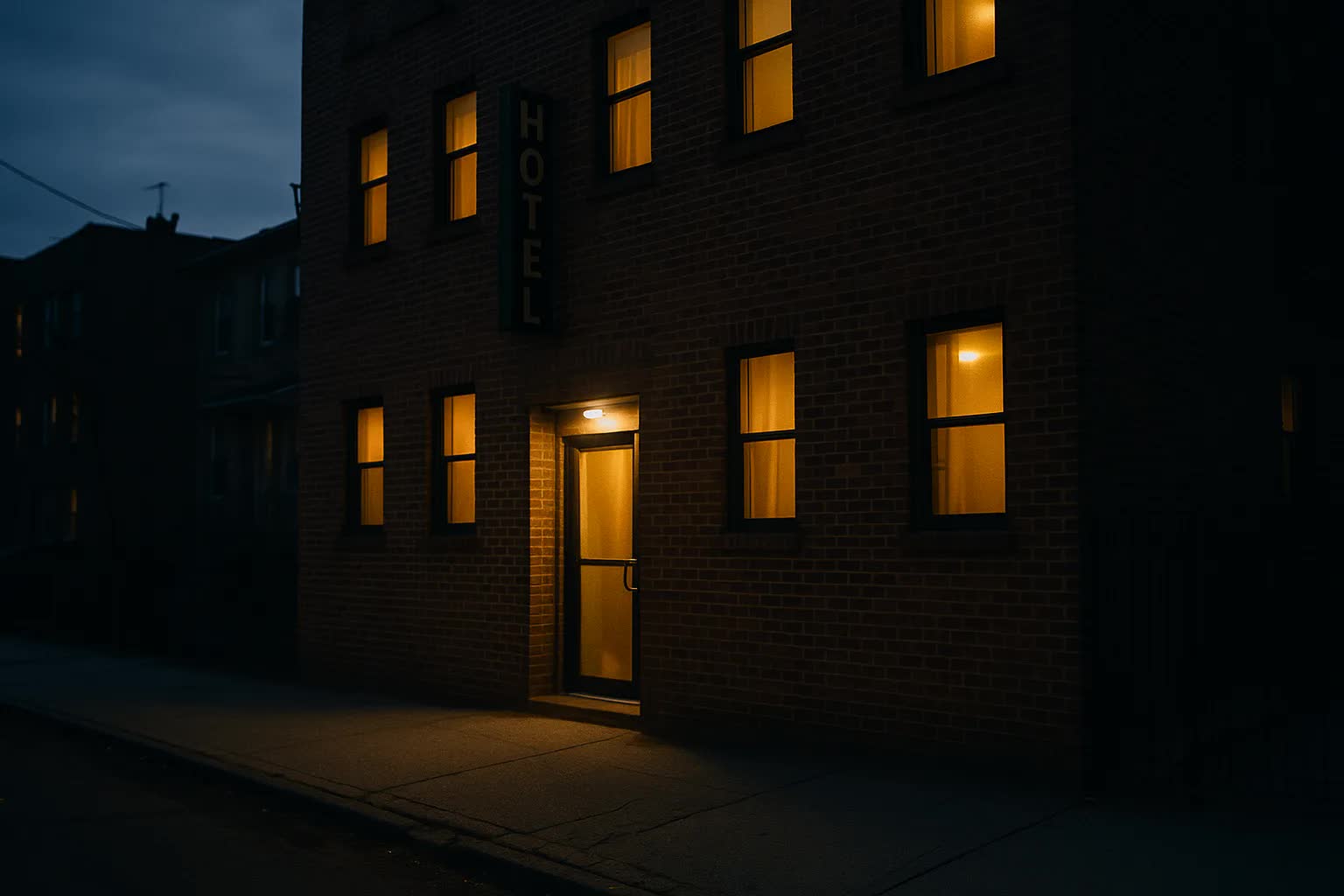
NEW YORK — Western Queens neighborhoods from Jackson Heights to Sunnyside are straining under a sudden influx of asylum seekers housed in newly converted hotel shelters, touching off clashes between local elected leaders, community boards and the nonprofits charged with providing health, legal and social services. Residents say placement decisions were made with little neighborhood input; service providers say they lack the staff and funding to meet demand. The debate is redrawing daily life along corridors like Queens Boulevard and Roosevelt Avenue and exposing tensions over who should bear the burden of the city’s continuing border-to-borough shelter strategy.
Neighbors in Elmhurst and Woodside describe late-night deliveries, crowded sidewalks and a sense that municipal planning failed to account for the everyday impacts of hotel conversions. Community Board 2 members in Sunnyside held an emergency meeting last month after the Parkview Inn, a 120-room property near Queens Boulevard and 46th Street, accepted 180 asylum-seeker placements. ‘‘We are not anti-immigrant,’’ said Leon Park, chair of Community Board 2, ‘‘but we need basic planning: sanitation pickups, language access at the corner, and coordination with schools. That didn’t happen.’’
Service providers counter that the placements were necessary to meet an urgent humanitarian need and that shelters closer to subway lines and hospital access were chosen deliberately. ‘‘We had to prioritize safety and access to medical care,’’ said Marisol Ortega, director of Queens Resettlement Network, which coordinates case management for several western Queens shelters. ‘‘But we also made commitments we can’t keep without more staff. A shelter is not a standalone unit—it’s a demand on every community service here.’’
Concrete numbers underscore the scale of the shift: in the last six weeks the city converted five western Queens hotels into shelters, adding roughly 1,200 asylum-seeker beds in the borough. The largest site holds 420 people; the smallest 80. Nonprofit partners report an immediate need for 120 additional caseworkers and 60 more mental-health clinicians to meet demand, while city emergency allocations so far have totaled $18 million boroughwide. Local clinics report a 22 percent rise in primary-care visits from new arrivals, and three public schools within a mile of converted sites have requested additional ESL staff to respond to increased enrollment.
For parents near Roosevelt Avenue, the stress is visible at school drop-offs and after-school programs. ‘‘We see more kids in the morning who are new to the district, and they come with trauma and interrupted schooling,’’ said Diego Morales, assistant principal at P.S. 143 in Jackson Heights. ‘‘Our teachers are heroic, but our budget is not.’’ Parents in the Rego Park and Forest Hills corridors have organized rotating volunteer language classes, but some say that volunteer efforts risk becoming permanent fixtures where public investment is needed.
The city’s shelter office contests that officials continuously consult with borough leaders and health systems before approving sites. ‘‘We coordinate with hospitals, transit agencies and community groups to make sure placements minimize disruption and maximize care,’’ said Carmen Alvarez, the city’s shelter operations manager. Alvarez added that accelerated timelines are sometimes unavoidable given the pace of arrivals and federal deadlines. ‘‘Speed is not a substitute for capacity, but we are balancing competing imperatives every day,’’ she said.
Transit planners and sanitation workers in western Queens say coordination has been uneven. ‘‘We got the call the week before the first buses arrived,’’ said a senior MTA planner who requested anonymity because the official was not authorized to speak publicly. ‘‘A shelter near Queens Plaza that adds hundreds of daily riders changes scheduling and platform crowding in ways that ripple across the whole line. Those impacts should be modeled in advance, not improvised afterward.’’
Local clinics and nonprofits say the strain is as much financial as logistical. Sunnyside Community Health Center reports that costs for interpreter services, emergency medication and intake coordination at three nearby shelters have outpaced pledged reimbursements. ‘‘We signed on because we believe in humane care, but our staff are being asked to absorb what amounts to a systemic underfunding of basic services,’’ said Rosa Chen, executive director of Sunnyside Community Health Center. Chen’s group has logged repeated requests for city supplements to cover bilingual therapists and social workers that have not yet been met.
Legal advocacy groups have filed complaints alleging insufficient notice and procedural review for some hotel conversions, and a coalition of eight neighborhood associations has petitioned for mandatory impact studies before any new sites open. At the same time, asylum-rights groups warn that delaying placements could leave hundreds of people without shelter options as winter housing contracts wind down. ‘‘Our objective is to protect communities and newcomers, not to pit them against each other,’’ said Elias Romero, director of the Immigrant Rights Project at Liberty Harbor Legal Aid. ‘‘That requires transparent criteria and funding tied to real costs, now.’’
Looking ahead, borough leaders and shelter officials have scheduled a series of hearings and working-group meetings this month to reconcile competing demands: community impact mitigation, stepped-up social services and clearer timelines for shelter leases. City officials have signaled plans to publish a borough-by-borough capacity map and a staffing matrix to guide future placements, while nonprofits continue to press for immediate bridge funding. Whatever the outcome, the neighborhoods of western Queens are bracing for more debate—and for the practical decisions that will determine whether the area’s institutions can absorb the new arrivals without eroding services for long-time residents.