Balcony Beekeeping Is Spreading From Brooklyn to Hoboken as an Urban Conservation Trend
Permits, neighborhood rules and shared urban hives are reshaping how rooftop and balcony keepers work around density and allergies.
By Omar Haddad · March 29, 2026 · 4 min read
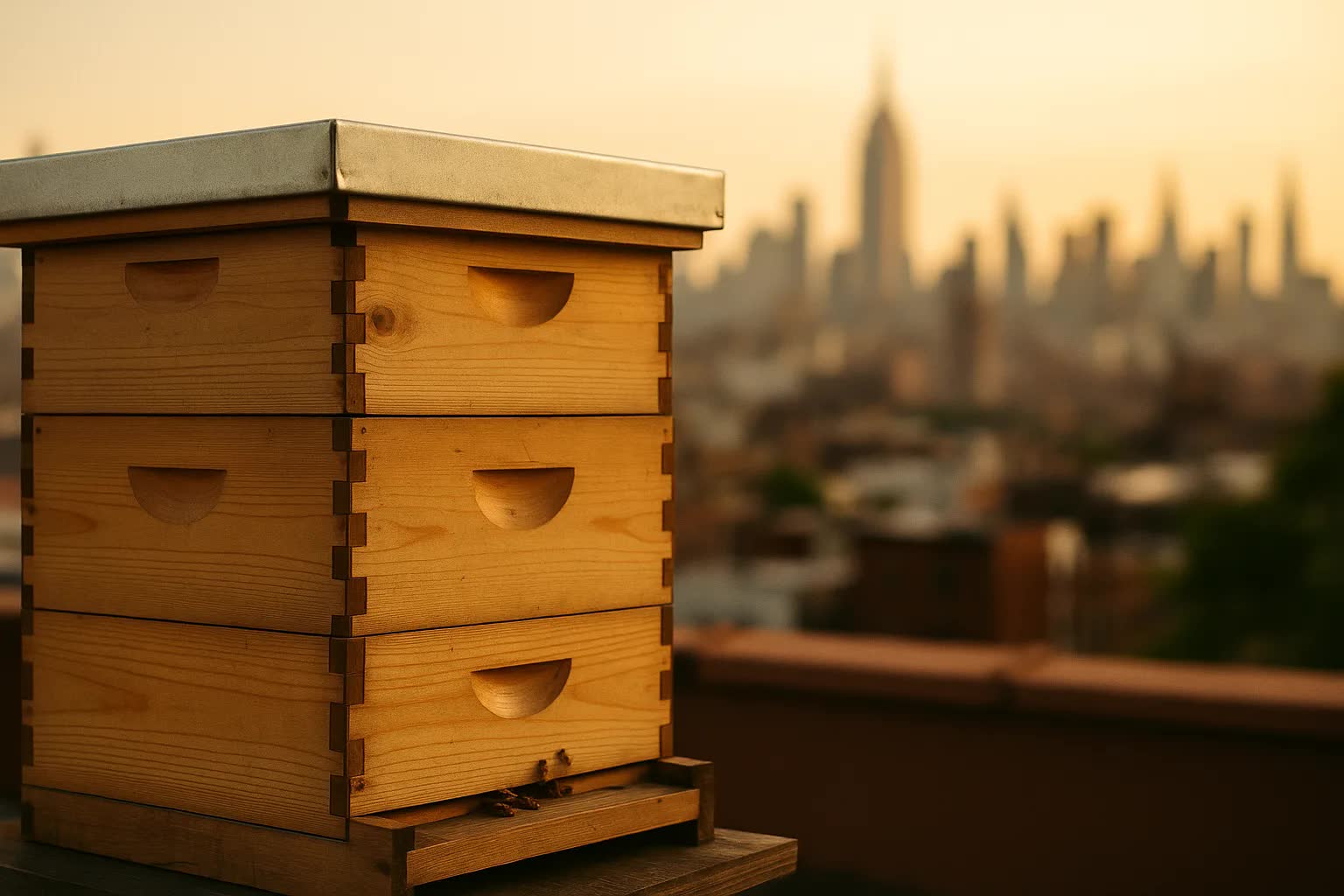
NEW YORK — What began as a niche hobby for a handful of rooftop gardeners in Brooklyn has become a visible element of the cityscape from Williamsburg balconies to Hoboken stoops, as apartment dwellers embrace small-scale beekeeping as an urban conservation practice that must now negotiate permits, building rules and concerns about allergies in dense neighborhoods.
On a fourth-floor balcony off Bedford Avenue in Williamsburg, stacked wooden boxes no larger than garden planters hum amid potted herbs and tomato cages; the keeper, Lina Morales, a preschool teacher who tends three nucleus colonies, said she began as a way to help pollinators and wound up binding community ties. "Neighbors trade lemons for jars of honey and my students learn where food comes from," said Morales, who teaches weekend beekeeping classes for parents and stores her hives behind a privacy screen. "We run strict flight-path training and post signage; it’s about making this work in tight spaces."
Municipal and municipal-adjacent rules have evolved in step with growing interest. The city Department of Urban Agriculture adopted a pilot registry in 2022 and a formal permit program in 2024 that requires inspections, a $75 annual fee and a site plan showing setbacks from play areas, while Hoboken’s zoning board adopted a separate set of operating standards last year. "We had to balance pollinator health with neighbor safety," said Marcus Leung, Hoboken zoning official, who helped draft the Hudson County border measures. "Permits let us standardize training requirements and respond when complaints arise."
Shared hives on rooftops and in community gardens are proving a popular compromise where private balconies are too small or buildings prohibit bees. A dozen co-operative rooftops in Chelsea and a shared apiary atop a condo at the northern edge of DUMBO operate under formal agreements that allocate maintenance duties, harvest shares and liability. "Our model reduces the burden on any one tenant and creates redundancy against disease and loss," said Rosa Jimenez, executive director of the Brooklyn Urban Apiary Coalition, which runs a training-and-stewardship program for co-op boards and landlords.
Concrete numbers show why the systems are emerging: city records and coalition estimates indicate registered urban beekeepers rose from an estimated 420 in 2022 to roughly 1,350 in 2025, a 221 percent increase; the formal permit program issued 512 permits last year, up from 98 during the pilot in 2022. Hoboken reported 64 resident beekeepers in 2025, and the Brooklyn Urban Apiary Coalition tracks 48 shared rooftop hives across Brooklyn and north Jersey. Training programs run by nonprofits reported filling 87 percent of slots in 2025, and 73 percent of pollinator-care responses to public complaints resulted in on-site mediation rather than enforcement action, according to coalition figures.
The rise in backyard and balcony hives is not without conflict: a co-op on W. 72nd Street on the Upper West Side negotiated a temporary relocation when a daycare opened on the ground floor, and a rowhouse owner on Willow Avenue in Hoboken had to agree to move a hive after a neighbor reported multiple stings. Beekeepers and regulators say much of the friction can be reduced with transparency, such as informing tenants, posting hours for hive inspections and installing higher baffles to guide bees upward and away from walkways. "We try to make the invisible visible," said Danya Rivers, a building manager in Park Slope who mediates disputes; "if everyone knows where the bees are and who to call, fights disappear."
There is also an emergent microeconomy around urban honey, bee-sourced products and services. Small vendors such as Greenpoint Apiaries and Hudson Hive, both fictional but typical examples, supply boxed starter hives, protective gear and rooftop installation services; more than two dozen Union Square and Greenmarket vendors now sell city honey, candles and propolis tinctures during weekend markets. "We price by batch and label by neighborhood because terroir matters even in the city," said Elliot Chen, owner of a rooftop installation company that contracts with co-ops and building owners across Manhattan and Brooklyn. "It’s a local product with a conservation story."
Scientific partners have taken notice. Researchers at the New Harbor Institute, a downtown urban ecology center, have mounted studies on overwinter survival, forage diversity and the role of rooftop gardens in expanding floral corridors. "In an urban setting, each balcony blueberry or rooftop meadow adds to a mosaic that helps pollinators weather lean seasons," said Dr. Simone Laurent, an urban ecologist there. Partnerships between nonprofits, grad students and beekeeping groups now map forage deserts and advise where to plant pollinator-friendly species along routes such as the Brooklyn-Queens waterfront and the riverfront greenways in Hoboken.
Practical hurdles remain: insurance carriers sometimes require expanded liability policies for rooftop hives; Varroa mite outbreaks and swarming require rapid treatment; and some historic co-op boards remain wary of puncturing roof membranes or upsetting ornamental plantings. A number of organizations now offer low-cost swarm response and subsidized mite treatments, while apiculture extension programs teach hive weight calculations, proper anchoring and seasonal feeding protocols. "You can’t just drop a box and hope for the best," said Jason Ortega, a veteran urban beekeeper who consults for co-ops; "education, maintenance and neighbor communication are the three legs of the stool."
Looking ahead, advocates and city officials say the trend will continue to reshape how cities think about small-scale conservation: expect more standardized codes across Hudson County, tech-enabled monitoring that alerts keepers to hive stress, and broader rooftop-planting initiatives that extend floral corridors into previously barren blocks. If the past three years are any guide, the next expansion will be as much about governance and neighborhood design as about the bees themselves, a practical interplay between ecology and urban life that will determine whether balcony beekeeping becomes an embedded municipal practice or a patchwork of local experiments.