Basement Comedy Clubs of Manhattan Are Building a New Pipeline
Small, oft-overlooked cellar venues are training writers and performers who are now feeding major stages and writers' rooms.
By Malik Johnson · February 26, 2026 · 4 min read
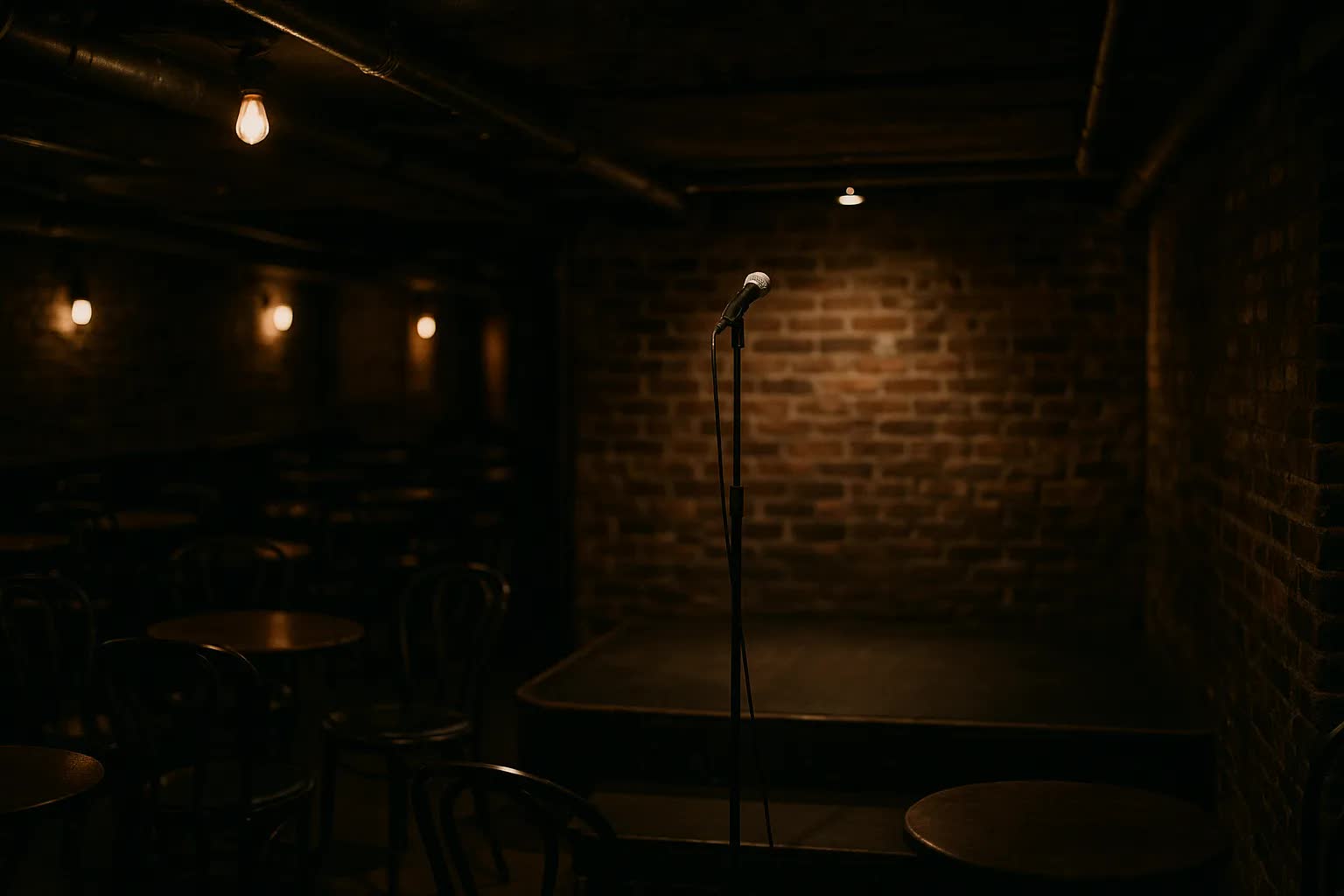
NEW YORK — Down narrow flights of stairs beneath bodegas, deli counters and a shuttered tailor on Bleecker Street and along the West 40s, Manhattan’s basement comedy clubs have quietly become a recruiting ground for the city’s bigger stages and the writers’ rooms that staff streaming shows and new late-night programs, training raw performers and writers in an intimacy that larger venues rarely allow.
For decades, Manhattan’s comedy ecosystem has been associated with well-known stages above ground, but the cellars — unmarked doors, low ceilings, seats that cling close to the mic — are where acts hone risky material and writers test half-formed jokes in front of live audiences. The result, local talent directors say, is a steady pipeline of performers and scribes who arrive on grittier stages ready for higher-profile work.
Owners and curators of those cellar spaces say the intimacy is intentional. "We treat this like a lab, not a theater," said Rosa Mendes, co-founder of The Cellar at Ninth in Chelsea. "People can bomb here and still be hugged afterward. That’s how you get brave writers and bold performers." Mendes runs workshops in the back room on 27th Street near Penn Station and books late-night open mics that producers from uptown and midtown have started attending.
As of February 2026, a survey of city promoters and venue operators conducted by NYDailyWatch shows roughly 28 active basement comedy rooms across Manhattan from the East Village to Hell’s Kitchen, with average seating between 30 and 70 people; about 62 percent of the comedy performers who signed first contracts with Manhattan talent agencies in the past three years reported regular stage time in basement venues, and an estimated 45 writers hired into local writers' rooms over the last 24 months had at least one year of basement-stage experience. Many of the rooms operate on razor-thin margins, with average monthly overhead between $6,000 and $12,000, excluding rent increases that have pushed several spaces to relocate in the last two years.
The programming models vary but share a common ethos. Union Square Underground, a two-night-a-week basement on the East side of Union Square, pairs a 20-minute writers' workshop with each open mic set and brings in a rotating slate of visiting editors. "We’re a finishing school for half-written jokes," said Ethan Frost, talent director at Union Square Underground. "When an editor from a streaming comedy arm sits in the back row and laughs at something messy, that’s proof of concept for both the act and the writer." Frost said producers now routinely book basement showcases to scout entire writing teams in a single night.
Performers who rose through basements describe the scene as a pragmatic boot camp. Marisol Vega, a 32-year-old standup who grew up in Washington Heights and cut her teeth at a basement on Rivington Street, landed a spot in a writers' room for a new sketch series after a program director saw her at a Lower East Side showcase. "You learn how to write to an audience that’s five feet away," Vega said. "If you can get a room laughing under a sloped ceiling and a crackling bulb, you can survive anything on a studio lot."
Scouts and small agencies have adjusted. Northbridge Agency, a Manhattan-based talent collective, runs monthly "basement rounds" to evaluate comics and writers before recommending them to clients. "The traditional filtered pathway through big clubs is clogged and expensive," said Lena Murphy, senior talent scout at Northbridge. "Basements accelerate development. We’ve booked at least 12 writers into staffed positions directly from basement rosters in the last 18 months." Those placements, she said, are driven by platforms hungry for distinct voices and producers looking for writers who already perform their own material.
But the model faces real pressures. Many cellar venues sit below storefronts in neighborhoods experiencing rapid redevelopment, including parts of Greenwich Village and Hell’s Kitchen where landlords reconfigure ground floors for luxury retail or boutique gyms. Complaints about soundproofing and occupancy codes have risen as city inspectors enforce tighter compliance. Mendes and Frost said rising rents and permitting hurdles have already forced three basement rooms to shutter or move north this season, and several landlords are pushing to convert basement spaces into storage or upscale back-of-house operations.
Still, the success stories are multiplying, and organizers are institutionalizing the informal apprenticeship. Coalition nights, where multiple basement rooms coordinate rotating lineups, now bring together curated showcases in Midtown and the Lower East Side aimed specifically at producers and development executives. Agencies, producers and the basements themselves are experimenting with paid residencies, stipends and short-term fellowships to keep promising writers afloat until they land staff jobs. "It’s not just about finding a laugh anymore," said Frost. "It’s about giving writers the time and context in which to build a voice that a showrunner can map onto a writers' room."
Looking ahead, participants say the cellars will likely deepen their role in shaping comedy’s next decade — if they can survive the twin pressures of real estate and regulation. Organizers and talent managers are talking about formal alliances, pooled grants and partnerships with Manhattan arts institutions to preserve performance space; comedians argue that the city’s culture depends on keeping these experimental rooms viable. "What’s happening down there is not small-time anymore," Mendes said. "These basements are where the next generation of writers and stars are being made, and if Manhattan wants to keep leading the culture, it has to recognize that the pipeline lives below street level."