Bergen Logistics Parks Promise Same-Day Delivery for NYC Retailers
New suburban warehouse developments in Bergen County court Manhattan merchants with faster shipping windows and lower per-square-foot costs than city facilities.
By Isabella Morales · April 5, 2026 · 4 min read
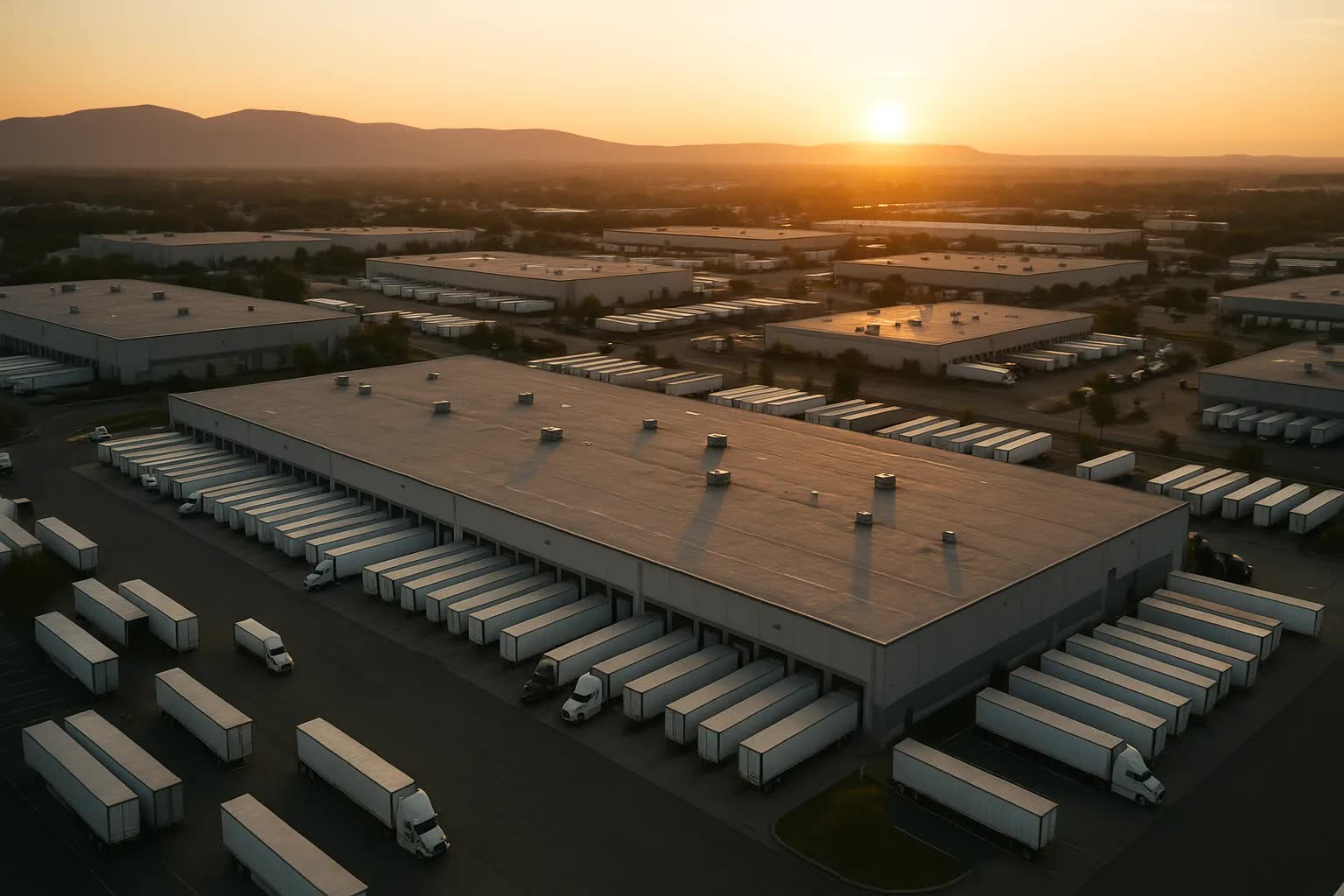
For Manhattan merchants whose customers expect packages before dinner, a new cluster of logistics campuses in suburban Bergen County is promising to turn patience into profit: same-day delivery windows from facilities in Paramus, Ridgefield Park and Hackensack that developers say will shave hours off current fulfillment times and undercut city warehouse rents. Store owners from the Lower East Side to Chelsea and Williamsburg say the arrangement could finally allow them to advertise next-day or even same-day shipping without the heavy premiums charged for scarce last-mile space inside Manhattan.
Bergen Logistics Parks, a joint venture led by Harborline Development and Meadow Partners, has started leasing three cross-dock facilities along Route 17 and the New Jersey Turnpike feeder corridors that are optimized for rapid unload, sort and dispatch to Manhattan's five boroughs. The development includes a network of inland 'micro-hubs' — smaller, 10,000- to 30,000-square-foot facilities — and partnerships with local couriers to handle the last mile into neighborhoods such as the West Village, East Village and the Upper East Side.
The scale of the buildout is significant: the three main sites total roughly 3.2 million square feet of distribution space, with 420 dock doors, room to stage about 1,200 delivery vans and an initial fleet of 350 electric last-mile vehicles contracted through ElectraCargo. Leasing rates at the Bergen Parks are being marketed in the $8 to $12 per-square-foot range for large footprints, compared with conversions and rooftop facilities inside Manhattan that can command $65 to $120 per square foot. Harborline projects that, with optimized routing, same-day deliveries to Midtown and Lower Manhattan will run 60 to 90 minutes from dispatch, slashing average fulfillment times by up to 40 percent for some retailers.
Retailers say the numbers translate into concrete changes in how they stock and sell. "When a customer in Chelsea orders a dress in the morning, we no longer have to choose between overnight air and expensive in-city warehousing — Bergen gives us both speed and a lever on cost," said Marco Alvarez, executive director of the Manhattan Merchants Alliance. "For independent shops on Bleecker Street or Canal Street, that difference can be the margin between expanding their online presence and staying strictly brick-and-mortar."
City planners and transportation experts caution that a suburban-to-city push on logistics will transfer pressures to Manhattan's streets and curbs if not carefully managed. "The infrastructure for moving goods is not just about how close you are, it's about how and where trucks can load once they arrive," said a senior New York City Department of Transportation planner who requested anonymity. "If curbside management, loading zones and signal priority aren't scaled for this influx, you'll see more double-parking and local congestion, particularly around high-density retail corridors like 34th Street and along the FDR Drive frontage roads."
Logistics operators are aware of those constraints and say technology and route planning will be central to avoiding new headaches. ParcelShift, a regional carrier contracted across the Bergen sites, has built dynamic routing software to send smaller vans into delivery windows tied to Midtown congestion patterns; BlueWire Logistics, another partner, plans to operate night cross-docks to feed daytime micro-fulfillment centers in neighborhood locations such as DUMBO and Red Hook. Several retail clients in the Garment District and SoHo have already signed pilot agreements for inventory pooling and evening dispatch to test the systems.
For property owners and investors, the push is reshuffling value in the industrial market. Commercial brokers say demand for suburban last-mile sites has pushed vacancy in Bergen's industrial corridors down to single digits over the past 18 months, even as Manhattan industrial conversion projects continue to face sky-high construction costs and zoning constraints. "We're seeing regional retailers that used to pay premium prices for tiny Manhattan footprints now opt for larger, more efficient New Jersey space paired with local micro-hubs — the math is compelling," said Eleanor Park, managing director at NorthRiver Realty, which advised several recent lease deals at the Ridgefield Park site.
But community and labor groups are watching closely. Elected officials in Paramus and Ridgefield Park have demanded traffic mitigation agreements and noise limits as part of approvals, and local unions are pushing for standards on wages and hiring practices tied to the new contracts. "We support reducing emissions and improving delivery times, but not if it comes at the cost of decent jobs or more unsafe truck traffic in residential areas," said Amelia Ross, head of the Bergen County Transport Workers Coalition, at a recent public hearing. Some neighborhood associations in Hackensack have also urged the developers to fund quieter loading docks and additional landscaping buffers along state Route 17.
Environmental commitments are part of the pitch. Harborline says the Bergen Parks will host charging depots sized for up to 600 electric vans and install solar canopies on rooftops to offset facility power use; developers project a 25 percent reduction in carbon intensity per package compared with conventional diesel-heavy last-mile models. Several Manhattan retailers, including boutique grocers and independent fashion houses, have signed on to the EV-enabled deliveries as a consumer-facing sustainability claim, saying it helps with branding in areas like Williamsburg and the Upper West Side where environmental standards matter to shoppers.
As pilots move from planning to pavement over the next 12 to 18 months, the Bergen-to-Manhattan experiment will test whether suburban scale and technological orchestration can satisfy the city's appetite for speed without adding friction to neighborhoods and streets. If the early leases and carrier partnerships hold, Harborline and its partners expect to expand another 1.5 million square feet in northern Bergen and Hudson counties within three years; city regulators and merchant groups say they will be watching the data closely to see whether promised delivery times, emissions cuts and traffic mitigations materialize before any wider rollouts are approved.