Beyond Fashion: Iris van Herpen's Sculpting the Senses
At the Brooklyn Museum, more than 140 works from the Dutch couturier reveal a practice that spans art, science, and engineering — garments that read as sculpture, biological specimen, and speculative technology at once.
By Lanney Jing · August 3, 2026 · 7 min read
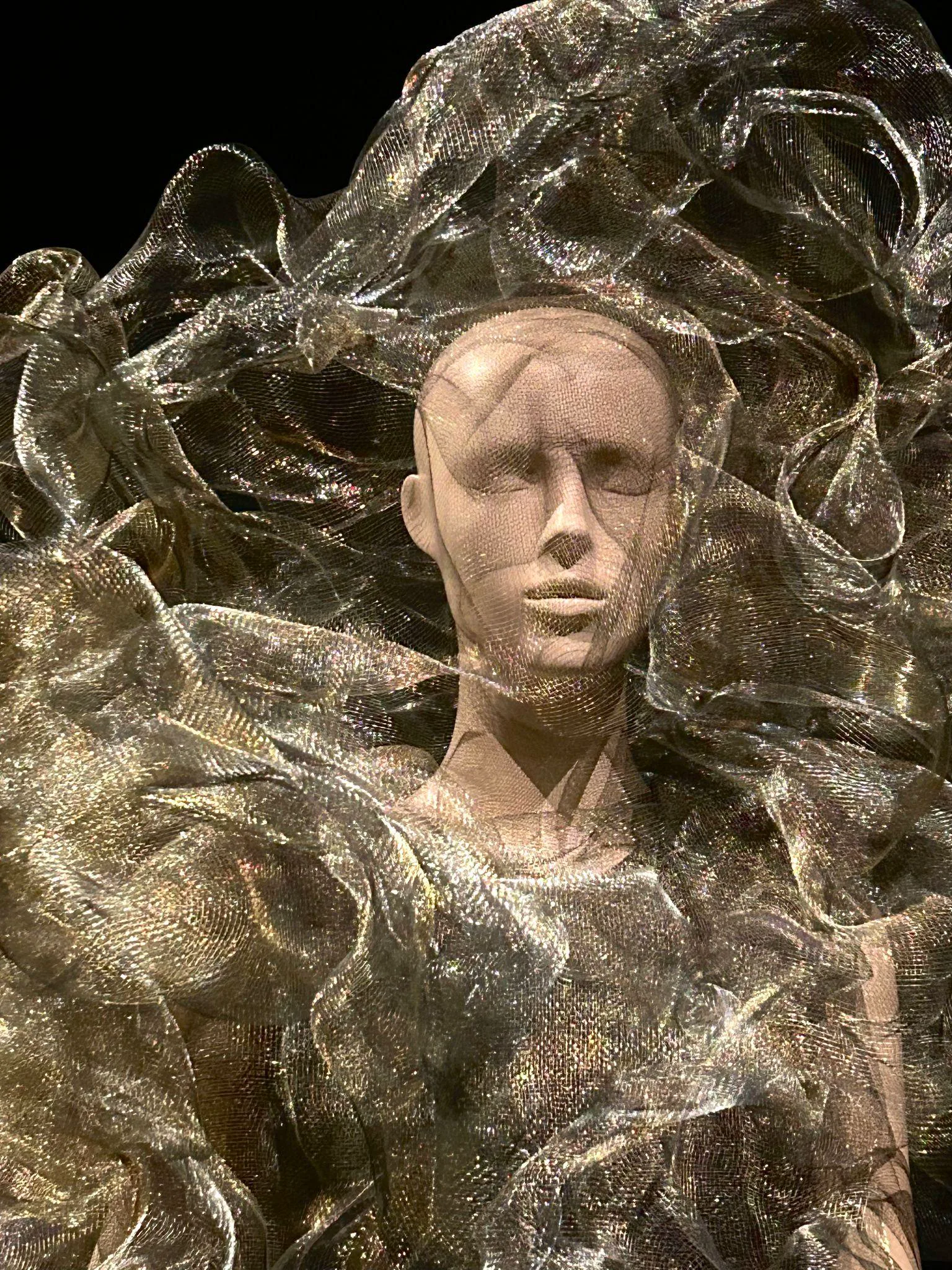
To describe Iris van Herpen simply as a fashion designer is to underestimate the scope of her practice. The Dutch couturier operates simultaneously as an artist, researcher, engineer, and environmental thinker, producing garments that exist somewhere between sculpture, biological specimen, and speculative technology. Iris van Herpen: Sculpting the Senses, currently on view at the Brooklyn Museum, brings together more than 140 works from nearly two decades of experimentation. Drawing on disciplines ranging from neuroscience and anatomy to marine biology, fractal geometry, and astronomy, Van Herpen transforms scientific inquiry into haute couture. The exhibition reveals a designer whose ultimate subject is not fashion itself, but the relationship between the human body and the larger systems — natural, technological, and cosmic — in which it exists. Following this introduction, the exhibition unfolds as a journey through different scales of nature, moving fluidly from oceans and microorganisms to anatomy and the cosmos.
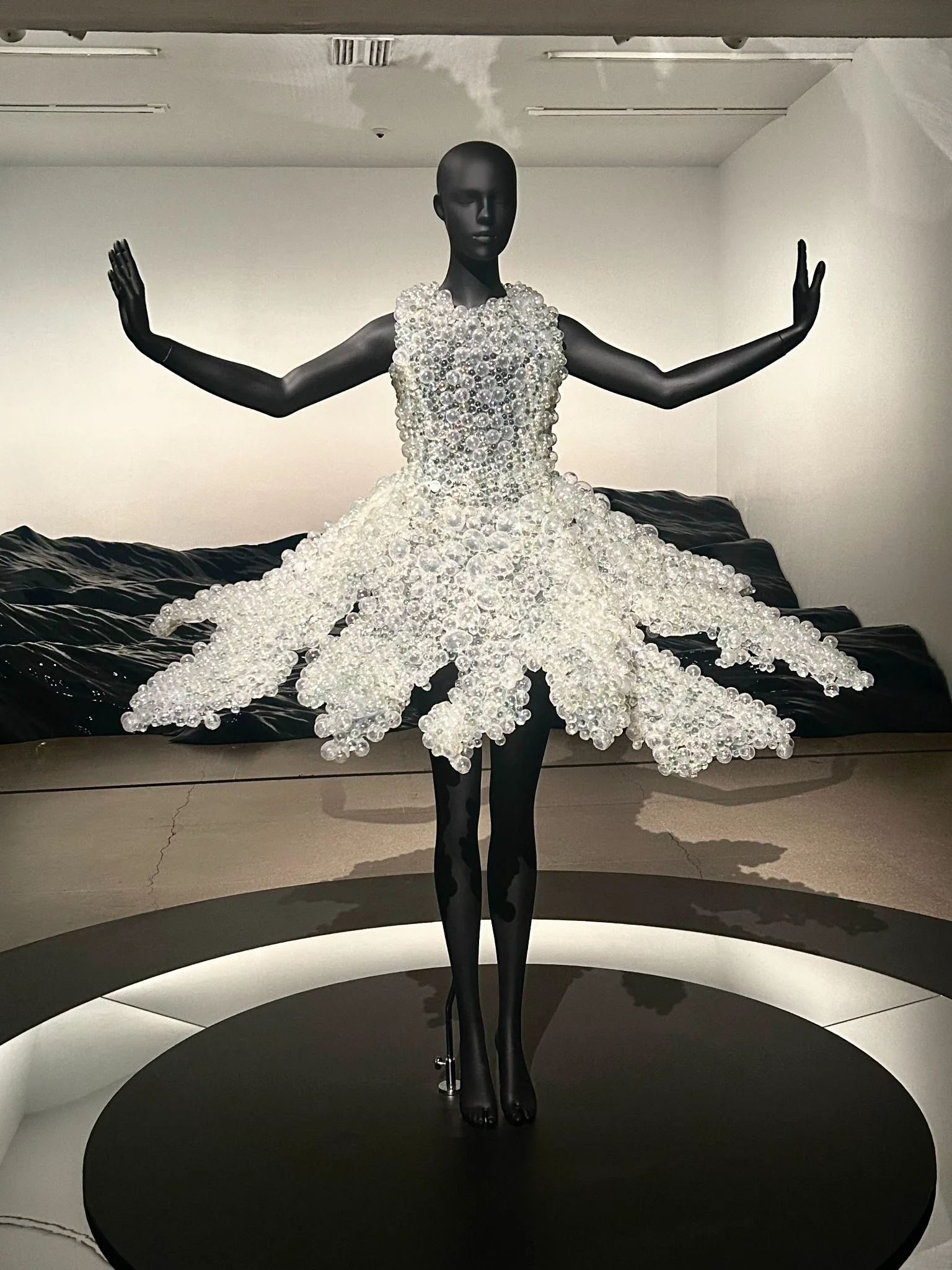
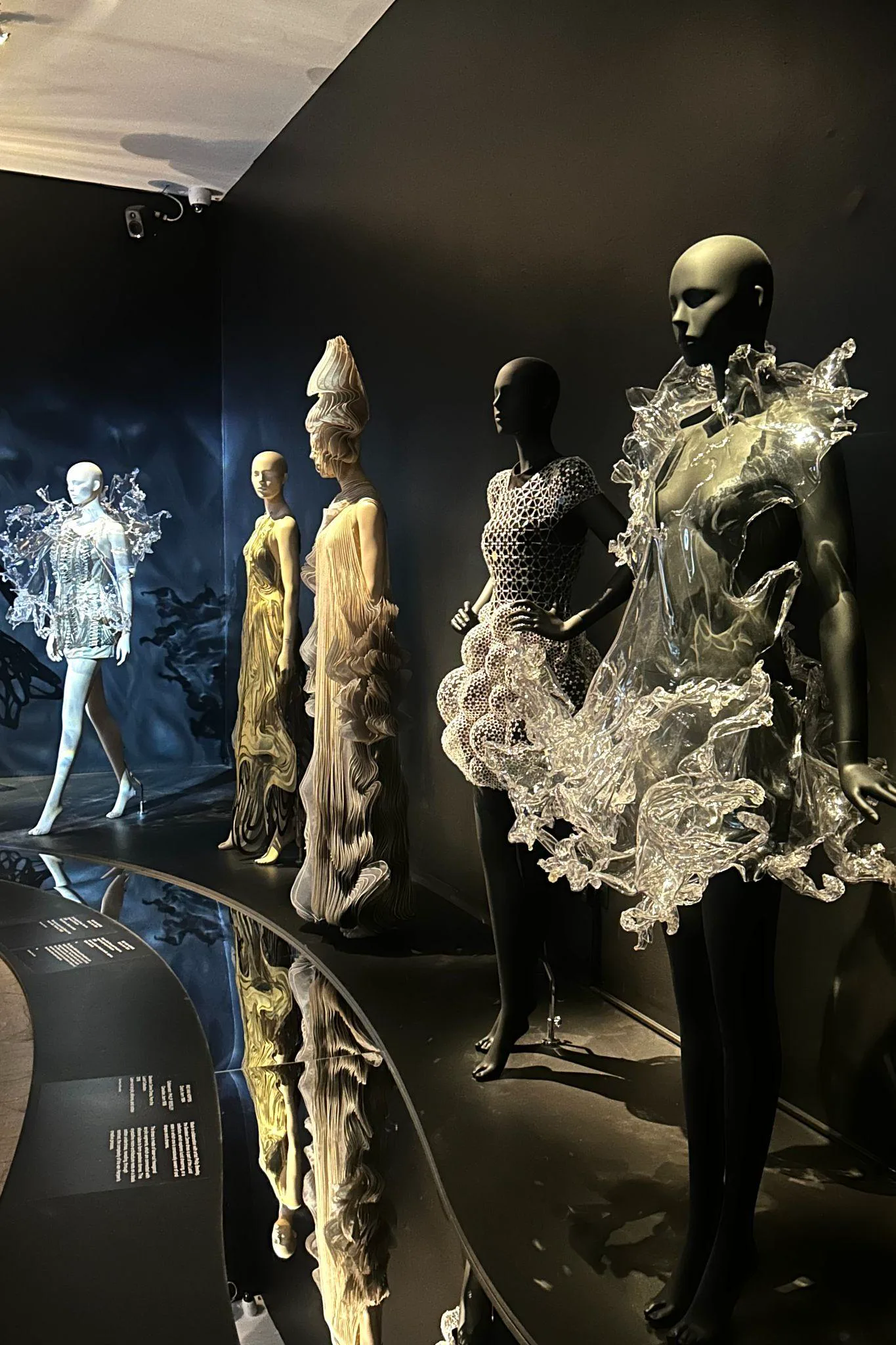
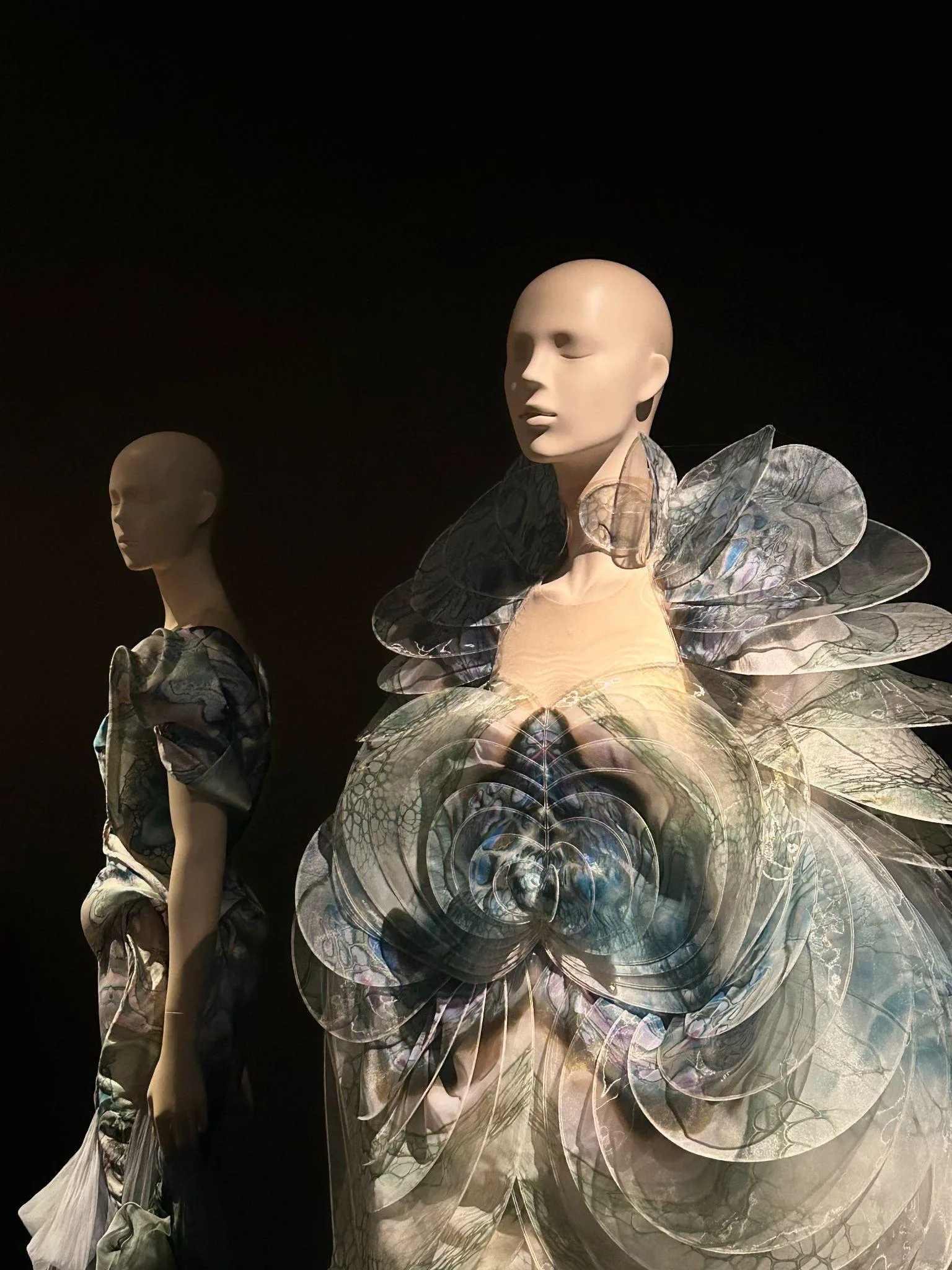
The opening gallery centers on water and the ocean, introducing one of the most persistent themes in Van Herpen's work: movement. Rather than merely depicting water, her garments appear to preserve its physical behavior. Swirling forms, translucent materials, and layered textures capture the fluidity of waves, currents, and bubbles in motion. Among the most striking pieces is a dramatic bubble dress from one of her best-known couture series — the same body of work that gained widespread public attention when Olympic skier Eileen Gu appeared in a related Iris van Herpen design at the Met Gala. Ethereal and meticulously crafted, the garment seems suspended between fashion and fantasy, transforming a fleeting natural phenomenon into a sculptural object. The collection demonstrates Van Herpen's remarkable ability to translate the intangible qualities of water into material form, allowing movement itself to become visible.
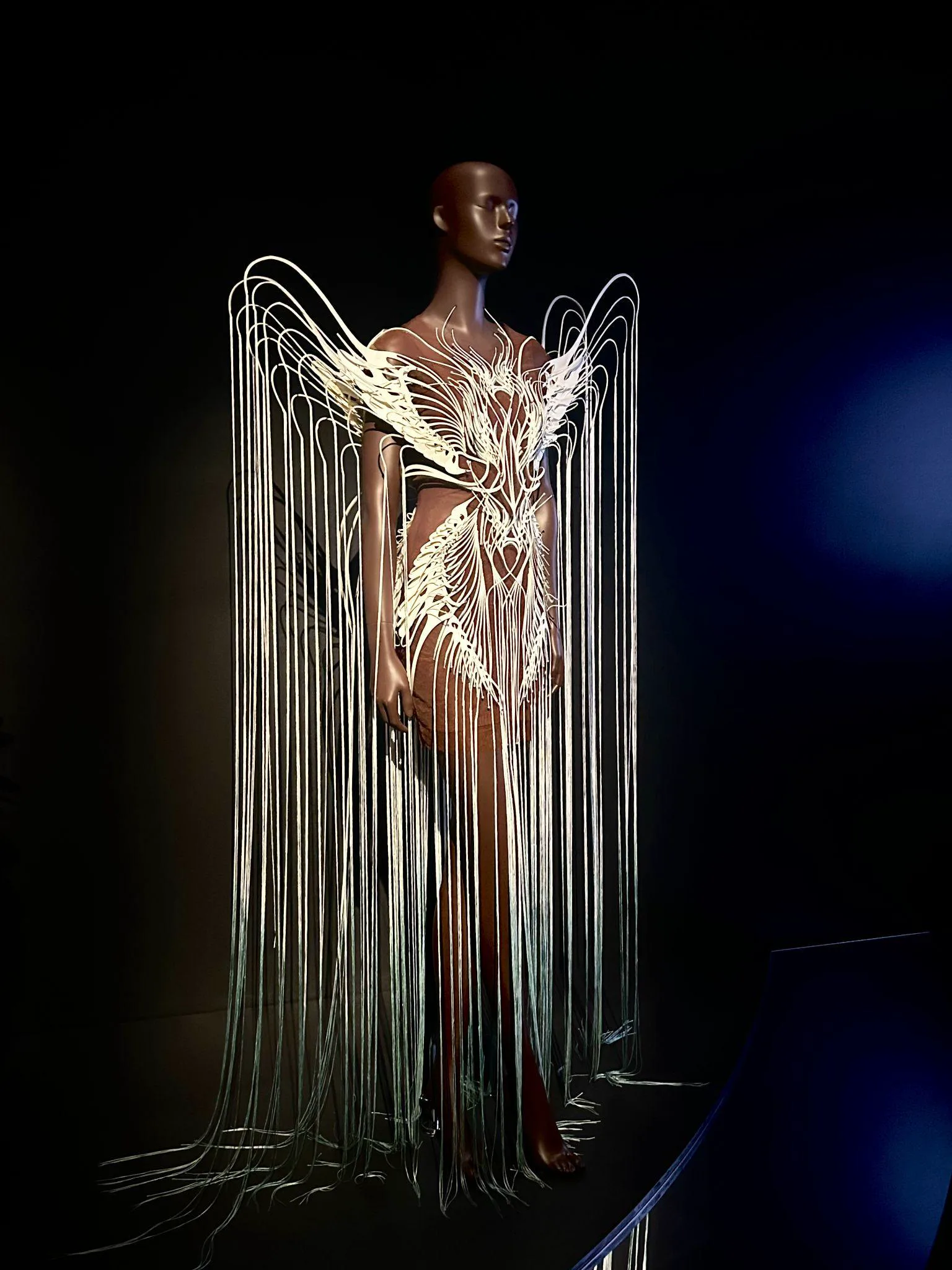
The exhibition then expands beyond the ocean to explore the broader natural world. Here, organisms and biological systems become sources of design inspiration. One particularly memorable work is the Arachne Bodice, inspired by the anatomical structure of spiders. Rendered entirely in white, the piece avoids visual excess while remaining extraordinarily complex. Its intricate network of lines and layered construction evokes both biological precision and architectural elegance. The garment reveals Van Herpen's fascination with natural systems, showing how patterns found in living organisms can be transformed into sophisticated works of couture without losing their scientific origins.
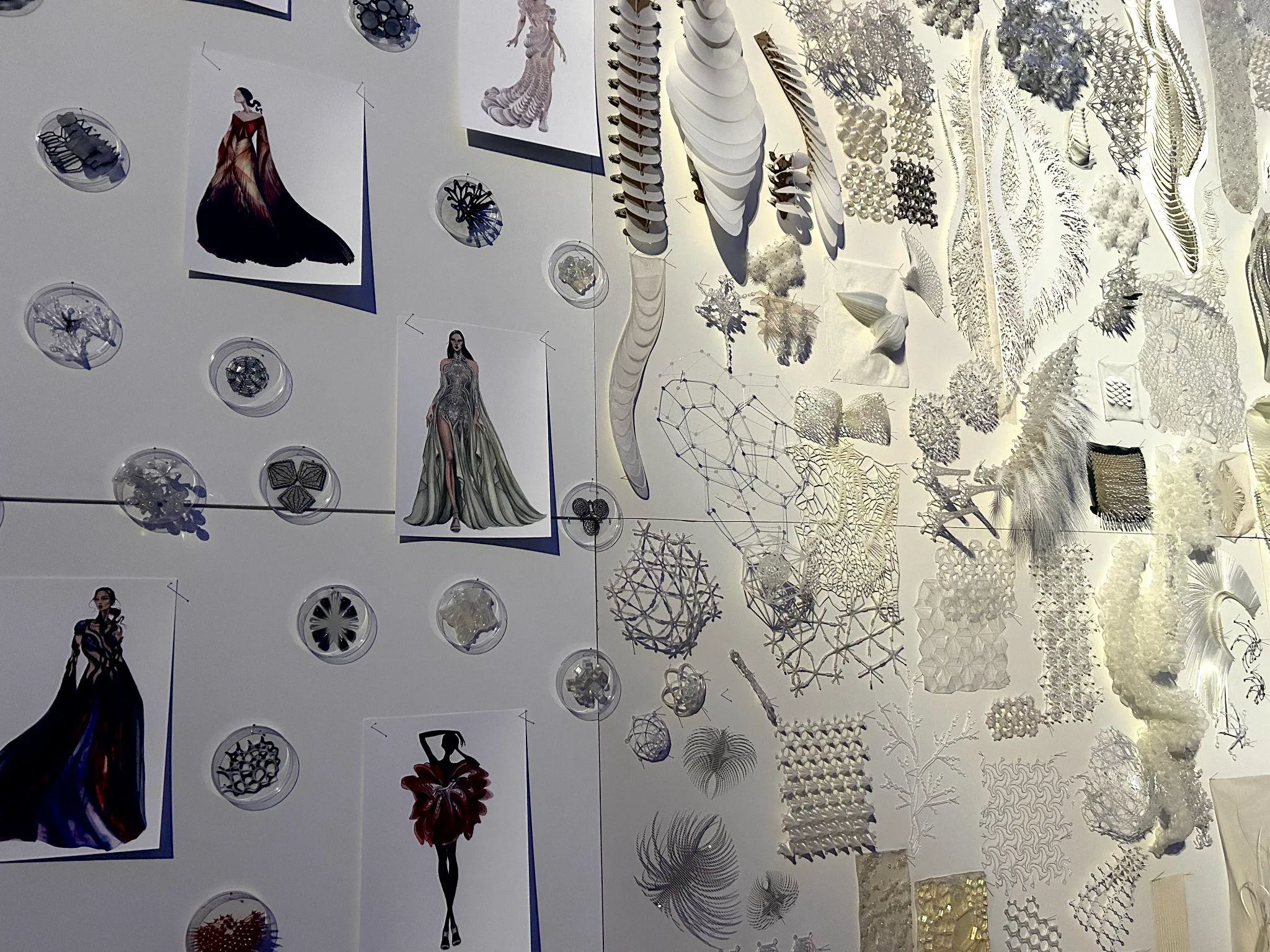
Perhaps the most compelling section of the exhibition focuses not on finished garments but on the designer's creative process. Sketchbooks, material samples, experimental prototypes, and research documents reveal the extensive investigation underlying each collection. This gallery presents Van Herpen not only as a designer but also as a researcher. Interactive displays, including a microscope available for visitors to explore, emphasize the importance of observation and experimentation within her practice. The microscopic world emerges as a recurring source of inspiration, with cellular structures, organic formations, and invisible patterns informing many of her designs. Seen through this lens, fashion becomes a method of enlarging and interpreting the hidden beauty of nature.
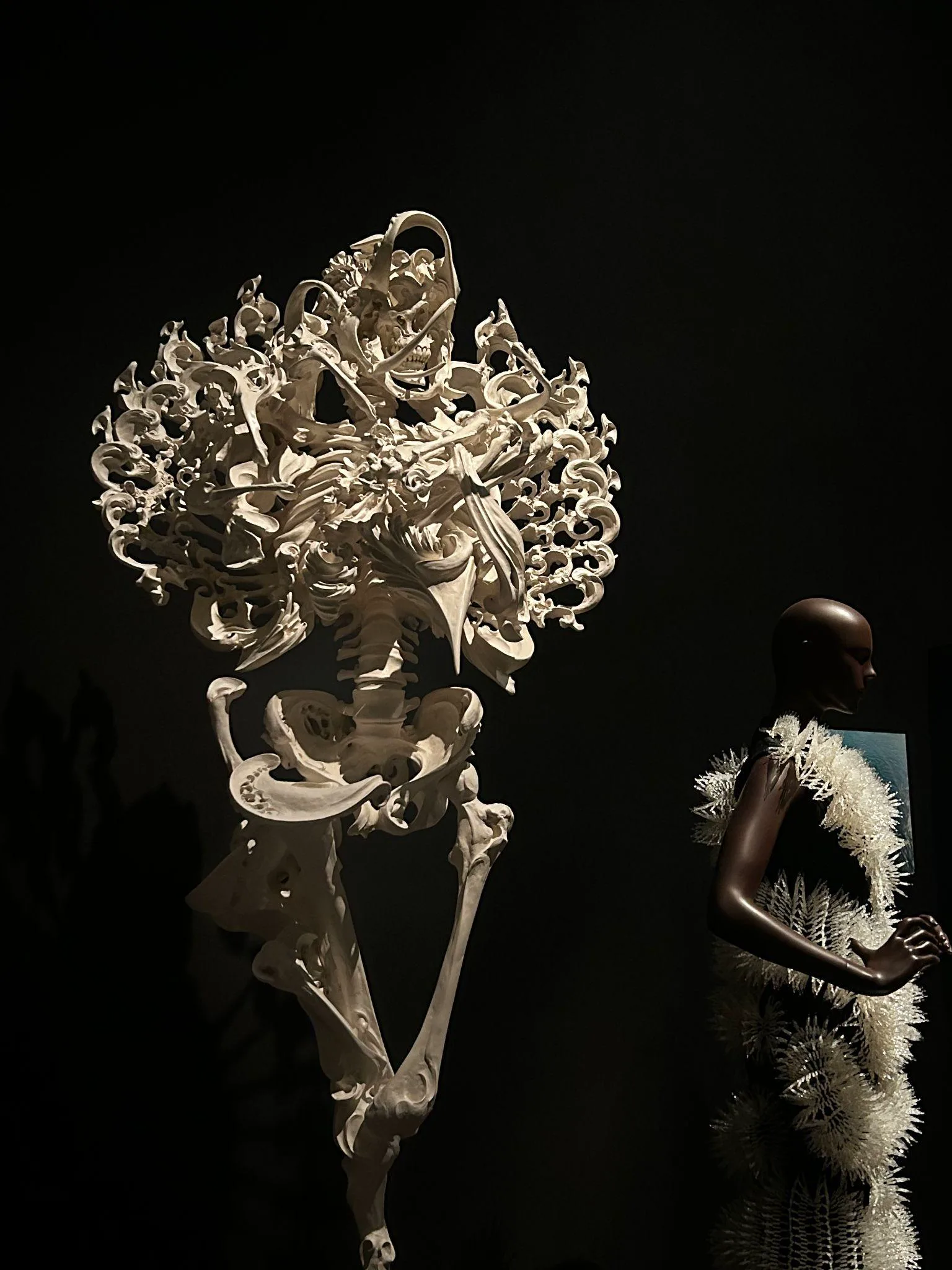
From there, the exhibition turns inward toward the human body itself. Drawing on anatomy and skeletal structures, Van Herpen creates garments and sculptural forms that feel simultaneously organic and otherworldly. Bones become decorative motifs, their arrangements transformed into elaborate patterns that cover and shape the body. These works possess a distinctly Gothic atmosphere — mysterious, elegant, and slightly unsettling. The garments often seem to belong to an unknown species rather than to humanity alone, challenging familiar distinctions between beauty and unease. By transforming anatomical structures into ornament, Van Herpen reveals the aesthetic possibilities hidden within the body's internal architecture.
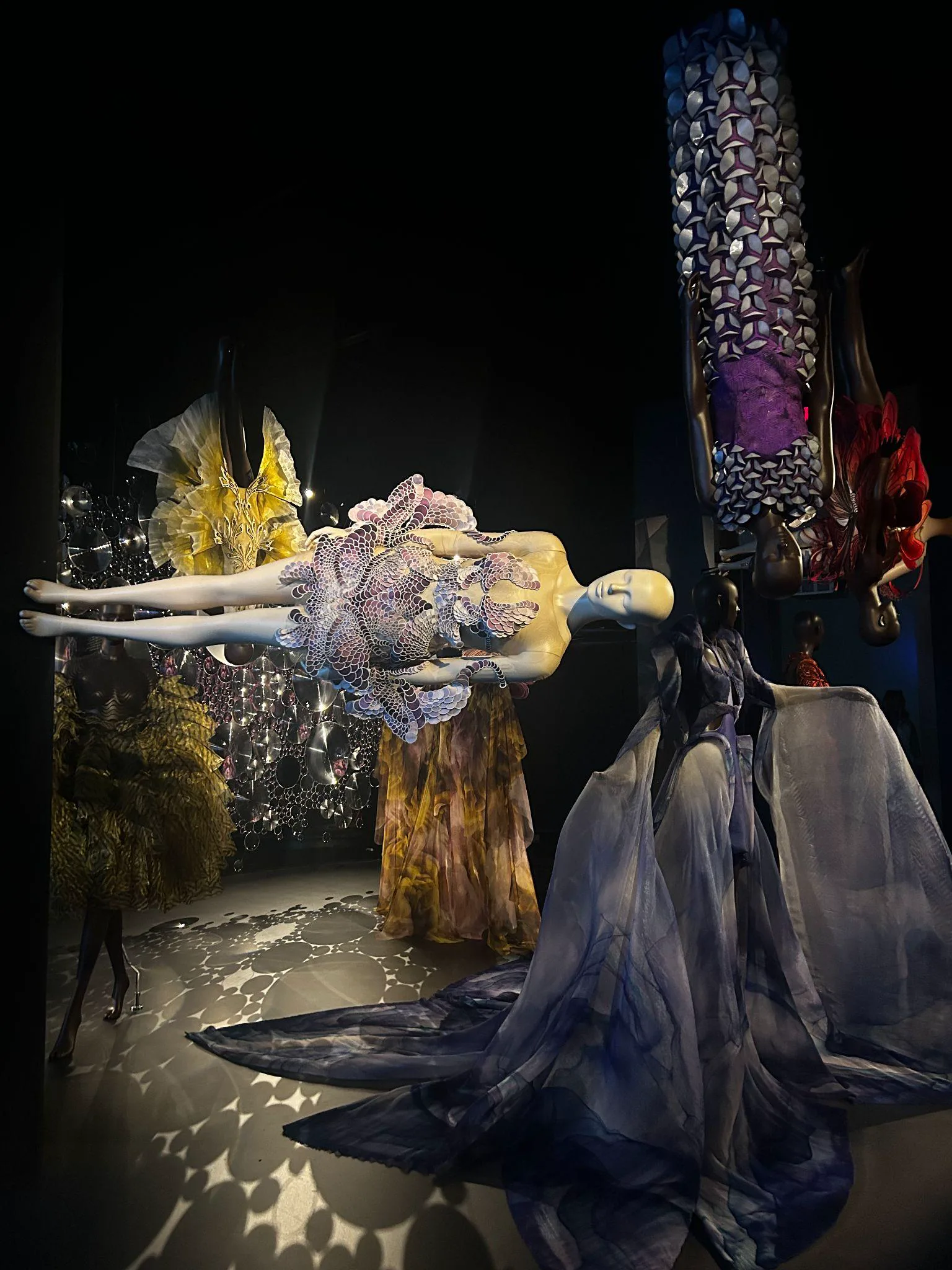
The final galleries broaden the exhibition's perspective even further, examining humanity's place within space and the universe. A particularly memorable video installation features a model dressed in one of Van Herpen's deep-blue creations, floating weightlessly above a distant Earth. Against the immense scale of the cosmos, the planet appears fragile and insignificant. The work evokes both wonder and vulnerability, reminding viewers of humanity's small place within a much larger system. This theme extends into the exhibition design itself. Mannequins are positioned in unexpected orientations — attached sideways to walls or suspended from ceilings — creating the sensation that gravity has been suspended. The human body is no longer portrayed as fixed and stable but as something capable of existing in entirely new spatial relationships.
Ultimately, Iris van Herpen: Sculpting the Senses is not an exhibition about fashion alone. While the craftsmanship and aesthetic achievement of the garments are extraordinary, the exhibition's deeper significance lies in its exploration of the relationship between humans and the natural world. Throughout the galleries, oceans, insects, microscopic organisms, skeletons, and planets are placed within the same conceptual framework. Van Herpen's work suggests that humanity cannot be understood in isolation; instead, we exist as part of an interconnected system that spans from the smallest cellular structures to the vastness of the universe. Her garments therefore function not merely as clothing but as philosophical reflections on where we belong within nature and how we might imagine our future within it.