Bicycle Courier Startups Multiply Along the Hudson as Road Costs Rise
Lower operating expenses and faster last-mile deliveries are fueling new courier services operating between Manhattan and Hudson waterfront hubs.
By Samuel Green · December 8, 2025 · 4 min read
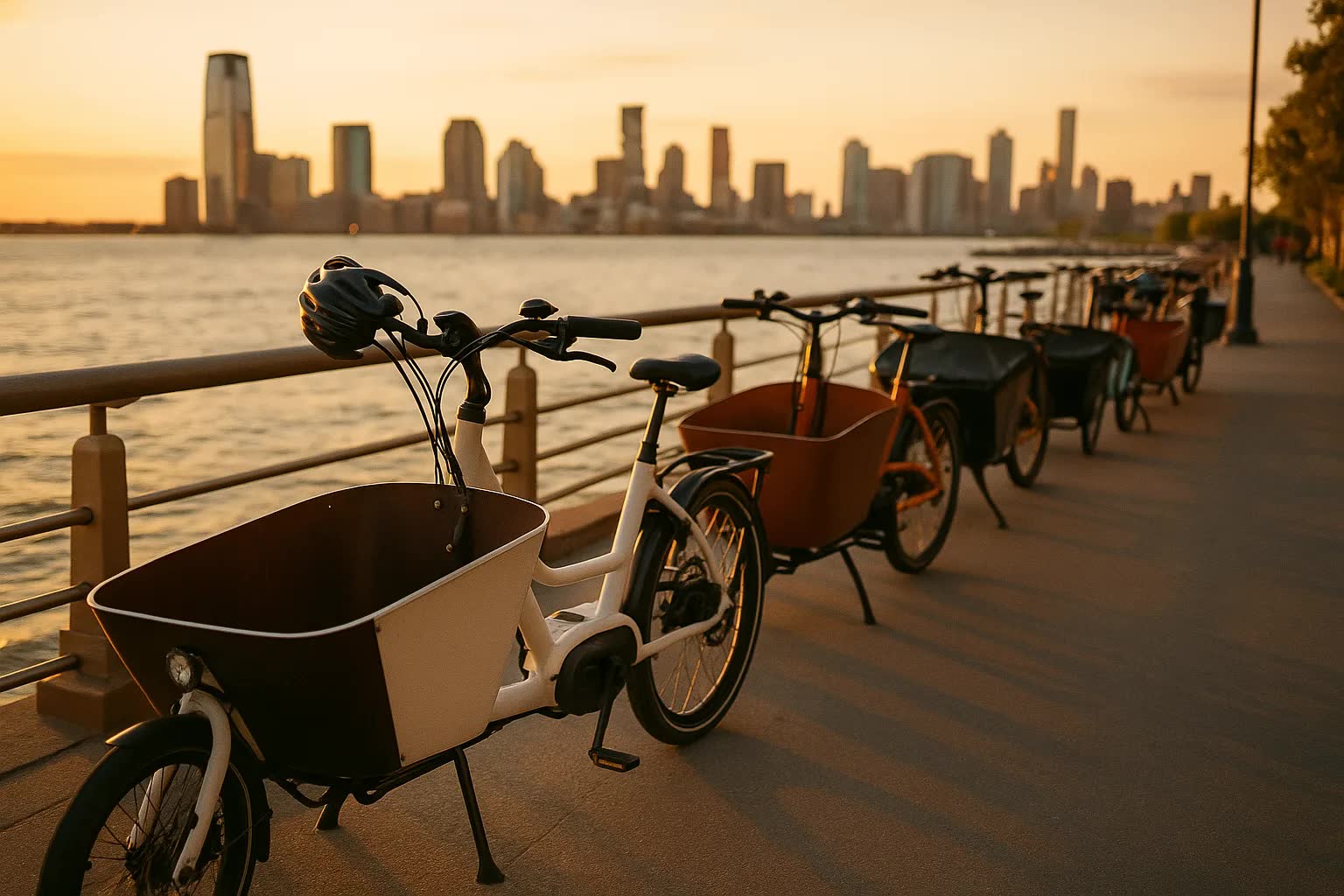
On a gray December morning, a parade of fluorescent jackets and battery hums threaded the narrow gap between Hudson River piers and Manhattan’s clogged West Side Highway, signaling a shift in how packages and restaurant orders move through the city; as road tolls, parking fines and fuel costs bite into margins for van-based delivery firms, a new generation of bicycle courier startups has multiplied along the Hudson waterfront, promising lower operating expenses and faster last-mile service between Manhattan and New Jersey hubs.
The startups cluster where piers and ferry terminals concentrate freight and foot traffic: from Hudson Yards and the High Line area near Chelsea to the Meatpacking District, Tribeca and Battery Park City on the Manhattan side, and Hoboken, Jersey City and Edgewater across the river. Firms such as HudsonRun Couriers, RiverRoute Logistics and PierExpress operate on dense, sub-three-mile radii, using e-bikes, cargo trikes and modular pannier systems to shuttle everything from legal documents to multi-course restaurant meals.
“We went from one van and three drivers to a fleet of 28 e-bikes in 18 months because the math makes sense,” said Miguel Alvarez, founder and chief executive of HudsonRun Couriers, standing outside Pier 57 as riders loaded insulated boxes. “Between West Street congestion and escalating tolls through the Lincoln Tunnel, bikes get the deliveries done on time and at a fraction of the cost — and our customers notice the difference in speed and reliability.”
The economics are stark on paper: firms operating along the Hudson corridor report a 60 percent decline in per-delivery operating cost compared with small vans when factoring fuel, tolls and parking fees. An internal survey of 12 courier startups conducted this fall by a local trade group counted 27 such companies operating between 14th Street and Battery Park City on the Manhattan waterfront and Hoboken to Jersey City across the Hudson — employing roughly 420 couriers. Average last-mile travel time fell from 22 minutes to 13 minutes within the two-mile radius that accounts for 72 percent of their trips, and the startups estimate that converting a single van route to an e-bike fleet reduces annual operating expenses by about $45,000.
For the riders, the work is both freeing and precarious. Sasha Moreno, 28, who has ridden for RiverRoute out of a Jersey City hub for two years, said the tradeoffs are clear. “You get paid per drop, so speed matters, but there’s more autonomy than you see in courier unions of old,” she said. “In Chelsea you can often make three drops in the time a van parks and pays a meter. But in the winter, the rain and wind make it a different sport altogether.” Riders praised new protected lanes near the High Line and along 10th Avenue but cited icy ramps at Pier 25 and delivery bottlenecks around Canal Street.
City infrastructure changes are reshaping routes. The Department of Transportation’s recent expansion of protected bike lanes along West Street and the extension of curbside loading pilots at Pier 57 have encouraged growth but also revealed policy gaps. “We see the private sector innovating where curbside management has lagged,” said Anuska Patel, deputy commissioner for freight and street management at the New York City Department of Transportation. “Our challenge is to scale protections for micromobility while balancing commercial loading needs and sidewalk safety.”
Small businesses along the waterfront are switching partners fast. At La Pescadería in Chelsea Market, owner Lucia Ramos said she turned to three separate bike couriers after repeated parking violations cost more than what she was saving on a cheaper van service. “Our fish arrives fresher and customers get it faster,” Ramos said. A West Village independent bookstore, Paper & Ink, reported cutting same-day delivery times in half after shifting to a subscription-based plan with PierExpress, and several downtown restaurants say bicycle couriers help preserve table turnover during dinner rushes by shaving 10 to 20 minutes off delivery estimates.
Despite the momentum, challenges remain: winter weather suppresses rider availability, cargo bikes carry limited volume for wholesale deliveries, and theft and vandalism of e-bikes on waterfront piers have increased insurance premiums. Coordination across the Hudson brings its own complications — commercial regulations differ between New York and New Jersey, and some startups say inconsistent enforcement at ferry terminals and municipal loading zones can cost them hours in processing time. “There’s not yet a unified playbook for cross-jurisdiction micrologistics,” said a senior MTA planner who requested anonymity, noting tensions when couriers try to use transit infrastructure during peak ferry hours.
Investors and manufacturers are taking notice. Several startups have closed early funding rounds, and a regional mobility fund led a $3.5 million seed investment in RiverRoute this spring to scale e-bike leasing programs and warehouse lockers at Hoboken Terminal; HudsonRun reported achieving break-even on select Manhattan routes within 10 months of startup thanks to lower capex. Vendors now offer lease-to-own battery packs and swap-station networks; courier firms estimate capital expenditure per e-bike at $3,200 to $4,500 depending on cargo configuration, with monthly maintenance averaging $45 to $70 per unit.
As New York’s waterfront continues to densify with offices, labs and residential towers, bicycle courier startups see both opportunity and pressure to evolve. Some leaders are experimenting with larger cargo trikes for midday wholesale runs, strategic partnerships with ferry operators for cross-river staging and aggregated subscription models for neighborhood merchants. City officials and industry representatives say the coming year will test whether regulatory modernization, investment in protected infrastructure and winter-ready equipment can sustain growth beyond the warmer months — a necessary step if two-wheeled logistics are to become a permanent fixture on the Hudson corridor.