Biotech Startups at Brooklyn Navy Yard Hit a Lab-Space Crunch
With demand for wet labs surging, small biotech firms are scrambling for space as costs and regulatory buildouts push many to the outskirts of the region.
By Tarek Mahmoud · February 9, 2026 · 4 min read
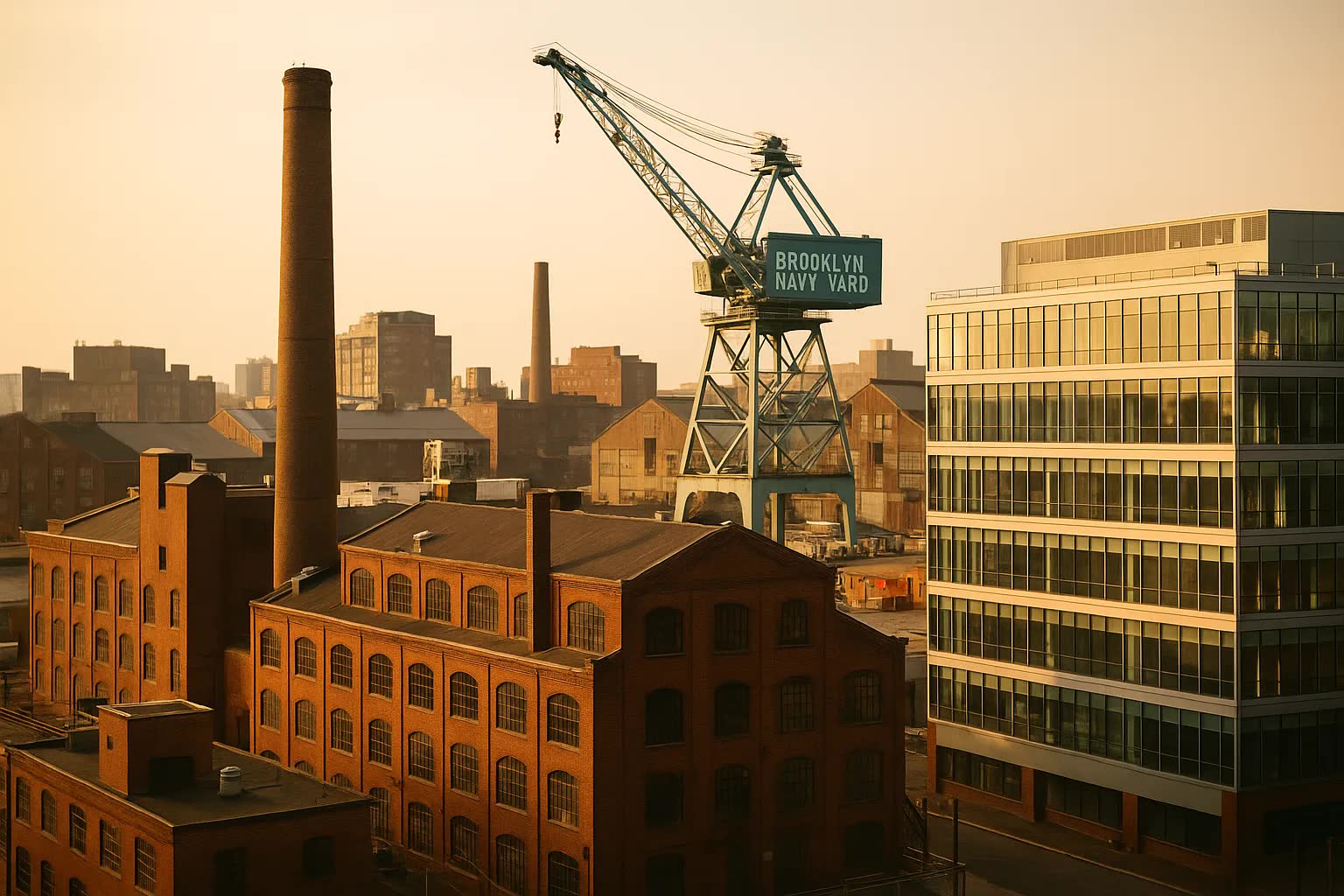
NEW YORK — A squeeze on specialized laboratory space at the Brooklyn Navy Yard is forcing a wave of small biotech companies to choose between prohibitively expensive buildouts in the borough and moving operations to the region’s periphery, a shift that threatens to reroute the city’s emerging life-science cluster just as it was beginning to take hold.
The Navy Yard, a 300-acre industrial campus off Flushing Avenue and Kent Avenue that has been recast over the last decade as a hub for makers and tech firms, has become ground zero in the city’s wet-lab crunch. Developers and tenants say the structural demands of wet labs — reinforced floors, enhanced ventilation, specialized plumbing and redundant power — have made conversions costly and slow. Startups from DUMBO and Vinegar Hill to Williamsburg and Gowanus report that the list of available ready-to-use bench space is shrinking fast.
“We started Novafold Labs in a co-working bench space on Dock Street last year, but we were given 60 days’ notice when the landlord decided to pursue a larger tenant,” said Dr. Elena Park, founder and CEO of Novafold, a three-year-old gene-editing startup that had to relocate equipment to a shared facility in Newark. “We want to stay in Brooklyn — our hires live here, our collaborations are local — but the capital required to retrofit a space into a true wet lab is more than our last two funding rounds combined.”
The numbers underline how acute the shortage has become. Industry estimates compiled by a local real estate advisory show that available wet-lab space in Brooklyn’s primary biotech corridor declined by roughly 35 percent between 2022 and 2025, leaving a sub-5 percent vacancy rate in multi-tenant lab buildings. Average fully furnished wet-lab rents range from $90 to $120 per square foot annually, while tenant fit-out costs vary from $400 to $700 per square foot depending on scope. The typical permitting and regulatory approval process for a new lab buildout has stretched to nine to 14 months, according to developers surveyed.
“This is a regional infrastructure problem, not just a Navy Yard problem,” said Marcus Ruiz, executive director of the Brooklyn Biocluster, a nonprofit trade group that tracks lab development and workforce needs. “You need to plan for redundant utilities, hazardous-waste handling and long-term ventilation systems; that takes money and time. Smaller companies can’t amortize those upfront costs, and when they can’t, they look to Hudson County or the north corridor, which undermines the network effects that come from proximity.”
The consequences are visible on the ground. Sunset Park’s Industry City has added a handful of lab-ready suites and large-scale cold storage, while mixed-use buildings along Flushing Avenue and the Navy Yard’s Building 92-style machine shops have been pitched toward life sciences. At the same time, companies such as Novafold are splitting staff between a small bench in Brooklyn and larger bench-and-equipment footprints in Newark, Jersey City or Yonkers. Commuting patterns shift; scientists who once lived in Brooklyn neighborhoods like Brooklyn Heights and Park Slope are now making daily trips to New Jersey or Long Island.
City-backed and private efforts are trying to blunt the exodus. The Navy Yard Development Corporation has launched a streamlined review program for lab modifications, according to a spokesperson, and is underwriting a shared lab facility intended to house 20 early-stage teams. “We recognize that lab startups need flexible, lower-cost entry points,” said Lena Ortiz, director of real estate at the Navy Yard Development Corporation. “Shared instrumentation and plug-and-play benches are part of the solution, but we also need larger capital commitments to build the kind of infrastructure biotech demands.”
Private developers are responding with large speculative projects. Two new lab towers planned along Atlantic Avenue and near the Barclays Center have been announced, totaling approximately 420,000 square feet of lab-ready space, with completion dates stretching into 2027 and 2028. Venture-backed lab operators are pre-leasing blocks of space, and several pharmaceutical companies are reserving floors to house scale-up operations — a trend that further tightens the market for small tenants. Neighbors and small manufacturers, meanwhile, worry that rising rents and changing land uses will displace long-standing businesses in Gowanus and Red Hook.
Policy options and private-market maneuvers will determine whether Brooklyn remains a life-science capital or becomes a high-cost waypoint on a broader regional network. City officials are weighing tax incentives for lab conversions, expedited permitting lanes and public investment in district utilities; private actors are proposing more shared-lab models and phased buildouts to lower entry costs. For now, many founders must weigh proximity against viability, and the next 18 months will show whether the Navy Yard’s cluster can scale without pushing its smallest innovators to the outskirts of the region.