Board of Elections’ Tech Overhaul Stalls as Borough Boards Squabble Over Costs
A plan to modernize voting machines and online interfaces is held up by disagreements between Manhattan and outer-borough boards over who picks up the bill.
By Tarek Mahmoud · January 7, 2026 · 4 min read
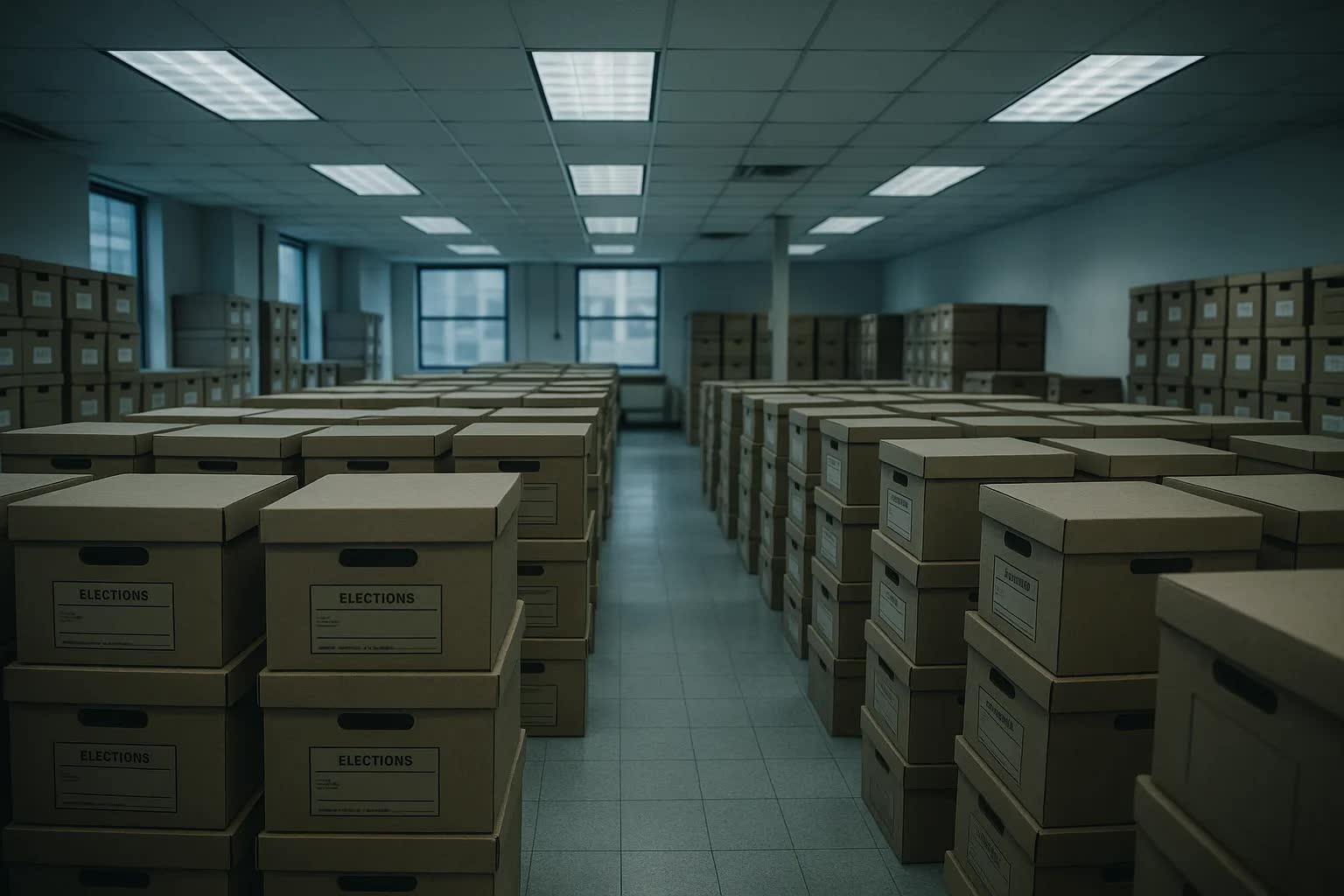
A high-stakes technology overhaul of the New York City Board of Elections has stalled amid a bitter fight over who will pay for new voting machines and revamped online systems, leaving election officials and poll workers scrambling in neighborhoods from the Lower East Side to Jamaica while vendors wait on a decision. The impasse, centered on a proposal to replace aging ballot-marking devices and build a unified voter portal, has exposed tensions between the Manhattan borough board and its counterparts in the outer boroughs over cost-sharing and control of procurement.
The modernization plan, branded internally as the VoteSecure 2026 initiative, was produced after two years of study by Board of Elections staff and an outside advisory panel. It calls for replacing roughly half of the city’s oldest optical-scan machines with accessible ballot-marking devices, consolidating multiple vendor platforms into a single online absentee and poll-worker interface, and funding a three-year training and maintenance contract. Advocates say the upgrades would reduce errors, speed tallying and improve access for voters with disabilities; critics say the price tag and allocation formula are the sticking points.
“We are not opposed to better equipment, but Manhattan’s proposal to have the borough cover a disproportionate share of capital costs is neither fair nor sustainable,” said Marisa Delgado, chair of the Manhattan Borough Board of Elections, at a Friday meeting at the board’s office near Canal Street. “Manhattan has the highest concentration of polling sites per square mile, and we want investment to match density — but responsibility should be shared proportionally.” Delgado’s office declined to provide the minute-by-minute breakdown she discussed at the meeting.
On the other side, leaders from the Bronx, Brooklyn, Queens and Staten Island have argued that Manhattan’s proposal would saddle outer-borough taxpayers and small community boards with the bulk of operating expenses over time. “Neighborhoods in East New York and the South Bronx already contend with longer lines and fewer resources,” said Eugene Holt, president of the Outer Boroughs Election Coalition, a group representing four borough boards. “Asking those communities to pay more for base-level election services will deepen inequities.”
Board officials presented a detailed cost estimate at the hearing: a projected total program cost of $78.2 million over five years, including $44.1 million for hardware purchases and installation, $19.5 million for software development and integration of a single voter portal, and $14.6 million earmarked for training, warranty and local maintenance. The plan would replace or upgrade 4,800 of the city’s approximately 6,200 voting devices, with an average per-device purchase and installation cost of about $9,200; it anticipates a three-month pilot beginning in June and fleet-wide deployment ahead of the 2026 primary, subject to contract awards and funding commitments.
The arithmetic has not reassured borough boards. Manhattan officials say their stock-in-trade of finance and nonprofit funders makes them a logical early funder, but the Bronx and Queens boards counter that using borough wealth as the primary lever would create perverse incentives and leave low-income neighborhoods shortchanged. The argument spilled into a heated exchange at last week’s meeting in Brooklyn Borough Hall, with representatives citing the distribution of polling places — roughly 2,950 sites across the outer boroughs versus about 700 in Manhattan — as evidence that costs per polling place should guide allocations rather than borough budgets.
Poll workers from multiple neighborhoods described daily problems that have made the decision feel urgent on the ground. “I’ve been setting up machines at P.S. 142 in Flushing for 12 years,” said Rita Chen, a veteran poll worker, during a public comment session. “We had a scanner jam last April that took 45 minutes to clear, and seniors stood in the cold on Main Street. New equipment and better software for absentee tracking could prevent that — but only if the board moves quickly.” Leonard Ruiz, deputy director for elections technology, warned that delays could increase vendor costs and jeopardize discounts negotiated during the preliminary procurement phase.
Beyond the dispute over immediate expenses, board members sparred over governance of the contracted system. Manhattan proposed a model that would grant its board a stronger role in vendor selection and maintenance scheduling, arguing that a single point of accountability would speed fixes and updates for midtown, SoHo and Upper East Side sites that host high-turnout elections. Opponents said such an arrangement would concentrate decision-making and undercut borough boards’ ability to tailor training and local maintenance for neighborhoods like Bay Ridge and Fordham, where polling logistics differ markedly.
The stalemate also has political ramifications. Several City Council aides from Queens and the Bronx have privately pressed for mayoral or state intervention to break the deadlock, while community groups in Crown Heights and Hunts Point have demanded formal guarantees that new equipment will reduce wait times and be accompanied by neighborhood-level training. Legal advisers for the city’s elections office say the charter gives the Board of Elections authority to proceed if two of five borough boards approve a funding plan, but that such a move would intensify political backlash and risk litigation that could delay deployment into next year’s contests.
Officials said they will reconvene a special negotiating session on Jan. 20 to try to hammer out a new cost-allocation formula, with aides confirming outreach to potential philanthropic partners to bridge short-term gaps. If the borough boards remain deadlocked, the board’s technology director warned, the earliest realistic rollout could slip past the 2026 primary calendar and force a temporary extension of support contracts for vendors supplying legacy machines. Board members emphasized that voters across Harlem, Bensonhurst and Jamaica are watching closely, and that any resolution will need to balance fiscal responsibility with the practical needs of neighborhoods at polling sites citywide.