Borough Tech Apprenticeships Put Paid Training Closer to Home
A new program in the Bronx, Queens and Staten Island will train 180 adults for entry-level technology support jobs. Organizers are pairing classroom lessons with paid placements at neighborhood employers.
By Marisol Vega · August 24, 2026 · 5 min read
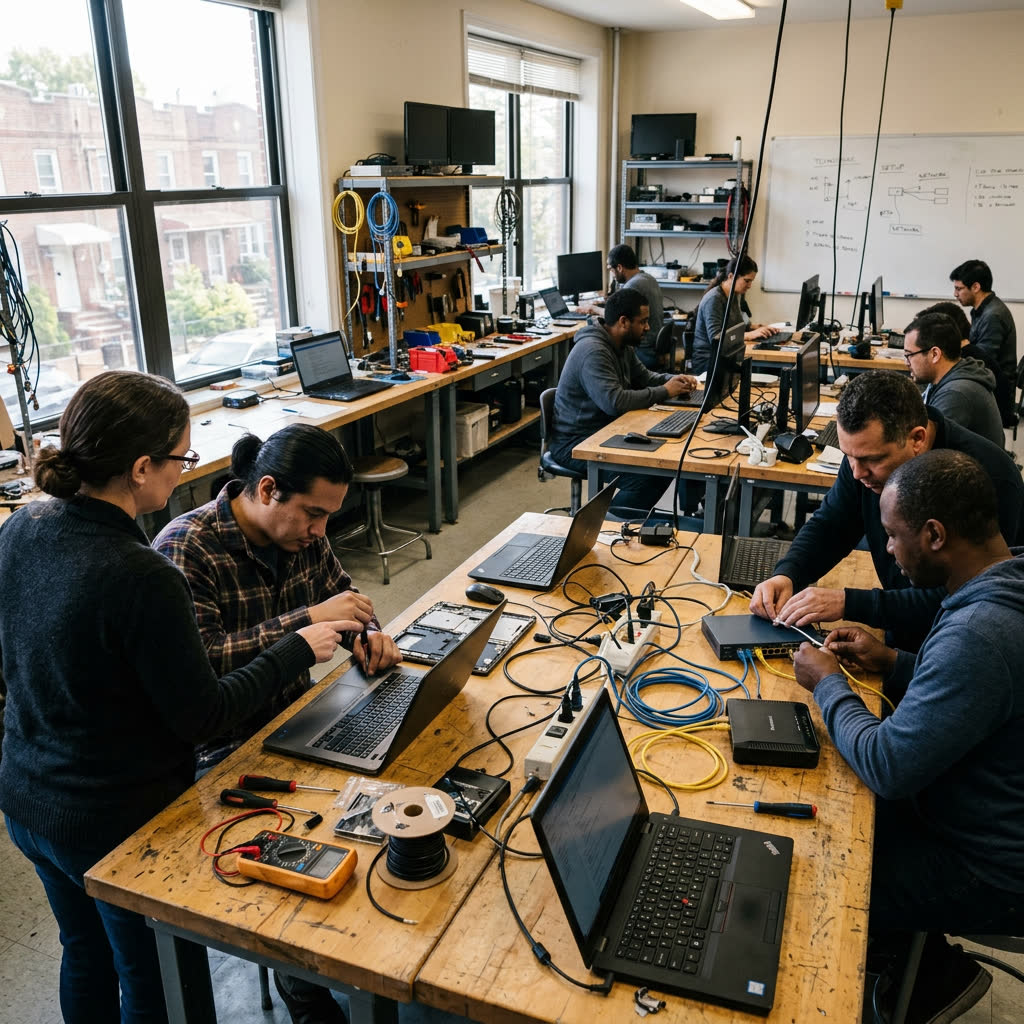
NEW YORK — A workforce coalition is opening three neighborhood technology training centers this fall, aiming to make career preparation more accessible to New Yorkers who cannot regularly travel to Manhattan. Borough Bridge Tech, a fictional nonprofit consortium, said Monday that it will enroll 180 adults in paid apprenticeships based in Mott Haven, Jamaica and St. George. Applications open this week, and the first classes are scheduled to begin Oct. 5.
The 20-week program will focus on help-desk operations, device repair, basic network administration and cybersecurity hygiene rather than software engineering. Participants will spend three mornings a week in class and two days working with a local employer. They will receive $20 an hour for up to 24 hours each week, along with a transit allowance and loaned laptop. Applicants do not need a college degree or previous technology job, but they must be at least 18 and comfortable using email and web forms.
Program director Simone Ellis said the curriculum was built after interviews with small medical offices, arts organizations, property managers and manufacturers that struggle to fill junior support positions. "A business with 40 employees still needs someone who can set up accounts, secure a router and explain why a printer vanished," Ellis said. "Those jobs are real, and the training should happen where the workers and employers already are."
The coalition expects to place apprentices at 36 fictional and nonprofit employers, including Tideway Community Clinics, Northline Fabrication and several neighborhood cultural groups. Host sites must provide a supervisor and a defined set of tasks; they cannot use apprentices solely for reception or general office work. Borough Bridge Tech will cover most wages during the first 12 weeks, after which employers contribute a larger share. Employers are encouraged, but not required, to offer permanent positions.
Morning classes at the Jamaica site will include simulated support calls and a lab filled with donated laptops that instructors intentionally misconfigure. Students will practice documenting a problem, protecting user data and escalating issues they cannot safely resolve. The course also covers common workplace tools, password management and recognizing fraudulent messages. Participants who complete the program will receive a coalition certificate and vouchers for one industry certification exam of their choice.
Distance can be a decisive barrier even inside the five boroughs. A late shift followed by a long transfer can turn a free class into an impractical commitment, said fictional labor economist Hannah Mensah of the Metropolitan Work Institute. Locating instruction near bus and rail hubs may improve attendance, she said, but paid time and predictable schedules are equally important. Mensah cautioned that programs should publish completion, placement and six-month retention data rather than treating enrollment as proof of success.
Child care remains outside the program's direct services, though organizers said participants may apply for emergency assistance from a limited support fund. Evening lab hours will be offered twice a week, and recorded lectures will be available when an apprentice misses class because of illness or caregiving. Ellis said hands-on assignments still must be completed in person. The program has reserved at least half of its seats for residents of the borough where each center is located.
Jamal Price, a 29-year-old Soundview resident who joined a small summer trial, said the stipend allowed him to reduce delivery shifts while learning. His placement involved updating devices and creating a simple inventory for a fictional senior center. "The biggest lesson was how to ask a person what happened without making them feel blamed," Price said. He has since accepted a full-time support role with a neighborhood bookkeeping firm, according to the coalition.
Funding for the first year comes from fictional local foundations and employer contributions, with a budget of $3.6 million. Borough Bridge Tech said it will release an independently reviewed results report next summer and will not expand until it knows how many graduates remain employed. For applicants, online information sessions begin Thursday, while each center will hold a walk-in application clinic before Labor Day for people who need help completing the form.