Bronx Bodegas as Curators: Micro-Exhibitions in Grocery Aisles
Neighborhood corner stores are installing rotating art displays and commissioning local artists to bring gallery experiences directly into everyday commerce.
By Julian Alvarez · December 31, 2025 · 4 min read
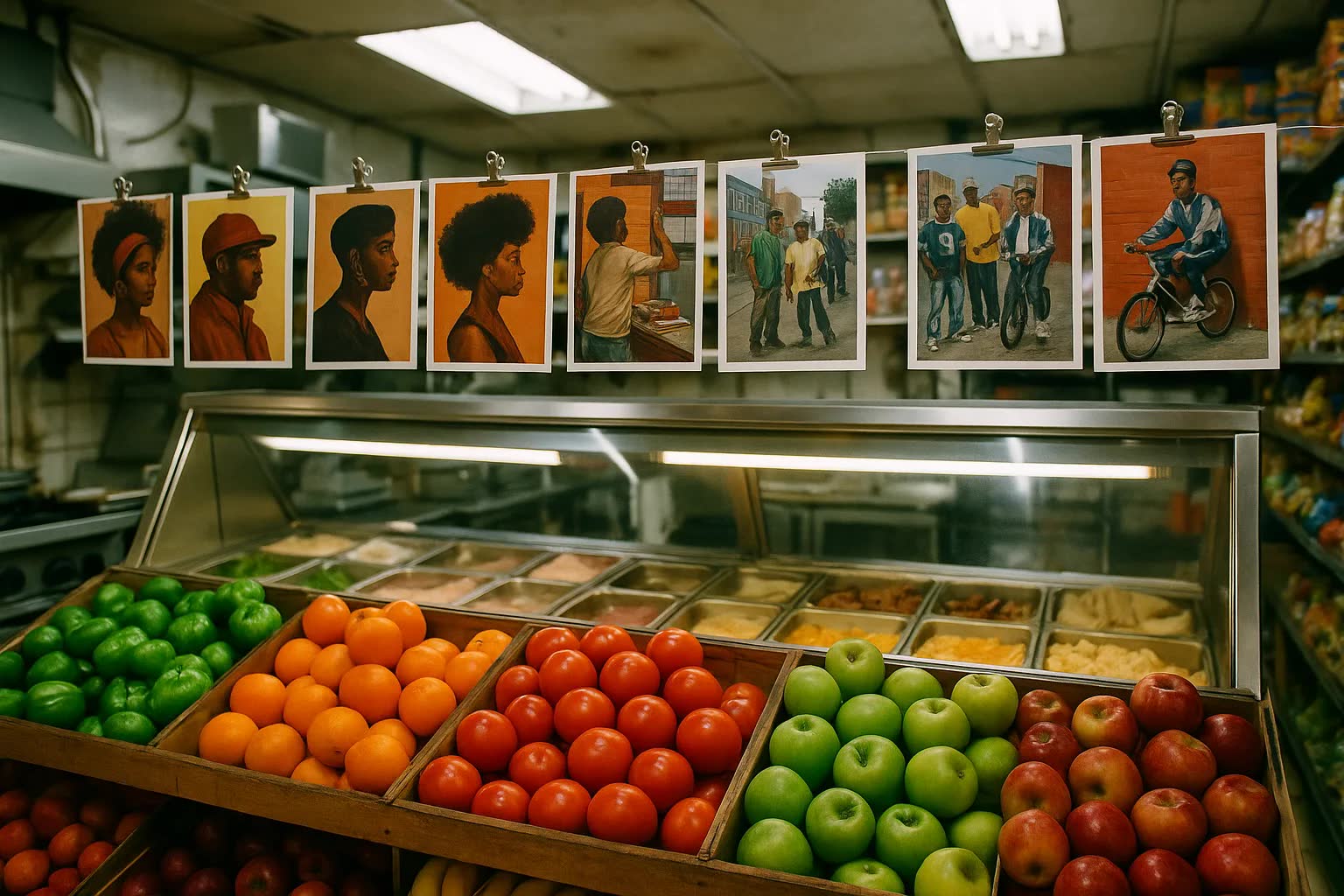
NEW YORK — On a cold December morning in Morrisania, a string of hand-painted postcards swings over the produce at La Casa Grocery, turning an ordinary shopping trip on Southern Boulevard into a micro-gallery visit; across the borough, stack-shelves, deli counters and even cooler doors are being repurposed to present rotating exhibitions that compress the gallery experience into the elbow room of neighborhood commerce.
The movement began two years ago as a grassroots experiment by ShelfSpace Bronx, a volunteer collective of curators, artists and bodega owners that set out to test whether art could thrive where people already live and work rather than waiting for people to visit institutional spaces. Within months the pop-up shows spread from a handful of stores near Fordham Road to pockets of Kingsbridge, Hunts Point and Belmont’s Arthur Avenue, drawing attention from small funders and residents who said a do-re-mi score of fine art had been playing quietly beside the milk and rice for too long.
“We wanted to break the idea that art belongs behind velvet ropes,” said Tyrone Hall, director of ShelfSpace Bronx, who once curated shows at a volunteer-run loft in the South Bronx and now negotiates hanging systems with deli owners between morning deliveries. “A bodega is both a cultural hub and the artery of daily life in the Bronx. If you can introduce a painting or a photo where people are already making decisions about dinner, you change the conversation.”
Artists say the trade-offs are immediate and practical: secure a 4-foot strip on a cooler door and you get an audience that overlays age, language and schedule in a way galleries rarely achieve. “I paint the neighborhood, and now my pieces are actually seen by neighbors who will tell me what they remember or correct me,” said Lina Gutierrez, a painter from Mott Haven who recently installed a series of linocuts depicting East 149th Street buskers in three bodegas. “One woman bought a postcard and said it made her think of her first job in a deli — that’s a different kind of sale and a different kind of validation.”
Bodega owners report modest but meaningful benefits: increased foot traffic during exhibit weekends, a bump in impulse purchases near display walls and an uptick in repeat customers who come to see what’s new. “On Thursdays people come for the empanadas and stay to talk about the photographs,” said Jorge Alvarez, owner of La Casa Grocery on Southern Boulevard and an early participant. “I don’t charge artists rent; I charge the neighborhood my time. If the store feels like it belongs to more people, I’m fine with that.”
Organizers and funders say the model is small but measurable. Since January 2024, ShelfSpace Bronx and partner groups report that 74 bodegas across the Bronx have hosted at least one micro-exhibition, with a running roster of 18 rotating displays monthly and an estimated combined foot traffic of 36,000 visits tied to exhibition weekends. The initiative operates on roughly $280,000 in philanthropic funding this year, with average artist stipends of $150 per installation and micro-grants to stores averaging $450 for display materials and insurance riders.
Logistics can be fiddly: humidity near open produce, sticky floors and narrow aisles force curators to favor sealed frames, laminated work or digital displays that can hang from pantry racks. “You have to think like a shopkeeper and a curator at once,” Hall said. “We write contingency plans for spills, train owners on hanging hardware and buy small insurance add-ons so nobody gets nervous about liability.” The solutions often arrive as a community technical assistance swap — artists teaching owners basic framing techniques while owners show artists how to rotate stock without knocking over work.
Not everyone is captivated. Some long-time customers worry that displays obscure goods or make quick errands slower, and a few critics in the arts community question whether micro-exhibits risk aesthetic flattening when curators prioritize durability over daring. “I appreciate seeing art while I buy my coffee, but sometimes it feels like we are moving the gallery into commerce without the curatorial protections galleries provide,” said Darnell Brooks, a retired Bronx schoolteacher who has lived near 149th Street for 27 years. Others counter that the cost of access is worth the trade-off for a wider cultural reach.
Financially, the model has opened modest revenue streams for artists and outlets: micro-sales, commissioned murals paid at rates between $500 and $3,000, and new commissions from local schools seeking artist visits. Schools and community centers in the area reported booking 62 artist residencies connected to the program this year, and several works that began as laminated prints in corner stores have later moved into small local galleries and auctions, creating a small upward mobility for makers who previously operated outside traditional markets. Public health and zoning officials say the installations are generally compatible with store operations when owners maintain required food-safety measures and keep exits and aisles clear.
Organizers are already planning an expansion in 2026: a pilot to place rotating exhibits in five Bronx subway-adjacent delis near Yankee Stadium and new training sessions for artists on retail-safe materials. “Our aim is to reach 120 stores by the end of 2027, and to build a catalog of works that can circulate across neighborhoods without losing the hyperlocal stories that make each display matter,” Hall said. Curators, owners and artists foresee a future in which the bounded space of a bodega becomes a recognized node in the borough’s cultural map, where daily commerce and culture are no longer strangers but neighbors.