Bronx Producers Turn Old Factories Into Recording Hubs
Affordable industrial spaces in the South Bronx are being converted into studios where emerging trap and Latin producers collaborate and record.
By Zoe Kaplan · December 15, 2025 · 5 min read
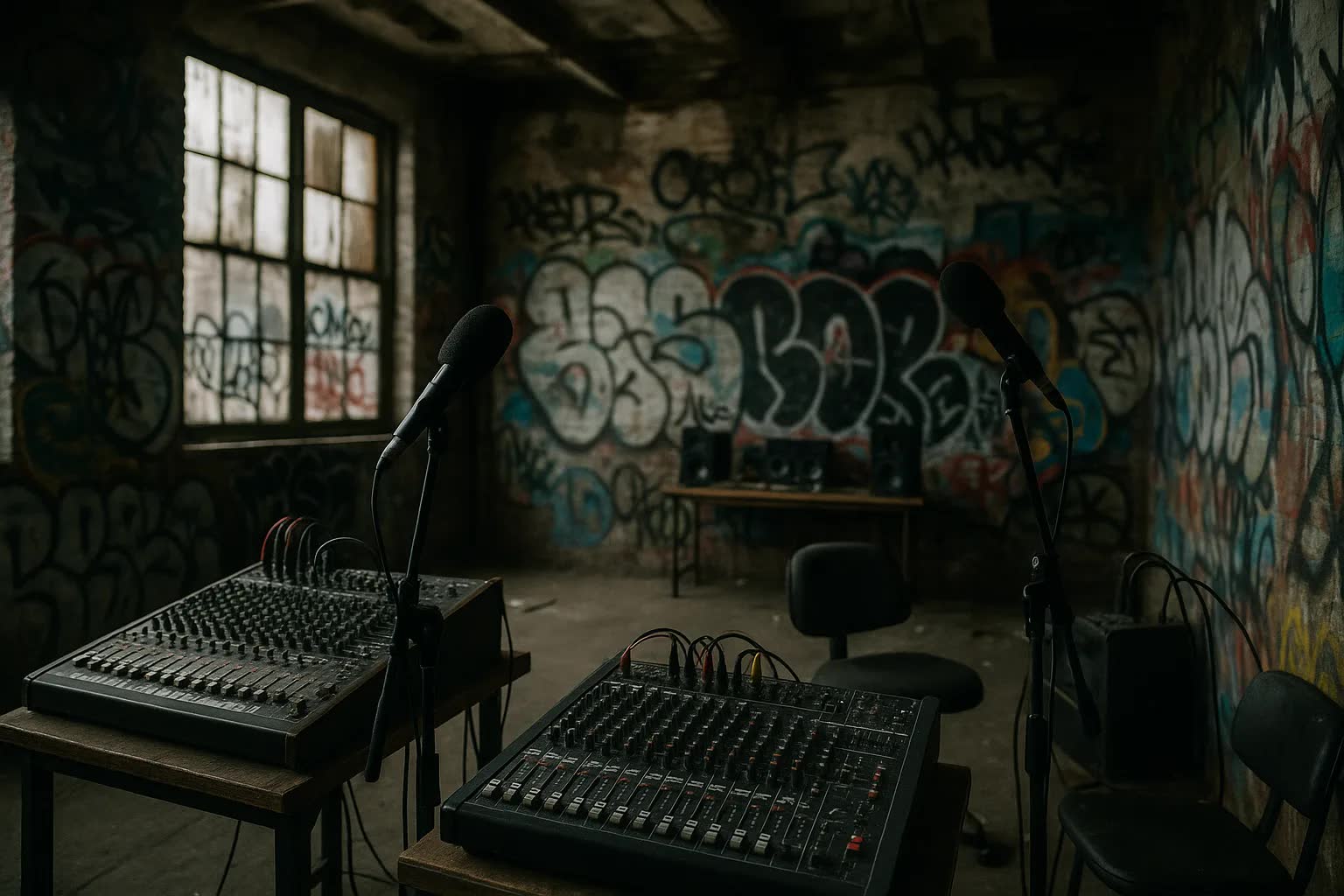
On a damp December morning, a cluster of low-slung brick buildings along Bruckner Boulevard and the South Bronx waterfront that once housed metal stamping and garment factories now hum with a different kind of industry: beat making, vocal tracking and late-night mixing sessions. Producers who cut their teeth in bedroom studios in Brooklyn or Queens are migrating to roomy industrial shells in Mott Haven, Port Morris and near the Willis Avenue Bridge, where loading docks and high ceilings allow for affordable isolation booths, drum rooms and communal lounges. The result is a patchwork of small, almost guerrilla recording hubs that are shaping the next generation of trap and Latin music in the city while remaking parts of the Bronx long written off as post-industrial backlots.
The conversions often started with a single producer or engineer subletting an empty storefront and building a vocal booth out of OSB and acoustic foam. ‘‘We could lease an entire 2,000-square-foot floor for what a closet studio costs on Flatbush Avenue,’’ said Miguel Santos, co-founder of Ironworks Studio and a Port Morris resident, standing amid racks of outboard gear and a drum set crowned with a Lo-Vox shield. ‘‘Space lets you experiment — a room for cumbia congas, one for trap 808s, one for singers. That cross-pollination is where the sound comes from.’’
Inside Ironworks and newer spaces such as South Port Studios on Bruckner and Conveyor Room on 149th Street the aesthetic is both utilitarian and celebratory: concrete floors, steel beams, loading doors repurposed as acoustic baffles, and murals that nod to Latinidad and Bronx hip-hop history. ‘‘We teach beatmaking workshops for teens and run a paid internship so interns can learn Pro Tools, Ableton and basic mix engineering,’’ said Asha Patel, executive director of Bronx Music Collective, which helps negotiate low-cost leases and equipment donations. ‘‘These are jobs and creative paths, not just hobbies.’’
The collaboration is literal: producers who specialize in trap-style percussion trade sessions with Latin percussionists brought in from Hunts Point or East Tremont; a reggaetón songwriter records a topline, then walks across the corridor to sit in on a mixing session for a drill-influenced beat. Artists like Karina Reyes, a bilingual songwriter and performer who records at Conveyor Room, say the proximity accelerates projects. ‘‘I can get a horn loop laid down on Tuesday, bring it to a beatmaker on Thursday and have a rough mix by Sunday,’’ Reyes said. ‘‘When you’re in the same building you lose the dead air between ideas.’’
The scale of the conversion is modest but measurable. Since 2021, neighborhood developers and indie landlords have converted an estimated 42 industrial units into music or creative workspaces across Mott Haven, Port Morris and Port Morris–adjacent blocks, according to data compiled by the Bronx Music Collective. Average studio footprints range from 600 to 2,400 square feet; monthly rents run between $1,200 for a small producer room to $7,500 for an entire floor, substantially below Manhattan equivalents that can top $20,000 for similar raw space. Studios report booking an average of 320 session hours per month and employing between 2 and 8 staffers, while collective-run educational labs have taught more than 1,100 students since 2022.
Financing for the projects has come from a patchwork of sources: small commercial loans, community development grants, crowd-sourced equipment drives and, in a few cases, adaptive reuse incentives from a municipal industrial program. Buildings such as the converted former textile loft on 141st Street were brought up to code by owners who said they saw a social and economic upside to retaining industrial character while creating Black- and Latino-owned creative businesses. ‘‘We’re not flipping the neighborhood,’’ said Daniel Cruz, CEO of Harborline Properties, which owns a three-building cluster near the Third Avenue Bridge. ‘‘We’re trying to stabilize rents for creative tenants and make a long-term play on community retention.’’
Still, the growth has sparked concern among longtime residents who fear the familiar arc of artists-taste-makers-developers could drive displacement. Community organizer Rosa Delgado, who runs a tenants’ rights group in Longwood, said a new coffee shop and co-working space that opened near St. Ann’s Avenue raised rents for small bodegas and pushed a music rehearsal collective into a basement. ‘‘We welcome music and jobs, but we want guarantees — community hiring, living wages, and spaces that don’t vanish when rents rise,’’ Delgado said. Informal agreements brokered by collectives and sympathetic landlords are helpful, activists say, but they lack the legal teeth of formal community benefit agreements.
The Bronx hubs are also feeding the broader music economy. Independent labels and boutique managers from Manhattan have started scouting sessions, and several producers report downstream revenue from sync placements and touring acts that begin their projects in these South Bronx rooms. A handful of studios have struck partnerships with local public schools and charter programs to run semester-long production classes, and one collective reported that six of its interns signed paid work contracts with local commercial studios in the last year. ‘‘We’re seeing a pipeline emerge,’’ Patel added. ‘‘It’s not overnight fame, but steady careers: engineers, A&R scouts, production assistants.’’
City policy will matter as the scene grows. A rezoning proposal floated last spring that would preserve industrial uses along stretches of Bruckner Boulevard and the East 149th corridor has stalled in community board hearings, and advocates are pressing for tax incentives for small creative businesses and a regional arts fund to underwrite equipment and training. Developers say that preserving affordable industrial space requires both incentives and new financing tools; activists say those measures must be paired with tenant protections. ‘‘If we don’t lock in affordability now, these rooms will become luxury offices in five years,’’ said Santos.
For now the South Bronx experiment looks less like an overnight takeover and more like gradual reclamation: converted factories where a percussionist returns the favor of a programmed kick, where a newcomer from Soundview learns compression from a veteran engineer, where small studios build portfolios that eventually pay for larger investments. Plans are in the works for a coalition-wide showcase next spring at the Bronx Terminal Market and for a larger shared facility slated to open on the Bruckner waterfront in late 2026 that would combine rehearsal rooms, a 150-seat live room and a mentorship program for producers of color. Whether those plans succeed will hinge on policy, community negotiation and the same improvisational energy that has brought beat makers and songwriters together under the high windows of these old factory roofs.