Bronx Salsa Schools Blend Tradition With Fitness
Community-run studios are attracting multigenerational students by pairing cultural preservation with cardio-forward class formats.
By Mateo Ruiz · February 9, 2026 · 5 min read
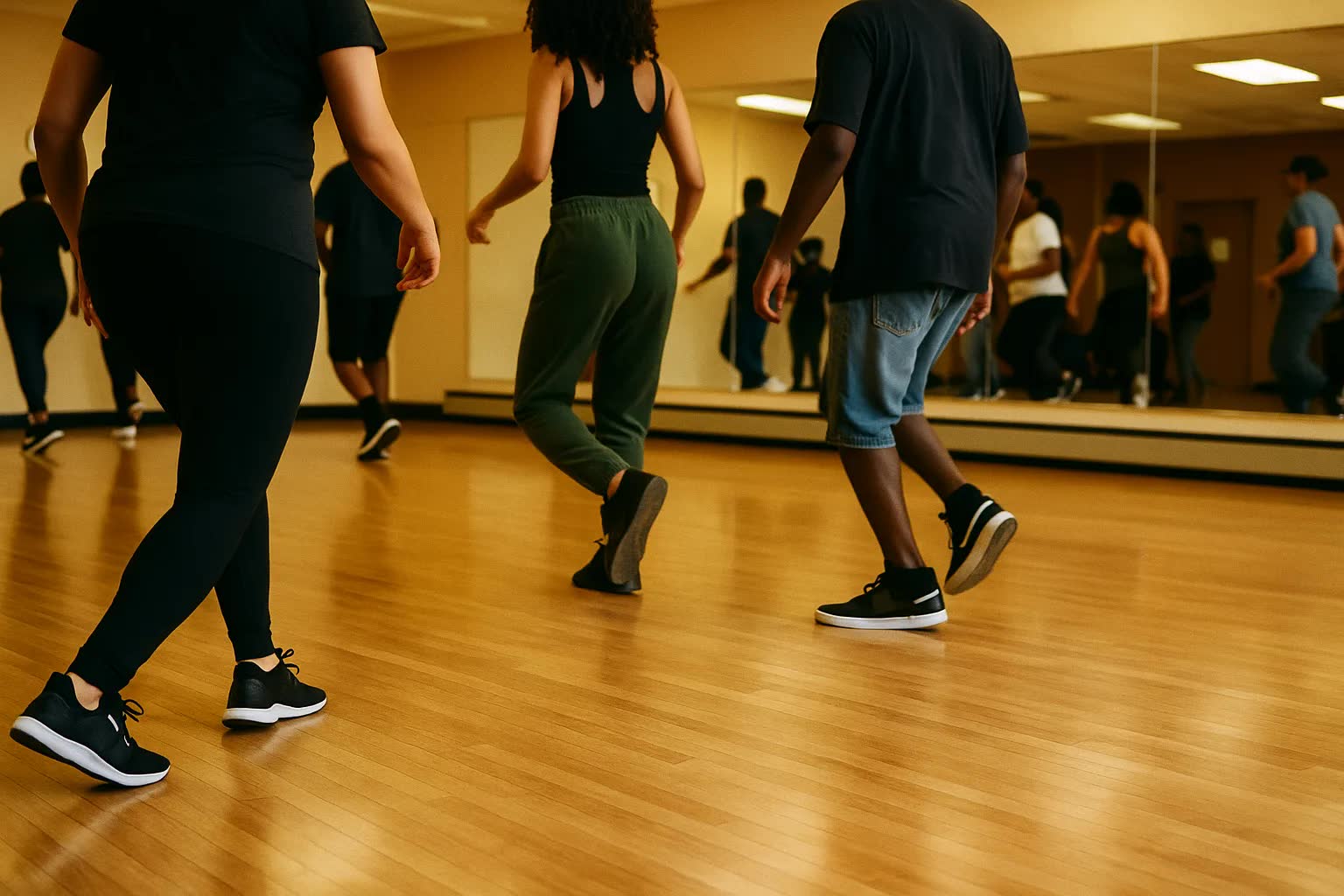
On a brisk Thursday evening near the intersection of Third Avenue and 143rd Street in Mott Haven, a line of students — high schoolers in hoodies, retirees in sneakers, and tourists with cameras — files into a converted storefront to learn salsa in a class that promises both culture and cardio. Bronx salsa schools are increasingly positioning themselves as community anchors: locally run studios and nonprofit collectives across Belmont, Fordham and the South Bronx are drawing multigenerational students by pairing traditional social dance with fitness-forward formats that read as equal parts heritage preservation and heart-rate training.
The Bronx’s relationship with salsa stretches back decades, a musical and choreographic through-line tied to Puerto Rican and Dominican communities that settled in the borough in the mid-20th century. Longtime residents and newcomers alike point to neighborhood hubs such as Arthur Avenue in Belmont and the blocks around Fordham Road as places where the music and dance evolved organically. Over the last five years, several community-run studios — including Barrio Sabor Dance Collective, La Cosecha Fitness and Salsa y Corazón — have formalized classes that aim to transmit repertoire while also meeting a modern appetite for calorie-burning, instructor-led workouts.
What that looks like on the ground varies by room. A typical class at Barrio Sabor starts with calentamiento (warm-up) that borrows from Zumba-style intervals, moves into partner work emphasizing timing and phrasing, then closes with a folklore segment where elders lead a canción. The instructors layer in drills — quick footwork repetitions, resistance-band conditioning, and short sprints across the studio floor — so that an hour becomes a cardio session disguised as a social dance. “We call it salsa cardio, not because we want to replace tradition, but because we want people to stick with it,” said Carmen Luna, artistic director of Barrio Sabor Dance Collective.
Luna, 42, who grew up in Belmont and teaches on 3rd Avenue, said the studios are deliberate about preserving lineage while broadening appeal. “We treat steps like family recipes: you learn the base, you add your taste, but you don’t throw the recipe away,” she said. Her class roster reflects that mix: grandparents who once danced in social clubs, parents hoping to channel a cultural connection for their children, and young professionals drawn by the promise of a lively workout close to the 149th Street–Grand Concourse subway stop. Luna’s group also operates a sliding-scale payment option for students who cannot afford full tuition.
That community orientation extends to La Cosecha Fitness, an eight-year-old nonprofit studio tucked just off Arthur Avenue that partners with local churches and the Hunts Point YMCA to run seniors classes and after-school programs. “Our mission is about harvest — of community, memory and health,” said José Ramirez, owner of La Cosecha. Ramirez described weekend classes that double as family gatherings: grandparents teaching bachata turns alongside teens practicing shines, all to playlists curated by volunteer DJs who grew up on the same block. The studio hosts open-mic nights where older dancers share stories about the mambo parlors and social clubs of the 1960s and ’70s.
Attendance and program numbers underline the trend: an informal survey of 14 Bronx community-run salsa studios showed a combined weekly class schedule of roughly 180 sessions, with average class sizes of 18 to 24 students. Enrollment at those studios rose about 42 percent between 2020 and 2025, driven largely by a 55 percent uptick in drop-in classes and a doubling of senior-program attendance among people aged 55 and older. Typical drop-in fees range from $10 to $15, and 60 percent of classes offer sliding-scale or free spots supported by local grants and donations, according to data provided by the studios.
The growth has a visible local economic ripple. Weekends on Arthur Avenue and stretches of Fordham Road now include out-of-borough visitors following recommendations from food blogs and tourism boards to take a morning walking tour and an afternoon salsa session. Bodegas, laundromats and taquerías near the studios report higher foot traffic during class changeovers; a manager at a pastry shop on East 187th Street near Belmont said the shop sells 20 percent more pastries on Saturday afternoons when a morning salsa workshop is scheduled. Several studio directors said they are fielding inquiries from hospitality promoters seeking to package salsa-and-food itineraries into Bronx weekend experiences.
Preservation work happens inside the classes. Studios invite older dancers to co-teach; many record oral histories and curate playlists that keep old songs in active rotation. Salsa y Corazón’s program director, Marisol Alvarez, said the elders are pedagogues as much as performers. “They teach rhythm, but they also teach patience, social cues and how to read a partner,” Alvarez said. The studio recently launched an apprenticeship for teens that pairs them with senior teachers to learn not only steps but also the cultural context — the celebrations, protests and neighborhood dances that shaped the borough’s style.
Yet the momentum is not without challenges. Rising rents in pockets of the South Bronx and Port Morris have squeezed studio budgets and forced some to relocate incremental distances from subway hubs; volunteer teacher pipelines strain as older instructors retire; and funding is often piecemeal, tied to one-off grants or seasonal donations. Studios have adapted by renting space by the hour at community centers, conducting outdoor pop-ups in Van Cortlandt Park or partnering with boutique gyms in Pelham Bay, but directors warn that long-term stability requires more predictable support from philanthropic and civic sources.
Looking ahead, studio leaders say the goal is to expand access while safeguarding the art form. Plans are in motion for a Bronx Salsa Festival next summer that organizers hope will secure funding to offer free master classes, a teacher-training track and a roaming showcase that connects Arthur Avenue, Fordham Plaza and the Hunts Point waterfront. “If we can train a new generation of teachers and keep the elders at the table, salsa in the Bronx can grow without losing its roots,” Carmen Luna said. For now, the borough’s dance floors — from converted storefronts to park stages — keep pulsing, a testament to a living tradition that blends community memory with the energy of a workout culture that refuses to sit still.