Bronx Spoken-Word Network Links House Parties to Cultural Institutions
Organizers are formalizing a boroughwide circuit that moves poets from basement shows to college stages and civic programming.
By Dominic Russo · January 21, 2026 · 4 min read
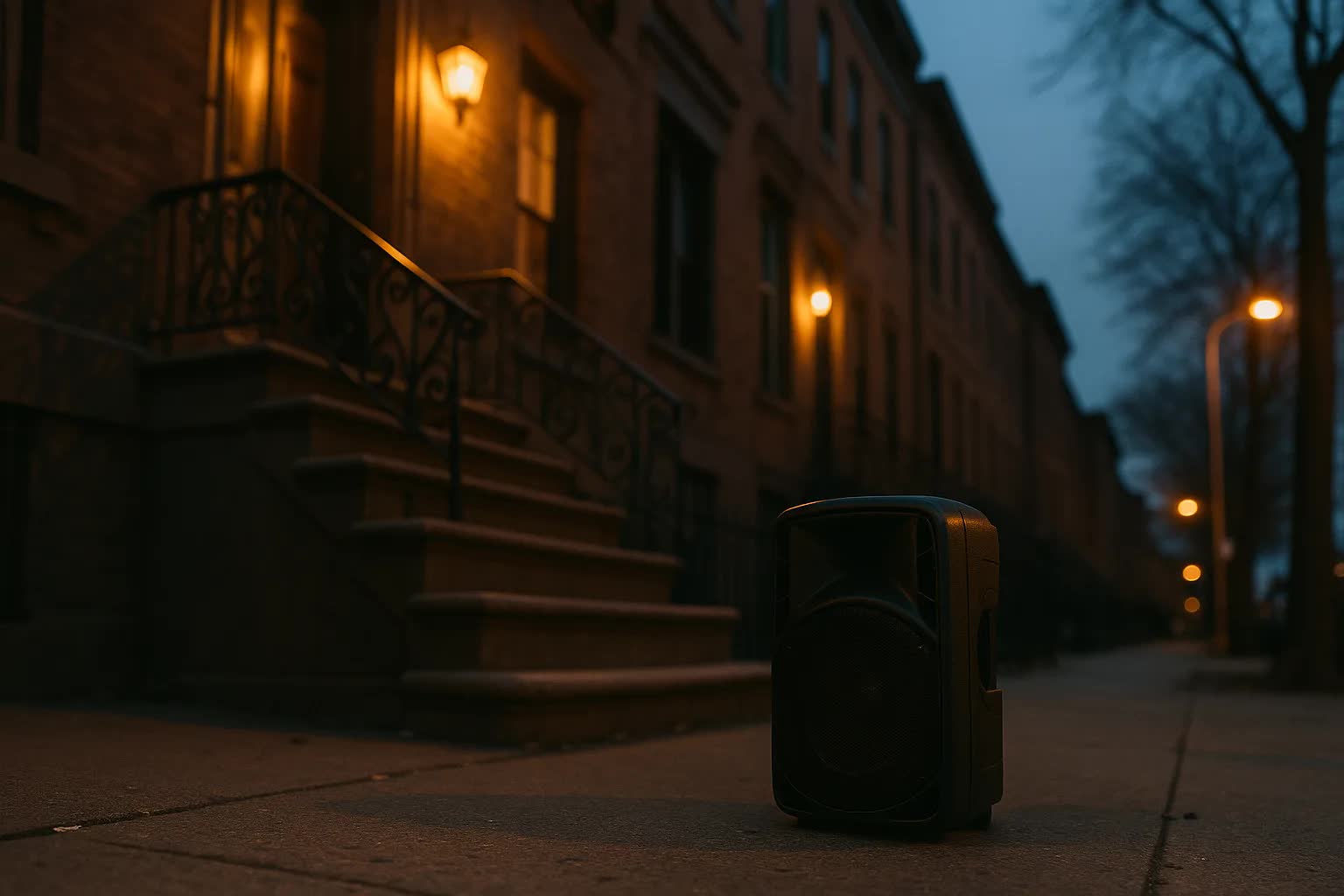
On a cold Friday in late November, a Sunday night basement reading on East 170th Street packed a living room full of poets who had been plucked from house-party stages across the borough into a residency at Lehman College the following week — a movement that organizers say marks the formal birth of a boroughwide spoken-word circuit in the Bronx. The network, convened by local artists and cultural workers, deliberately links informal, invitation-only gatherings in Morrisania and Fordham to college classrooms, library programming and civic events at the Bronx Museum of the Arts, creating what its backers call a coherent pipeline for writers rooted in the borough’s neighborhoods.
The new Bronx Spoken-Word Network grew out of a decade of loose alliances: living-room salons on the Grand Concourse, apartment basements off Webster Avenue, and pop-up readings staged in laundromats and barbershops in Mott Haven and Tremont. Those DIY spaces have long served as training grounds for lyricists and storytellers who developed followings by word of mouth. Until recently, the path from those rooms to institutional stages was irregular and often dependent on a single advocate inside a college or library; the network treats those connections as infrastructure worth building and maintaining.
Organizers say formalizing the circuit helps poets negotiate pay, travel and scheduling and reduces the burden of informal gatekeepers. "For too long our borough’s talent had to beg for a slot or rely on a single sympathetic professor to get into a college auditorium," said Amara Reyes, director of the Bronx Spoken-Word Network and a former host of the Willow Street House Reading series. "We’re creating schedules, fair-pay standards and rotating rosters so artists from Kingsbridge to Soundview can move from basements to borough institutions without losing credit for their work."
The network’s first year of operation offers concrete numbers to back that claim: from fall 2024 through fall 2025 the organizers say they connected 76 poets and spoken-word performers to 128 events across 22 neighborhoods; they brokered 34 partnerships with colleges and civic institutions including Hostos Community College, Lehman and the Bronx Library Center; and they distributed $62,400 in performance stipends, funded by a mix of private donations and a $50,000 grant from a city arts philanthropic fund started in 2023. Average attendances varied by venue: intimate house readings drew between 20 and 60 listeners while college and museum events attracted 150 to 340 each.
Partnerships have taken different forms. At Lehman, the network placed weekly open-mic slots into an English department series and created a semester-long visiting poet residency that includes a stipend and a public workshop. At the Bronx Library Center, a curated monthly salon now includes a youth apprenticeship program that brings high school poets to co-produce events. "This isn't about replacing what community organizers have built," said Malik Johnson, chair of creative writing at Hostos Community College. "It’s about recognizing that these house shows are the trunk of a tree and giving the branches room and resources to grow."
On the ground, the circuit is logistical as well as cultural. Volunteers coordinate a shared calendar, purchase liability insurance policies acceptable to institutional partners and negotiate city permits that allow a basement poetry night to be included on a college syllabus. Venues vary: the Bronx Basement Project on Jerome Avenue hosts late-night showcases; The Carver, an arts incubator near Freeman Street, programs cross-disciplinary evenings with musicians and muralists; and a monthly series at a converted storefront on East Tremont Avenue has become a proving ground for younger voices. The network maintains a digital roster and a rider packet that standardizes hospitality and payment expectations.
The renewed focus on infrastructure has also brought scrutiny over inclusion and representation. Some veteran hosts in Claremont and Van Nest worry their rooms could be overshadowed by institutional partners that can offer pay but also expect programmatic control. Others cite the threat of rising rents and closures of informal venues. "There’s a tension between getting paid and losing ownership of the space where the culture developed," said Rasheed Powell, a poet and co-founder of the Mott Haven Wordhouse. "Our goal is to make sure the money follows the people and doesn’t displace the people who made the scene."
Funding and training have been central challenges. The network runs a modest operational budget and relies heavily on volunteer labor; administrative costs for insurance, promotion, and travel reimbursements have consumed roughly 18 percent of funds in its first year, according to internal estimates shared with partners. Organizers have prioritized small, recurring stipends for artists and secured a summer teaching residency that places spoken-word artists into three public high schools, but longtime advocates say sustained municipal support will be necessary to scale apprenticeships, create paid touring routes and fund translators and accessibility services for deaf and non-English-speaking audiences.
Beyond logistics and money, participants say the circuit has changed how Bronx poetry is seen beyond its neighborhoods. Poets who once performed only for friends and neighbors now read on college stages, at parks near Yankee Stadium, and in civic ceremonies on the Grand Concourse; a handful have been commissioned to write pieces for local events such as the annual Bronx Day celebrations. "There’s this newfound legitimacy that doesn’t mean we’ve sold out," said Tania Morel, programs director at the Bronx Library Center. "It means our stories are being heard in places that previously saw the Bronx as only a backdrop."
Organizers say the next 12 months will test whether the structure can be sustained: plans include a boroughwide festival in late 2026 spanning Van Cortlandt Park and collaboration with the Bronx Museum to launch a fellowship for mid-career spoken-word artists, as well as a push to codify payment standards into municipal arts contracts. If successful, the network’s leaders hope the Bronx model will become a template for other neighborhoods seeking to translate house-party culture into long-term cultural infrastructure without erasing the intimate spaces that birthed it.