Bronx Theater Company Centers Latinx Voices in Its New Season
A Bronx-based company is devoting an entire season to plays by Latinx playwrights and community co-productions.
By Marcus Thompson · December 28, 2025 · 4 min read
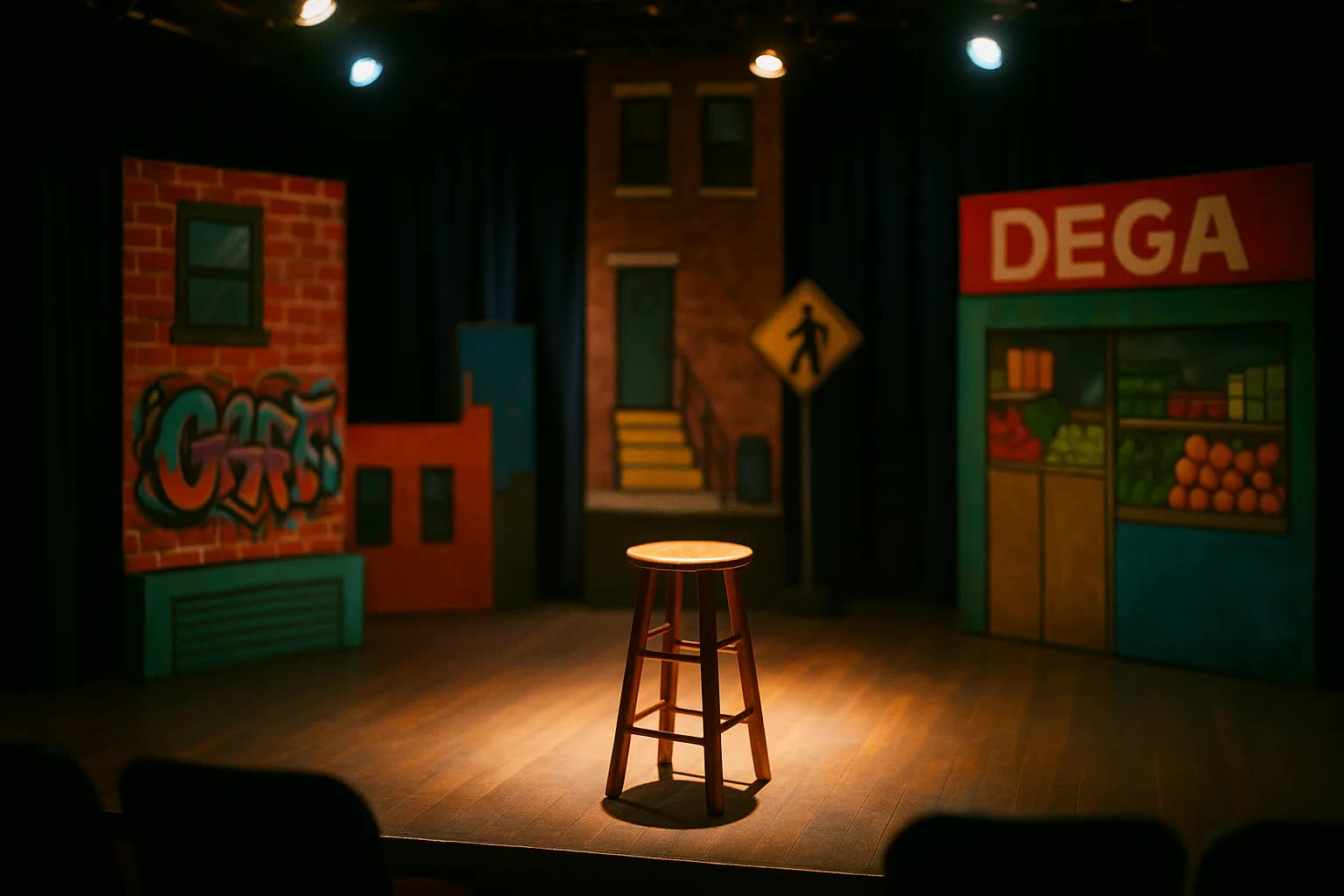
NEW YORK — In a tidy storefront theater on East Tremont Avenue near Crotona Park, the Bronx-based Estrella Theater Company is taking an uncommon step for a small nonprofit: devoting its entire 2026 season to plays by Latinx playwrights and a slate of neighborhood co-productions aimed at centering stories from Belmont, Fordham, Mott Haven and Hunts Point.
Founded seven years ago by a group of veteran community artists, Estrella operates out of the LaFaro Black Box, a 120-seat converted rehearsal space tucked above a bodega and a barber shop at the corner of East Tremont and Prospect avenues, one block from the 2 and 5 subway at Prospect Avenue. The company has long mixed experimental work with community workshops; what is new is scale and focus. The season — billed simply as Estrella 2026: Voces — will run from March through November and marks a strategic bet on a borough where Latinx residents make up a majority of the population and where commercial theaters are sparse.
“The theater should reflect the neighborhood that feeds it,” said Ana Castillo, artistic director of Estrella Theater Company. “Too often our narratives are footnotes in downtown seasons. By committing an entire year to Latinx playwrights and community co-productions, we are honoring the storytellers who live next door, who grew up on Fordham Road and raised their voices on Arthur Avenue.”
The season will include a mix of full productions and collaborative pieces developed in partnership with local organizations: a world premiere drama called La Línea about borderland identities; a bilingual comedy, Mango Streetlights, set in a Bronx subway car; and a series of short plays produced jointly with the Belmont Community Arts Council and the Hunts Point Theater Workshop. Estrella said it will host residency weeks for each community partner, sharing rehearsal space, technical crews and box office revenue, as well as mounting site-specific pieces on stoops and in storefront windows along Arthur Avenue and third-floor lobbies near Yankee Stadium.
Concrete details underscore the company’s ambitions: Estrella is programming eight mainstage productions, commissioning five world premieres and organizing 12 community co-productions; the season is backed by a $1.1 million operating budget that combines ticket revenue, foundation grants and individual donations; tickets will be sold on a sliding scale from $15 to $40 with 20 percent of seats reserved for pay-what-you-can nights; the company expects to serve roughly 10,000 audience members across all programming and aims for an average house rate of about 80 percent in the 120-seat theater.
“This changes the ecology of who gets to be called a playwright in this borough,” said Roberto Marquez, executive director of the Belmont Community Arts Council, which will co-produce three pieces and lead neighborhood outreach. “We’re not bringing artists into the community as guests — we are developing work with residents who have been performing and making stories in living rooms, churches and bodegas for decades. Those practices deserve a professional stage and fair pay.”
To build that professional pipeline, Estrella is pairing emerging playwrights with unionized designers and offering stipends for community artists. Programming notes show that roughly 40 percent of the season’s creators are first-time playwrights, many recruited from youth programs at Hostos Community College and the Bronx Youth Poetry Project. Workshops will be bilingual and ADA accessible, and Estrella has contracted with a local translator collective to subtitle performances for Spanish- and English-dominant audience members alike.
Local businesses and civic stakeholders say the season could have ripple effects beyond the stage. Lucia Rivera, owner of Café Pabellón on Fordham Road, said she has already seen a modest uptick in weekday traffic when Estrella hosts rehearsals nearby. “When the theater has something on, people linger,” Rivera said. “We sell more coffee, more pastries, and there’s a slow buzz that helps other shops on the block. If the season brings more visitors from other boroughs to Arthur Avenue, that matters.”
The move also fits into a broader recalibration in the city’s arts ecology that has elevated borough-based work and questioned longtime downtown hierarchies. Financial pressures are real: smaller ensembles face rising production costs, and a community-forward season requires investment in artist pay, translation, mobility and technical training. Estrella’s leaders say the company has built a two-year reserve to cushion the season and is consulting with legal and union advisers as it scales contracts and touring plans.
Estrella’s season opens March 12 with the world premiere of La Línea and will close with a neighborhood festival in November featuring short works staged on Bronx stoops and in storefronts. “This is not a one-off statement,” Castillo said. “We’re building infrastructure — for artists, for audiences, and for neighborhoods — and we intend to keep growing.” Planners say the company will evaluate audience data and financials through the summer with an eye toward a 2027 expansion that could include a second performance space and a touring program to community centers across the borough.