Brooklyn Brownstone Prices Breach $4 Million for the First Time
Competitive bidding in Park Slope, Cobble Hill, and Carroll Gardens has pushed the median sale price for intact single-family brownstones into territory previously reserved for Manhattan, raising questions about how long the borough's reputation for relative value can survive.
By Nahid Mohammadi · August 1, 2026 · 5 min read
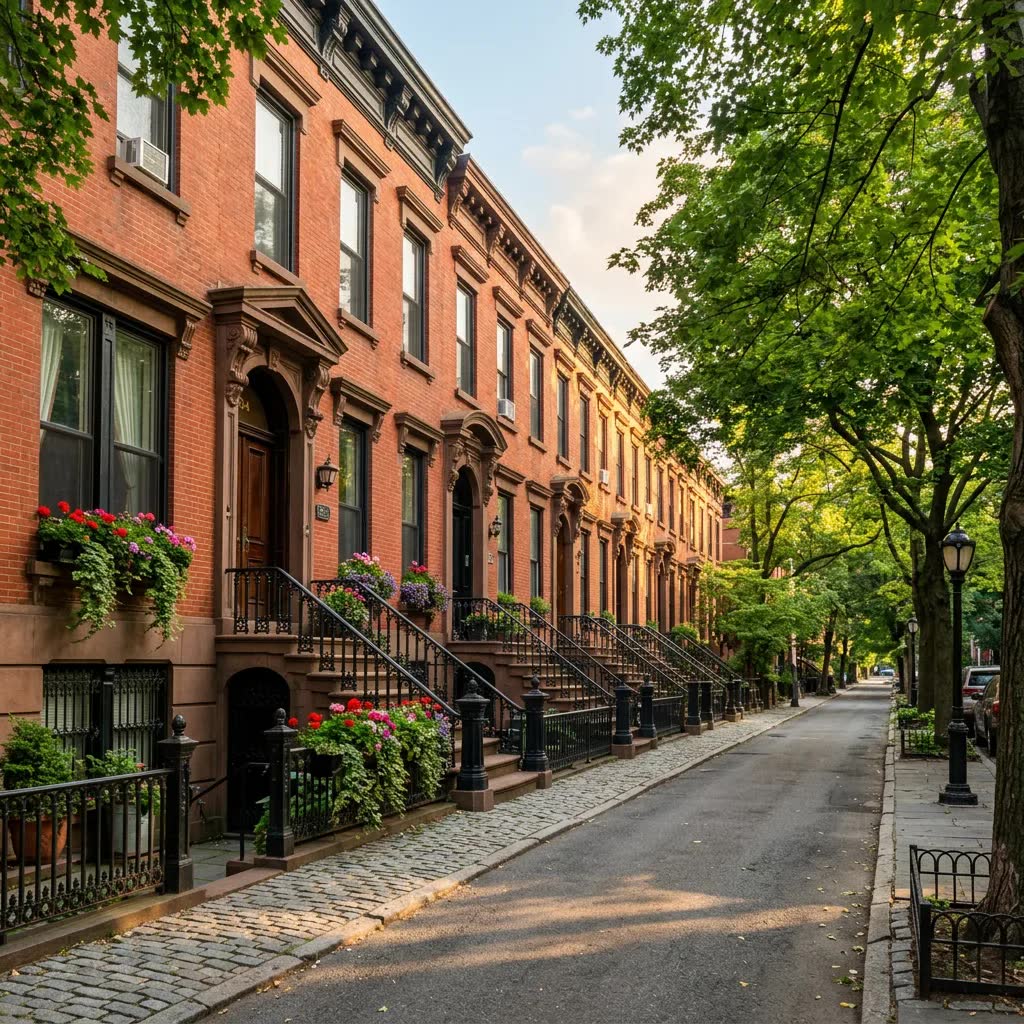
NEW YORK — The row house that once defined Brooklyn's claim to affordable urbanism has crossed a threshold that would have been unthinkable a decade ago. The median sale price for an intact single-family brownstone in the borough's most sought-after neighborhoods surpassed $4 million this past quarter, according to market data compiled by several brokerage firms, the first time the figure has cleared that mark in a sustained way rather than as a one-off outlier.
Brokers attribute the shift to a narrowing supply of move-in-ready properties and intensifying competition from buyers priced out of Manhattan's townhouse market, where comparable space routinely commands twice as much. A brownstone in Park Slope or Carroll Gardens — one with an original parlor floor, a working fireplace, and a south-facing garden — is now frequently attracting five or more offers within the first weekend of showing, with bidding wars routinely pushing final prices 10 to 15 percent above the asking price.
The surge reflects a broader recalibration of how buyers value space, privacy, and neighborhood character after years of apartment living. "We have buyers who spent the pandemic renting a house somewhere upstate or in the Hudson Valley and simply will not go back to a high-rise elevator building," said one Brooklyn-based broker who specializes in the area. "The brownstone is the closest thing to a house that still lets you walk to the subway and the farmers market."
The pressure on prices has been amplified by the near-total halt in new brownstone-style construction. While townhouse-style new development exists at the margins of the market — in pockets of Crown Heights, Bed-Stuy, and Prospect-Lefferts Gardens — the authentic nineteenth-century brownstone is effectively a fixed supply in a market of expanding demand. Buyers who lose bidding wars are not finding substitute product; they are circling back and trying again, often months later, with a higher ceiling.
The question hovering over the market is whether $4 million represents a new floor or a speculative ceiling. Some economists point to the pied-à-terre tax and rising mortgage rates as potential moderating forces. Brokers who operate in the sub-$2 million Brooklyn market — which has seen its own price appreciation — note that the borough retains meaningful pockets of relative value in neighborhoods further east and south. But in the triangle of brownstone Brooklyn that stretches from the Slope to Columbia Street, the era of the attainable row house appears, for now, to be definitively over.