Brooklyn's Brutalist Buildings Get a Second Look — and a Fan Club
A sold-out summer walking-tour series is reframing the borough's much-maligned concrete structures as the underappreciated architecture of a hopeful, if awkward, era.
By Keisha Brown · July 9, 2026 · 4 min read
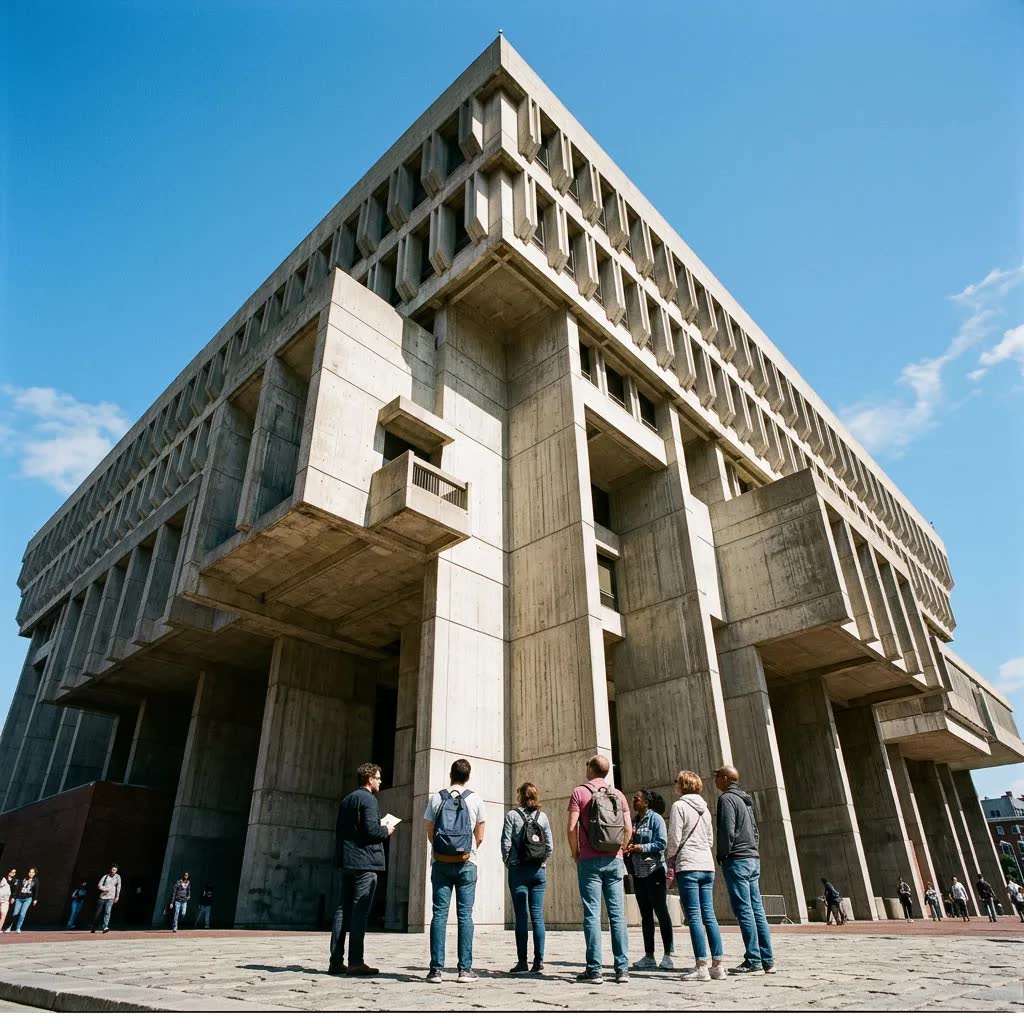
NEW YORK — For decades, the hulking concrete municipal building on the edge of Downtown Brooklyn was the kind of structure New Yorkers walked past without seeing, or saw only to grimace at. This summer, on Sunday mornings, small groups gather at its base with cameras and notebooks, tilting their heads back to admire the deep-shadowed geometry that generations of critics dismissed as ugly. They are taking part in a walking-tour series devoted to the borough's brutalist architecture, and every date through August has sold out.
The tours are led by an architectural historian who spent years cataloging the concrete buildings that rose across Brooklyn in the 1960s and 1970s — libraries, courthouses, university halls, and housing complexes built with a conviction that raw material and bold form could serve ordinary civic life. "Brutalism gets treated like a mistake we're embarrassed about," the guide told a group of two dozen last weekend. "But these were optimistic buildings. They were built by people who believed the public deserved something monumental."
The revival of interest tracks a broader shift in how younger New Yorkers regard the recent past. Where their parents saw grim, water-stained slabs, many on the tours describe seeing texture, honesty, and a kind of confidence absent from the glassy towers going up around them. Several attendees said they had discovered the style through photographs shared online, and had come to see the real thing in person after months of admiring it on their phones.
Preservationists hope the enthusiasm arrives in time to matter. Two of the buildings on the route face uncertain futures, one slated for a possible facade overhaul that critics say would erase its defining character, the other quietly for sale. The tour guide is careful not to turn the walks into rallies, but she does not hide her view that appreciation and protection are linked. "You can't save what nobody has learned to love," she said. "So we start by teaching people to look."
The route ends, deliberately, at a beloved concrete library branch whose cantilevered reading room juts over the sidewalk like the prow of a ship. There, the group lingered in the cool shade of the overhang, and the guide passed around a folder of original blueprints. A retiree who had lived nearby for forty years admitted he had never once looked up at the building he visited weekly. "I thought it was just where the books were," he said. "I didn't know somebody designed it to feel like that."
Organizers say the demand has been strong enough that they are planning an autumn extension into other boroughs, and a companion series on the city's overlooked postwar apartment complexes. For now, though, the Sunday walks continue, weather permitting, gathering strangers around the unlikely proposition that the ugliest buildings in Brooklyn might be among its most interesting.