Brooklyn Maker Space Fights to Keep Its 3D Printing Lab Open Amid Rising Rents
Community workshops say rising neighborhood costs threaten hands-on tech education for teens and entrepreneurs.
By Mateo Ruiz · February 1, 2026 · 4 min read
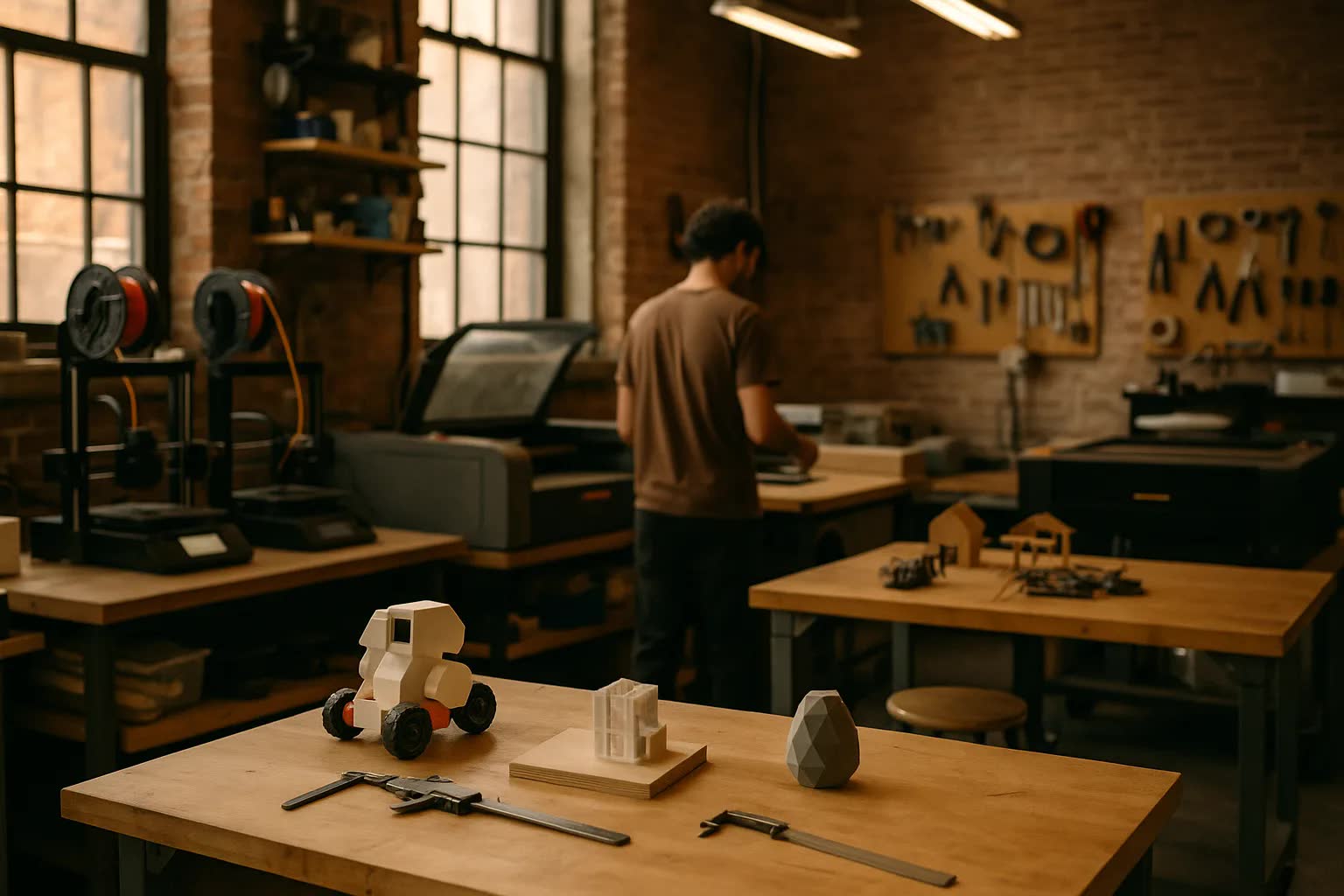
Under the shadow of the Gowanus Canal, a small, sunlit workshop that looks out onto a block of warehouses and new glass towers is fighting to keep its doors open as commercial rents surge across Brooklyn. ForgeBK, a nonprofit maker space on Third Street near Nevins Street that trains teenagers in 3D design and hosts early-stage entrepreneurs, says a looming rent hike could force the closure of its 3D printing lab, a resource members call indispensable for hands-on tech education and prototype development in the neighborhood and beyond.
Founded in 2015 by a group of educators and machinists, ForgeBK has grown from a weekend hobby hub into a neighborhood institution where kids from nearby Carroll Gardens and Sunset Park learn CAD modeling and rapid prototyping, and local hardware startups refine parts before seeking investment. The space advertises itself as a stepping stone for students who “learn by making,” offering structured after-school programs, weekend workshops and open-access nights for freelancers and inventors who cannot afford commercial prototyping services.
"When a kid from P.S. 32 designs and prints a prosthetic finger at ForgeBK, that’s not just a class, it’s a lifeline," said Amaya Santiago, executive director of ForgeBK. "We are trying to create real pathways into tech jobs and manufacturing that don’t require a car, a trust fund or a four-year degree. If we lose this lab, those pathways close for hundreds of families in this part of Brooklyn."
The financial picture is stark: ForgeBK’s current lease runs $8,500 a month and expires this spring; the landlord has proposed a renewal at $14,000 a month, an increase of 65 percent. The lab currently houses six industrial-grade fused filament fabrication printers and three resin printers; membership has climbed to 420 active members, including 120 teens enrolled in regular programming and roughly 35 microbusinesses that rely on low-cost prototyping. ForgeBK’s annual operating budget is $420,000, and the proposed rent increase would consume an additional $66,000 a year, on top of mounting utilities and equipment maintenance costs.
Neighbors and students point to the way the physical fabric of Gowanus has changed in recent years, with art galleries giving way to glass condominiums and corporate offices. A block down from ForgeBK, a formerly empty warehouse is now being marketed as a co-living complex with retail spaces on the ground floor, and the stretch toward Smith Street has seen cafe chains and boutique fitness studios replace small industrial tenants. For those who remember the neighborhood’s rougher edges, the transformation has meant better lighting and safer streets; for small nonprofits such as ForgeBK, it has meant a scramble to remain affordable.
"We bring kids from the neighborhood who would otherwise never touch a lathe or a 3D printer," said Ethan Cole, STEM coordinator at P.S. 32 and a volunteer instructor at ForgeBK. "Losing this lab would leave a generation without a place to practice the hands-on skills that complement classroom learning. They won’t get to iterate a prototype at midnight before a science fair, or to see an idea go from code to a physical object in the same day."
The rent dispute has exposed tensions among landlords, tenants and the borough’s changing commercial market. The building owner, Harbor Ridge Properties, declined to comment on the specific lease terms but issued a statement saying it is pursuing market rents to cover rising property taxes and maintenance costs after renovations to the facade and utilities. Local business owners say some landlords have shifted from long-term, below-market leases to short-term renewals with steep increases, arguing that new office demand and residential conversions justify higher rates.
ForgeBK’s leaders have launched a multipronged effort to save the lab: a membership-drive targeted at makers across the city, a fundraising campaign to raise $120,000 for a new three-year lease buffer, and grant applications to local foundations and the Brooklyn Institute of Technology, a private college that has offered in-kind technical support. The space has collected more than $32,000 in individual donations so far and secured conditional promises from three small manufacturers in Greenpoint for discounted materials; nevertheless, the gap remains large enough that the board is considering a contingency plan to split the lab across two smaller sites if a single affordable space cannot be found.
The struggle at ForgeBK echoes a broader pattern in New York: a recent survey by the fictional Metro Makers Alliance found that 18 percent of maker spaces in the borough closed between 2022 and 2025 and 42 percent reported rent pressures as their primary challenge. Advocates are pressing city agencies for a preservation fund or affordable-commercial zoning that would prioritize community-benefit tenants in former industrial zones, arguing that hands-on education and prototyping capacity contribute to a diverse local economy and provide low-barrier job pipelines.
For now, neighbors and entrepreneurs are watching a calendar of key dates: a town-hall meeting with the landlord next Tuesday at the neighborhood church, a public demonstration of student projects the week after and a deadline in late March when ForgeBK’s current lease must be either renewed or terminated. "We still have a shot," Santiago said. "If people see what the kids can build, and if the city recognizes the economic value of small-scale manufacturing, we can find a way to keep the lab in Gowanus."