Brooklyn Manufacturing Revives Along Gowanus Canal
Small-batch factories and makerspaces are moving into retrofitted warehouses even as concerns about flood risk and zoning remain unresolved.
By Mei Lin · April 15, 2026 · 4 min read
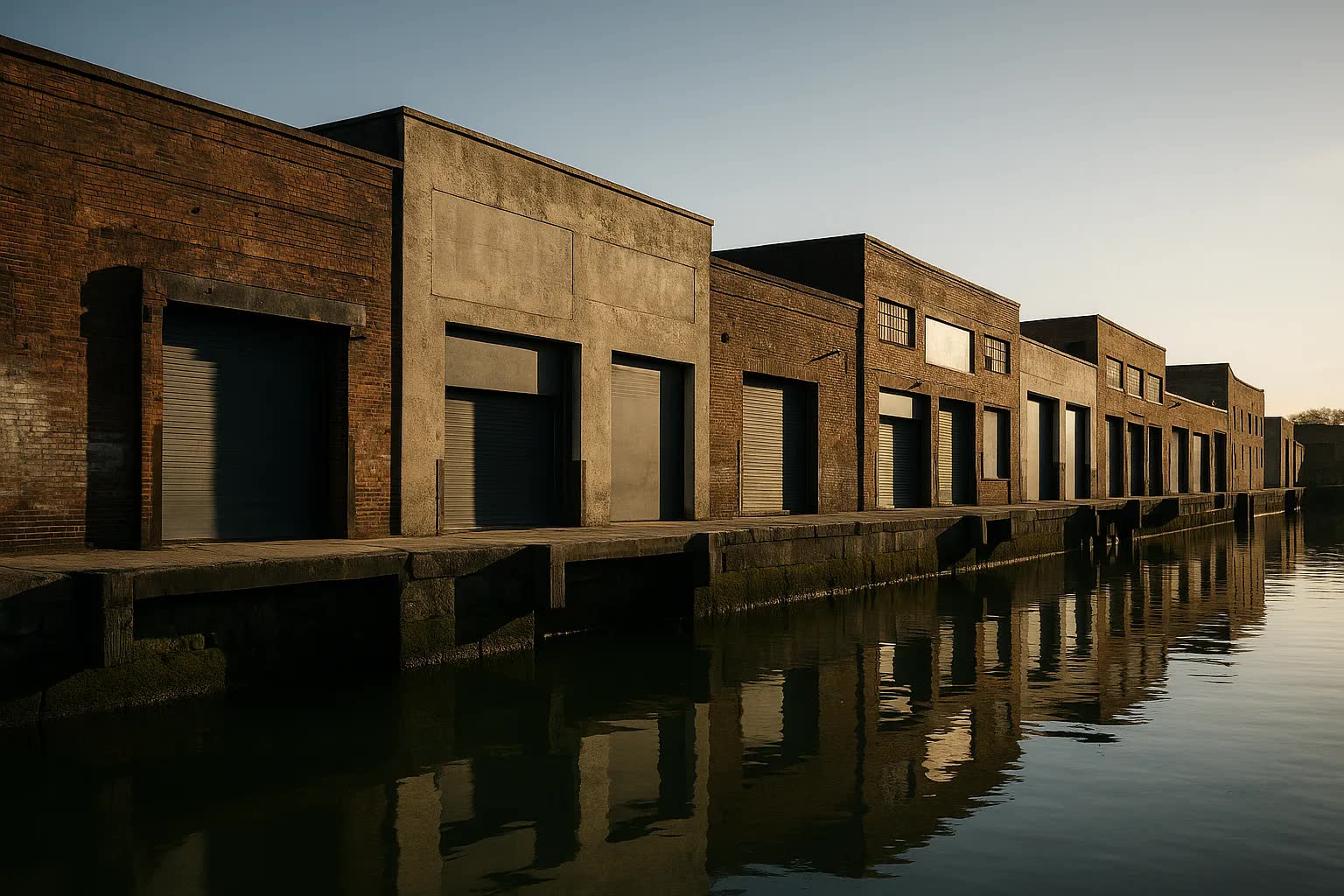
NEW YORK — Along the still-bucketed banks of the Gowanus Canal, a quiet industrial revival is taking shape: small-batch factories and makerspaces are moving into retrofitted brick warehouses on Third Street and along the Smith Street corridor, bringing pottery kilns, leather shops and micro-bakeries back to a landscape dominated for decades by metal shops and auto repair bays. Developers, landlords and an emerging cluster of artisan manufacturers say the work supports neighborhood economies from Carroll Gardens to Park Slope, even as unresolved zoning and flood resilience questions loom large.
On a rainy Tuesday morning, a pallet of clay sat drying outside a converted 1920s garage at 246 Third Street, where Canal Ceramics manufactures tableware for restaurants on Smith Street and in Red Hook. "We wanted to be where the clay could be fired and sold in the same neighborhood," said Ana Morales, founder of Canal Ceramics. Morales said moving from a smaller Red Hook studio two years ago allowed her to triple output while keeping wholesale relationships local.
In the same block, the Gowanus Makers Collective occupies the ground floor of a long-vacant brick loft, with shared kilns, a small metal shop and a digital fabrication bay. "This is not just about craft, it's about supply chains that stay in Brooklyn," said Marcus Chen, director of the collective, noting collaborations with nearby bakeries and furniture shops. Residents and longtime industrial tenants say the influx has sparked concerns about noise, fumes and the character of streets that have long been nonresidential.
Zoning remains a central point of contention. Property owners have sought flexible use approvals from the Department of City Planning while engineers and architects push for floodproofing in a 100-year floodplain that climate scientists say will arrive more often. "We're trying to thread the needle between protecting people and keeping the industrial base viable," said a senior city planner who requested anonymity because negotiations are ongoing. The planner said permanent changes to manufacturing rules are not expected until after a series of neighborhood workshops concludes.
City and private data collected by neighborhood groups offer a snapshot of the revival: 27 small manufacturers and makerspaces have opened within a half-mile radius of the Gowanus Canal since 2023, activating roughly 320,000 square feet of previously underused warehouse space. Average lease rates for industrial lofts in the corridor are about $28 per square foot, down from $35 in adjacent Sunset Park industrial zones, while capital spending on tenant-led retrofits has totaled an estimated $12 million. The new businesses employ approximately 150 full-time and 230 part-time workers, according to a compilation of business registrations.
Financing for the retrofits has been a patchwork of small business loans, landlord investment and a new private grant program called the Brooklyn Economic Resilience Fund, which has awarded $1.5 million to 11 firms for flood mitigation and electrical upgrades. "The grants helped us raise the service panels and install floodproof doors without passing costs to our makers," said Evelyn Price, executive director of the Gowanus Business Alliance, which manages the fund. Price added that landlords are increasingly willing to underwrite resilience work that would have been cost-prohibitive for a solo proprietor.
Even with grants, the hurdles are real. Insurers have been raising premiums and many landlords require tenants to cover costly retrofits that meet now-stricter building codes: elevated electrical systems, sealed loading docks and secondary drainage. Some small manufacturers have relocated to Industry City in Sunset Park or to Long Island City to find larger footprints and lower retrofit costs. A leatherworker on Union Street closed last winter after a dispute over whether the landlord would pay for a backup generator to meet new safety inspections.
Residents and community boards have pushed for safeguards. Meetings at the Carroll Gardens branch library and an ongoing series of hearings hosted by Community Board 6 have produced calls for noise limits, emissions monitoring and clearer rules on what kinds of industrial use are permitted near housing. The Department of Small Business Services has launched a pilot to provide technical assistance for compliance and a low-interest loan pool for mitigation, but local activists say the timeline and capacity are insufficient to keep pace with new occupants.
Supporters of the revival argue the new activity plugs critical gaps in the city's local economy, supplying restaurants, designers and repair shops with faster, greener supply chains than imports from farther afield. "It's a different kind of manufacturing — smaller scale, more repair-orientated, and tied to neighborhood demand," said Tara Bishop, an environmental organizer in Park Slope who also works with a cooperative that hosts repair workshops. Still, Bishop urged officials to lock in stronger flood protections for workers and to preserve space for longtime industrial tenants who might otherwise be priced out.
For now, the Gowanus revival is being built block by block, combining entrepreneurial energy and targeted public support while policy decisions lag. City planners say they will publish a zoning update for the canal corridor by late 2026, and local groups hope that the next phase will enshrine protections for floodproofing, maintain industrial capacity and create incentives for long-term leases. Manufacturers, residents and officials say the stakes are high: whether this stretch of Brooklyn can knit together resilience, affordability and small-scale industry will be decided in the months ahead as retrofits continue and the canal's banks slowly shape the next chapter of neighborhood life.