Brooklyn Museum Opens Sweeping Show on the City's Immigrant Craftwork
A new exhibition traces generations of textiles, ceramics, and metalwork made by New York's immigrant communities, treating everyday objects as living history.
By Noah Fitzgerald · July 10, 2026 · 4 min read
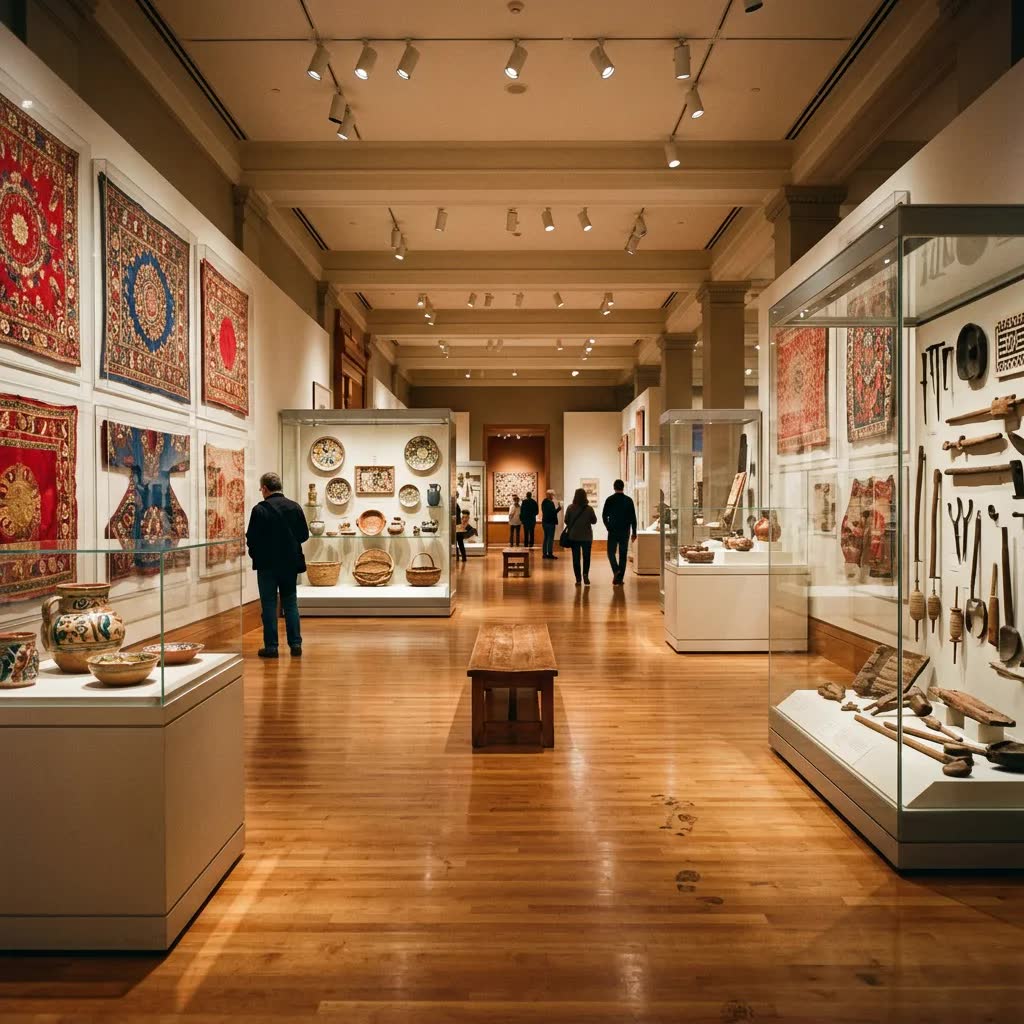
NEW YORK — The Brooklyn Museum on Friday opened a sprawling exhibition devoted to the craftwork of the city's immigrant communities, gathering hundreds of textiles, ceramics, tools, and pieces of metalwork made over more than a century by New Yorkers who brought their traditions with them and reshaped them in a new city. The show, occupying two floors, treats these everyday objects not as folk curiosities but as a serious record of labor, memory, and adaptation.
Rather than organizing the material by country of origin, the curators arranged it around shared human acts — cooking, mourning, celebrating, working — allowing a hand-embroidered wedding textile to sit near a set of tailor's tools worn smooth by decades of use. The effect is to draw out echoes across communities that arrived in different eras and neighborhoods, suggesting a common vocabulary of making that runs beneath the city's diversity. "These objects are how people held onto who they were while becoming something new," one curator said.
Many of the pieces were lent by families rather than drawn from institutional collections, and the exhibition pairs them with recorded oral histories in which relatives describe the objects' origins and uses. That approach, the curators said, was meant to keep the makers present rather than letting the works float free as anonymous artifacts. Visitors move through the galleries hearing the voices of the descendants explaining a grandmother's loom or a father's cobbling bench.
The show arrives at a moment when questions of immigration and belonging remain politically charged, and the museum has been careful to let the objects carry the argument rather than sloganeer. Still, the curators acknowledge the exhibition's implicit claim: that the city's material culture is inseparable from the people who came from elsewhere to build it. "You cannot tell the story of New York craft without telling the story of migration," one said. "They are the same story."
Community response has been notably personal. At a members' preview, several visitors lingered before objects that resembled ones their own families owned, and the museum has set up a program inviting residents to record their own stories about heirloom crafts. Educators plan to bring school groups through the galleries, using the objects to teach neighborhood history in a city where students trace their roots to nearly every corner of the world.
The exhibition runs through the fall, accompanied by a series of weekend workshops in which contemporary artisans demonstrate techniques on display. Museum officials framed the show as part of a broader effort to expand whose work counts as art worth preserving. "For a long time, this kind of making was left out of the museum," one official said. "Putting it at the center is the whole point."