Brooklyn Navy Yard’s Modular Housing Plant Expands Production
The industrial campus is adding shifts and a second assembly line to meet a city pipeline of modular units for affordable housing projects.
By Caroline O'Neill · February 17, 2026 · 4 min read
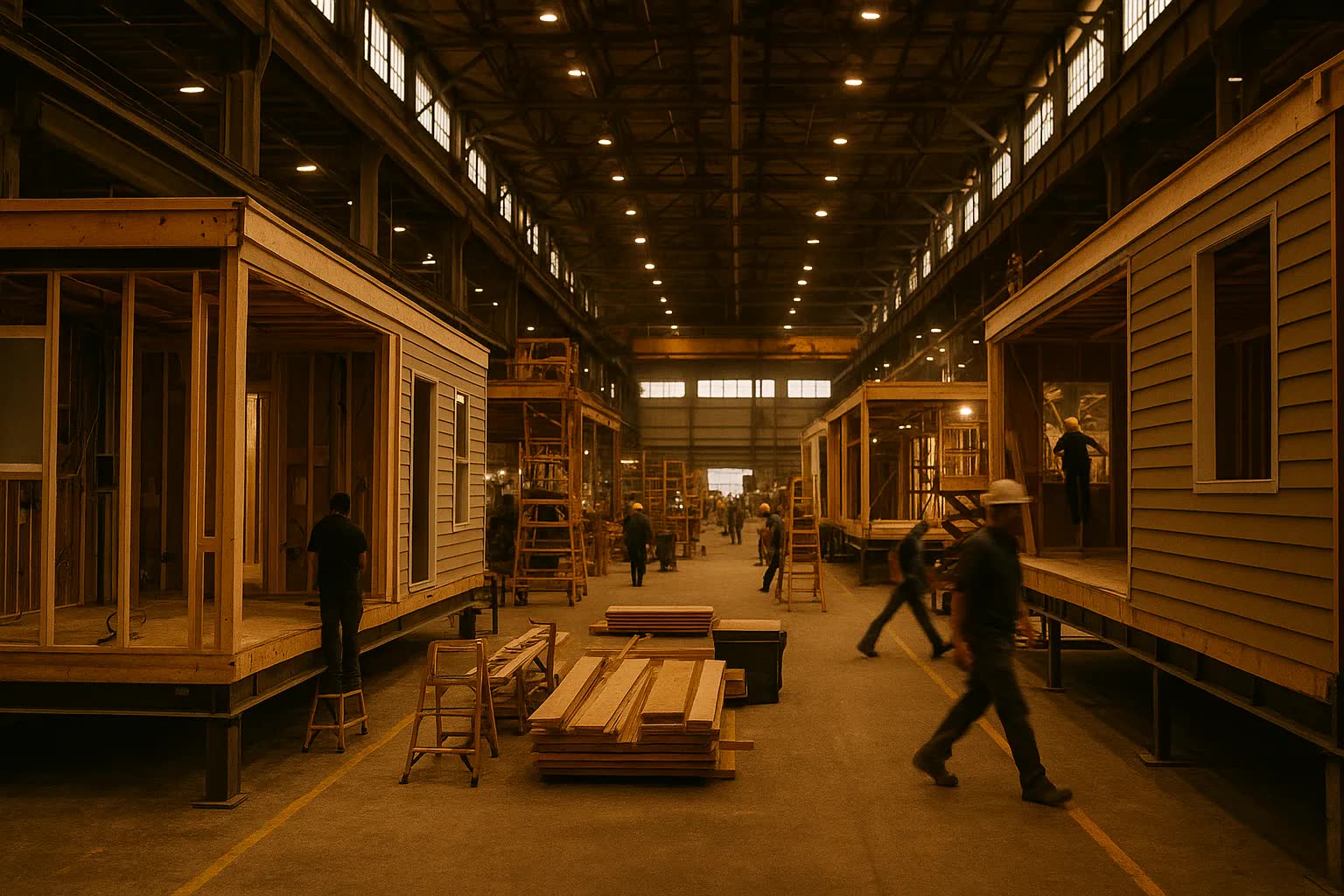
At the Brooklyn Navy Yard, where hulking brick warehouses meet the East River and the Williamsburg Bridge looms to the north, a new phase of housing production is unfolding: the yard’s modular housing plant is adding a second assembly line and expanding to three shifts to meet a city pipeline of prefabricated units earmarked for affordable housing projects across New York City.
City officials and private contractors say the move is designed to speed delivery of apartments for neighborhoods that face the tightest rental markets, from Sunset Park in Brooklyn to East Harlem and parts of Queens such as Jamaica and Astoria, and to reduce costs associated with long on‑site construction schedules. The Navy Yard, long known for shipbuilding and light manufacturing, has been refashioned in recent years as an industrial campus that hosts everything from film studios to tech startups; now it is positioning itself as a production hub for off-site housing assembly.
The Navy Yard expansion will be led by YardBuilt Modular, a private company that won several city contracts last year, and will take over two adjacent bays in a former machine shop near Flushing Avenue and Navy Street. "This isn’t about making cookie-cutter boxes," said Marta Delgado, director of manufacturing at YardBuilt Modular. "We are standardizing components, not homogeneity, and scaling operations so we can meet the city’s needs without sacrificing quality or design flexibility."
Construction crews have already installed overhead crane rails and new conveyor systems, and engineers are fitting out a climate-controlled finishing area for plumbing and electrical work. The second assembly line will be sited in a 120,000 square foot hall that was used for metal fabrication, and YardBuilt is erecting temporary modular offices for engineers and inspectors along the yard’s southeastern truck route. Local labor leaders and contractors are negotiating work rules that would let Masonry and Sheet Metal apprentices rotate through the plant as part of a city-backed training program.
Under the plan announced this month, current output of roughly 260 modular units a year will triple to about 840 units annually once the second line and three-shift schedule are fully operational, according to company projections and documents provided to the city. The expansion will require about $18 million in plant upgrades, the hiring of approximately 220 full‑time assembly workers, and the addition of a 60‑person logistics crew to manage deliveries. The city’s modular pipeline now stands at roughly 2,400 units contracted for the next four years, with an average module footprint of 420 square feet and an estimated per-module production cost of $95,000 before site work and vertical stackup are added.
"Modular construction allows us to cut the on-site schedule in half and reduce weather-related delays," said Ethan Park, deputy commissioner for modular housing at the New York City Office of Housing Development. "By coordinating factory output with site readiness across boroughs — from a 12‑story project near Pitkin Avenue in East New York to a seven‑story building planned near 30th Avenue in Astoria — we can deliver affordable units more predictably and at lower cost."
Not everyone welcomed the expansion without reservation. Community groups, particularly in neighborhoods that will receive large shares of modular units, raised questions about long-term affordability and the visual character of modular projects lining their streets. "We do not want our neighborhoods to become testing grounds for short-term fixes," said Anita Ruiz, president of the Brownsville Neighborhood Coalition. "We need guarantees that these units will remain affordable and that local residents will benefit from the jobs promised."
The Navy Yard expansion also underscores the growing industrial supply chain that surrounds New York’s modular efforts. Steel frames and connector hardware are being sourced from plants in northern New Jersey and Long Island, while glazing and bathroom pods are being prefabricated by smaller firms operating in Maspeth and the South Bronx. Truck routes have been mapped to avoid neighborhood schools where possible, but planners acknowledge that a steady flow of flatbeds will be part of the city’s logistical equation as completed modules travel from the yard down the BQE or across the Manhattan Bridge to staging sites.
Architects and engineers note that modern modular units are increasingly sophisticated: units arrive with mechanical, electrical and plumbing systems largely preinstalled, and building cores can be assembled quickly on-site to form mid-rise structures. That said, projects still require meticulous coordination, from wetlands and foundation work in coastal neighborhoods like Red Hook to elevator installation and fire‑safety commissioning in denser parcels along Fulton Street and Jamaica Avenue. City inspectors will perform sequential tests as modules arrive and are stacked so that code compliance does not lag behind the faster construction pace.
If the Navy Yard expansion proceeds on schedule, YardBuilt expects the second line to begin producing modules by the third quarter of 2026, with the first deliveries slated for an East New York project under construction off Pitkin Avenue that aims to provide 180 affordable units for families, seniors and formerly unhoused residents. Officials at the yard and in the city say the goal is to refine the production model and then market it to other municipal housing programs around the region, a move they argue could help New York meet its ambitious affordable-housing targets while keeping industrial jobs in neighborhoods from Bushwick to Long Island City.