Brooklyn Night Schools Teach DJing and Club Light Design
Community centers and independent clubs are offering weekend classes to train the next generation of nightlife technicians and stagehands.
By Malik Johnson · April 3, 2026 · 4 min read
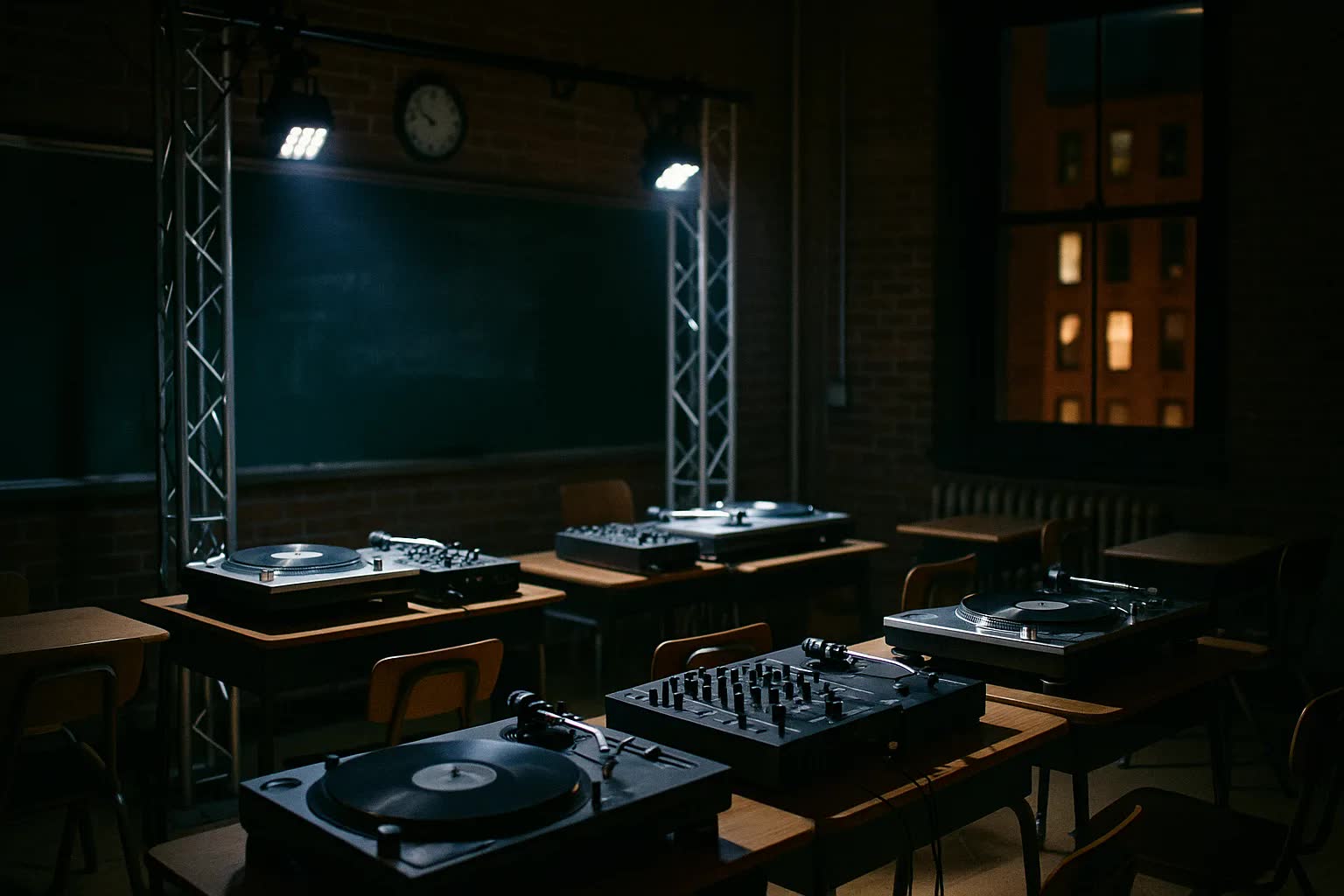
NEW YORK — On weekend nights across Brooklyn, from a converted loft off Morgan Avenue in Bushwick to a storefront on Myrtle Avenue in Bed-Stuy, community centers and independent clubs are running classes that teach DJing, club light design and the technical skills that keep nightlife running when the bass drops and the house lights go down, part of a quietly growing effort to build a workforce of trained nightlife technicians in a city still defined by its after-hours culture.
The programs blend music education with trade skills, and they are cropping up in places as varied as a volunteer-run arts space in Gowanus and a nonprofit arts hub near McCarren Park in Williamsburg, as well as at Sunset Park Community Arts on Fifth Avenue. "We want to demystify the tech side of nightlife so people can turn creativity into work," said Nadia Cruz, director of the Brooklyn Night Workshop, which runs weekend DJ and PA-systems classes in a former warehouse on Jefferson Street in East Williamsburg.
Curricula range from basic beatmatching and crate-digging lessons to advanced workshops on DMX lighting consoles, LED programming and safe rigging practices. "Students learn how to read a lighting plot, how to program cues and how to troubleshoot a failing circuit under pressure," said Marcus Delgado, resident lighting designer at Club Atlas in northern Bushwick, who runs a weekly evening class teaching club-specific fixtures and console etiquette. His students practice on inventory that includes three moving-head fixtures, two follow-spots and a programmable LED wall.
Classes are intentionally scheduled after 7 p.m. on Fridays and Saturdays to mirror real club shifts, and sites are chosen to be accessible by transit: the Brooklyn Night Workshop is a six-minute walk from the Morgan Avenue L train stop, while Club Atlas is a short ride from the G train in northern Bushwick. In Bed-Stuy, the Myrtle Avenue storefront shares space with a youth center, with students arriving by Citi Bike and city bus to practice DJ sets on donated Pioneer mixers and Traktor controllers beneath a mural of vinyl records.
The expansion is measurable. Since the fall of 2023 the number of weekend-night venues offering formal DJ and lighting classes in Brooklyn has grown from six to 18, according to a coalition of organizers who track the programs; aggregate enrollment rose from roughly 520 students in 2023 to about 2,160 in the last 12 months. Tuition per eight-week module ranges from $75 for sliding-scale community spots to $320 at privately run clubs, and about 28 percent of seats are allocated to scholarships funded by local arts grants and donated gear drives.
Organizers say the classes are more than hobby courses; they are a career pipeline into production work, club operations and small-business ownership. Graduates of the Brooklyn Night Workshop have landed paying shifts as assistant sound techs and bar managers, and Club Atlas reports that three of its regular stagehands began as lighting students. "The industry has historically been apprenticeship-based and informal," Cruz said. "Formal training gives people documentation on their resume and a practical skill set that venues can rely on."
Local nonprofits and a small group of club owners have pooled resources to make equipment affordable. The Night Skills Fund, a Brooklyn-based nonprofit created last year, donated 42 pairs of headphones, 16 mixers and two rigging kits to classrooms and has committed $150,000 in seed grants for programming through 2027. "We had to get creative — equipment is expensive, and safety training is non-negotiable," said Aisha Bello, program manager at Sunset Park Community Arts, which offers a winter lighting boot camp that emphasizes load-in and safety checklists.
There are tensions. Neighbors in rapidly gentrifying pockets of Williamsburg and parts of Bushwick have filed noise complaints that have made scheduling live-instruction nights more complicated, and some venues face increased building-code scrutiny when a classroom program converts a storage loft into a training space. "We try to keep decibel levels reasonable during practice and work with community boards to avoid late-night disruptions," said Marcus Delgado. Organizers also contend with insurance costs for hands-on rigging work, which can run several hundred dollars extra per class.
Students describe the programs as a pathway to dignity and opportunity. "I came in because my cousin recommended the DJ class and now I'm mixing my own sets and learning to program lights," said Jaylen Ortiz, 24, a Bushwick resident and a part-time student at Club Atlas who hopes to tour as an opening DJ. "The instructors show you the industry standards — it's not just about being flashy, it's about doing the job right." Many students say the social aspect is as important as the technical training: classmates swap records, loan cables and take shifts at weekend pop-up nights organized as part of the coursework.
Organizers and club owners are already looking ahead: plans under discussion include a citywide certification recognized by venues, a summer apprenticeship that pairs students with touring production crews, and expanded classes in projection mapping and immersive audiovisual systems to reflect how club shows are evolving. If the current momentum holds, Brooklyn's nights will not only be louder and brighter but staffed by a new generation of technicians who were trained in the same neighborhoods where they now keep the city dancing.