Brooklyn Parents and Electeds Collide Over School Co-Location Plan
City education officials propose sharing space between an existing high school and a new charter, igniting months of back-and-forth in community board meetings.
By Priya Patel · May 1, 2026 · 4 min read
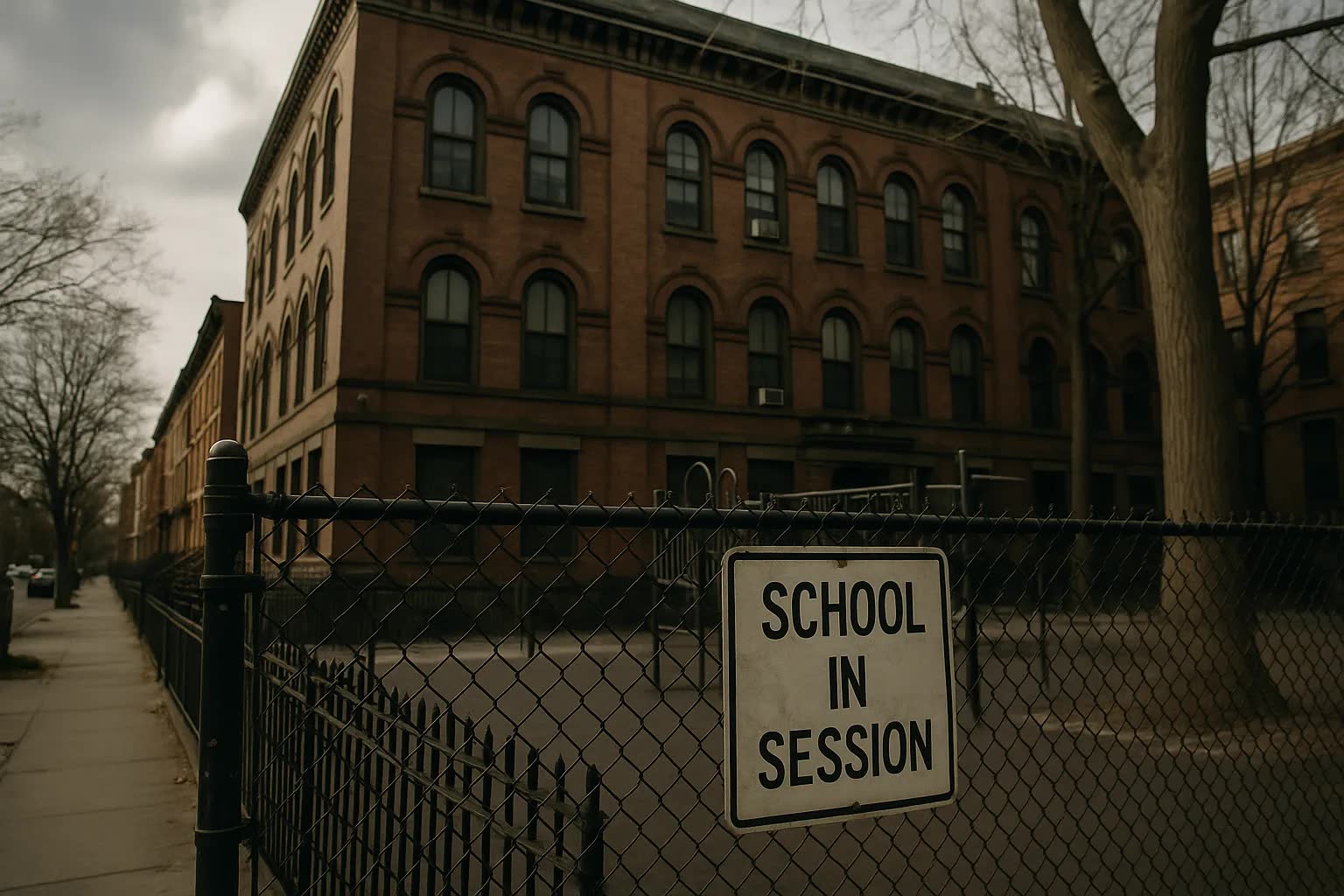
NEW YORK — At a cramped red‑brick building on Flatbush Avenue, a few blocks from the oak groves of Prospect Park, parents, teachers and local politicians have spent the better part of the spring trading sharp questions, petitions and public testimony over a city plan to co‑locate a new charter school inside an existing Brooklyn high school. The proposal from the Department of Education to insert the Brooklyn Futures Charter into Parkside High School has turned routine community board meetings into full‑throated battles over space, programming and equity across neighborhoods from Park Slope to Sunset Park.
Parkside High, a three‑story building wedged between a laundromat and a bodega, serves 1,270 students in grades 9 through 12 and has long been a fixture for families on the south side of Prospect Park. The charter operator, Brooklyn Futures Charter, won initial city approval last year to open a 450‑seat high school serving grades 9 through 12 and has proposed occupying two floors and a portion of the first‑floor auditorium and cafeteria. City education officials say the move would make better use of underused rooms and bring more choices to families; opponents say it will squeeze out electives, displace arts programming and create logistical headaches for a building already stretched thin.
"We were blindsided," said Arman Sethi, co‑chair of the Sunset Park Education Alliance, who has a sophomore at Parkside. "We did not wake up and say we wanted less music and fewer lab periods. Families were not consulted in a meaningful way. You cannot retrofit a community overnight without losing programs that took years to build." Sethi has helped organize petitions and a petition drive that has collected signatures outside the school entrance on several rainy Tuesday mornings.
Councilwoman Marissa Delgado, whose district includes the school, has embraced the parents’ concerns and demanded a pause. "This plan puts our kids last," Delgado said at a March press conference on the steps of a nearby library. "Our priority should be shoring up existing schools, not reassigning spaces that students rely on for services and extracurriculars." Delgado has called on the DOE to explore alternatives, including underused municipal buildings in the borough and partnerships with community colleges for shared facilities.
The numbers underlying the dispute are concrete and sharp. Parkside currently enrolls 1,270 students in a building with an official capacity of 1,500, a utilization rate the DOE says is 85 percent; the charter seeks an initial 450 seats with growth to 600 over five years. The agency’s space plan would reassign 18 classrooms and two administrative offices to the charter, reduce elective slots by an estimated 20 percent and relocate after‑school programs to offsite community centers three blocks away. City estimates say roughly $2.4 million in renovations would be required to create separate entrances, additional bathrooms and new science labs for the charter space. Since January, the community has held six public meetings on the proposal and more than 1,600 people have signed a petition opposing co‑location.
Dr. Raul Mendes, a deputy chancellor for school facilities at the Department of Education, defended the proposal at a raucous April hearing. "We have the space and a plan to minimize disruption," Mendes said. He described a phased construction schedule, new partitions to preserve small‑group instruction rooms, adjustments to bell times and a $2.4 million capital allocation for upgrades to HVAC, accessibility and security. Mendes also said the city had identified surplus classroom space in three nearby campuses as contingency options if Parkside’s needs shifted during implementation.
Still, the local community board voted against the plan in a narrow advisory ballot this spring, 7‑6, with two abstentions. Members who opposed the proposal cited worries about losing advanced placement and arts classes, which Parkside parents say have improved graduation rates in recent years. Board member Leah Park, who works at the Wyckoff Street Community Center and voted no, said the process felt rushed. "We want new seats for kids, but not on the backs of the programs that serve kids now," Park said. Supporters of the charter argued that Brooklyn Futures would recruit from under‑served neighborhoods and bring new counseling and college‑prep resources to the campus.
Borough President Lila Nwosu, a frequent interlocutor in education fights across Brooklyn, issued a sharply worded statement criticizing the DOE for what her office called a lack of transparency. "Families deserve a seat at the table before decisions are made about where and how their children learn," the statement said. The United Brooklyn Teachers Association has weighed in as well. "Our kids deserve fully funded classrooms and stable schedules," said Jose Marin, the union’s president, adding that teachers fear program cuts and larger class sizes if the co‑location moves forward.
Practical questions have animated much of the neighborhood debate. Under the city plan, Parkside students’ start time would shift 15 minutes earlier, the cafeteria would be split into two reserved windows and music classes would be moved to a repurposed storage room on the third floor. After‑school clubs that now use the auditorium would be redirected to the Cooper Street Recreation Center, about two blocks away, requiring some students to cross busy Atlantic Avenue after dismissal. Transportation planners say bus loads from eastern neighborhoods such as Crown Heights and East New York may increase by as many as two routes during peak dismissal periods if busing needs change.
The next public milestone is a DOE hearing scheduled for May 20 at Brooklyn Borough Hall, where officials say they will present final impact studies and a more detailed mitigation plan. A final city decision is expected in June, after which opponents have signaled they will seek an appeal through administrative channels if the city moves forward. For now, parents, elected officials and school staff are preparing contingency plans and promises of continued scrutiny. "We will keep showing up," said Sethi. "This isn’t over, and neither are the kids we’re fighting for."