Brooklyn Rooftop Cinema Clubs Turn Summers Into Nightly Screenings
New rooftop venues in Williamsburg and Bushwick are curating classics and neighborhood premieres that trade late‑night bars for skyline viewings.
By Mei Lin · May 1, 2026 · 4 min read
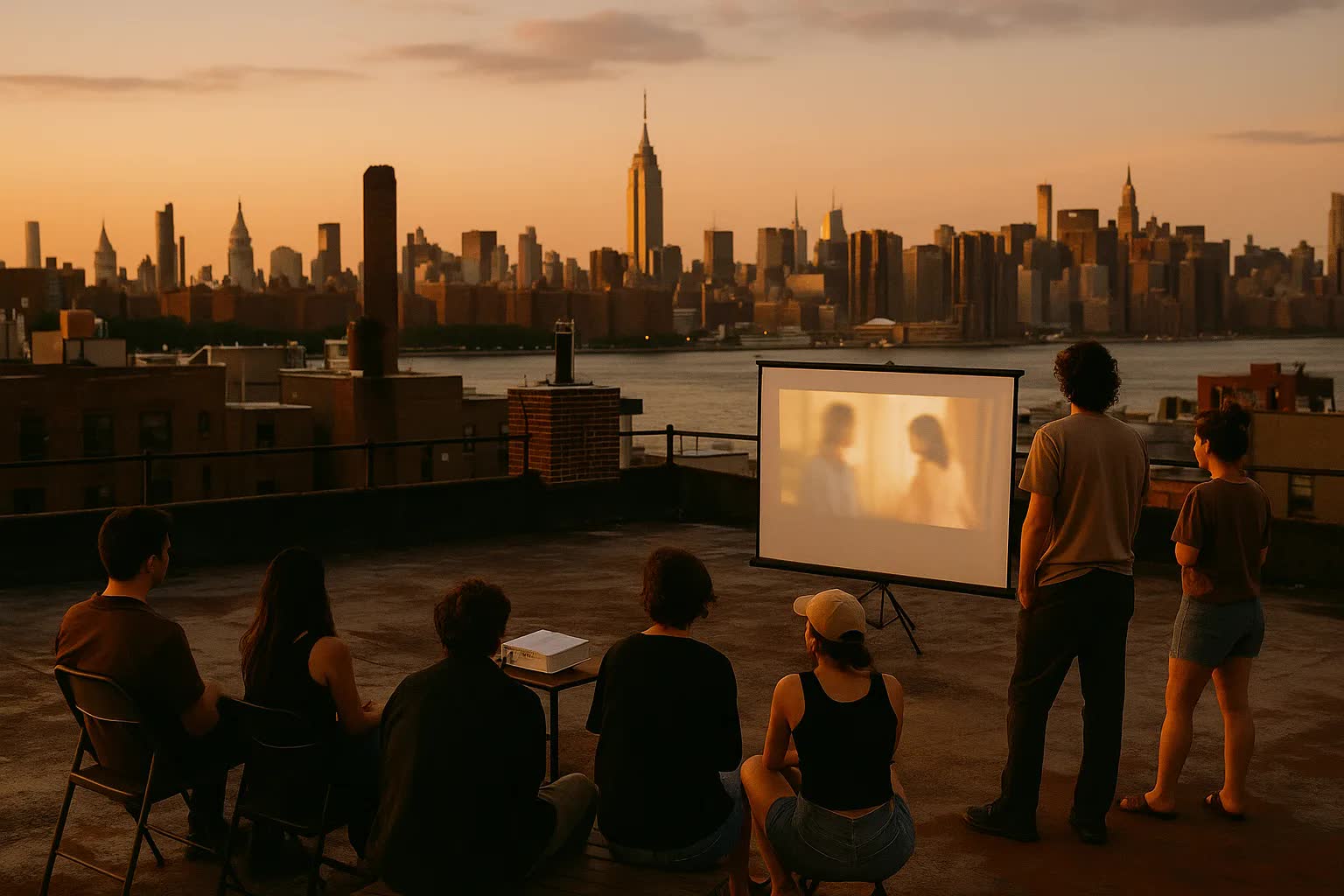
NEW YORK — On warm evenings this spring and into summer, rooftop film clubs in Williamsburg and Bushwick are turning what were once bar‑crowded blocks into open‑air cinemas where neighbors trade bar stools for skyline seats, blankets and communal popcorn. From a converted textile loft a block from Bedford Avenue to a warehouse roof at the edge of the Bushwick Collective murals, organizers are programming classics and neighborhood premieres that capitalize on skyline views of the East River and Manhattan, and on a newly hungry audience that wants a cinematic night out without losing the borough feeling.
At the once‑dormant roof of 295 Wythe, the Skyline Reel Club opened in late April with a slate that mixes black‑and‑white Hitchcock and contemporary Brooklyn premieres, installing tiered seating and weatherproof screens just shy of the Domino Park sightline. "We wanted to give people a different night scene — one that feels local and cinematic at once," said Arielle Soto, programming director of Skyline Reel Club. Her team curates films around neighborhood themes and coordinates with nearby businesses on food pop‑ups and bar takeovers to keep the experience Brooklyn‑centric.
A few blocks east, the Bushwick Roof Cinema Collective has converted the rooftop of a former printing facility along Troutman Street into a 350‑seat venue that leans into experimental works and late‑night neighborhood premieres. "There’s a certain electricity when a film lands against the murals on Troutman and the glow of Broadway; it feels like the community is projecting itself," said Marcus Delgado, co‑founder of the Collective. Delgado said the Collective schedules shorter programs on weeknights and double features on weekends to keep noise and foot traffic manageable for surrounding residents.
The clubs use a mix of film‑industry grade 4K projectors, directional speakers that create sound domes, and translucent windbreaks that preserve views while shielding screens. Both venues contracted with local AV firm HarborLight for setup and with Permity, a neighborhood permitting consultant, to navigate city requirements. "Sound design is as much about neighbors as it is about fidelity — we test at multiple decibel levels and talk to block associations before season openers," said Lena Park, senior sound compliance manager for HarborLight, summarizing a technical approach that operators say has cut spillover complaints nearly in half compared with ad hoc rooftop parties of years past.
Concrete numbers suggest a growing, organized trend: in North Brooklyn last summer, 12 rooftop venues staged 1,120 screenings between Memorial Day and Labor Day and together drew an estimated 58,400 patrons, according to a survey compiled by the North Brooklyn Arts Partnership, a coalition of venue operators and cultural groups. Average venue capacity ran about 320 seats; average ticket price was $18; nightly revenue per venue — including concessions and vendor fees — averaged roughly $5,700 on weekends. Operators reported that food and beverage partners saw a 20 to 30 percent uptick in nearby foot traffic on screening nights.
Neighbors and small business owners offer mixed reviews. Owners of a café on Bedford Avenue said rooftop screenings have extended their dinner rush by an hour as patrons stop for coffee before or after shows. "It’s been good for business — we close later and see younger crowds who stick to the neighborhood instead of hopping to Manhattan," said Rafael Jiménez, owner of Willow Bakehouse. But some residents near McCarren Park and in parts of Bushwick have raised concerns about late‑night noise, trash and public safety; two block‑association meetings this spring included lengthy discussions about curfews and trash collection schedules.
Organizers stress their efforts to be neighbors‑first. Venues have invested in shuttle bikes, arranged bulk trash pick‑ups, hired licensed security and instituted quiet exit corridors, often coordinating with Community Board 1 and local precincts on safety plans. "We’re trying to build cultural infrastructure, not a midnight destination that displaces residents," Delgado said. He added that the Collective allocates 10 percent of advance tickets to local residents at reduced prices and meets monthly with a resident advisory panel to adjust programming and operations.
The cinematic programming itself has become a draw for filmmakers and curators. Independent directors who premiered shorts on rooftop programs this spring say the settings provide a different energy than indoor theaters. "The rooftop premiere felt like the film was being set into the city itself — you could see the skyline breathe with the story," said Jamal Reyes, a Brooklyn director whose short premiered on a Bushwick roof in April. Festivals and micro‑cinema series have begun to eye the rooftops as companion venues, pairing talks and panels on urban filmmaking with screenings that place local stories against a literal urban horizon.
Regulatory hurdles remain, from licensing film rights and alcohol permits to the structural inspections required for repeated public use; some landlords have balked at long‑term conversion of commercial roofs into event spaces. Insurance costs, which can range from $4,000 to $12,000 per month depending on capacity and vendors, are a primary barrier for pop‑up operators considering winter programs. Weather is another constraint: several rooftop clubs pilot contingency plans that include nearby storefronts and heated tenting when forecasts threaten cancellations during peak season.
Organizers say the first full season is shaping the blueprint for future growth, and several teams are already scouting locations in Greenpoint and the fringes of Gowanus for next year. "We’re experimenting with what a summer cinema culture looks like in Brooklyn — it’s about hospitality, community partnerships and sustainable operations," Soto said. As the rooftops program more neighborhood premieres and experimental nights, city planners and operators alike will be watching to see whether the model can be scaled into a year‑round feature of Brooklyn’s cultural landscape or remain a seasonal, skyline‑lit ritual.