Brooklyn's Soundstages Are Full, and the City Is Racing to Build More
A surge in streaming and television production has filled the city's soundstages to capacity, driving an expansion that boosters say is minting middle-class crew jobs.
By Dana Okafor · July 17, 2026 · 5 min read
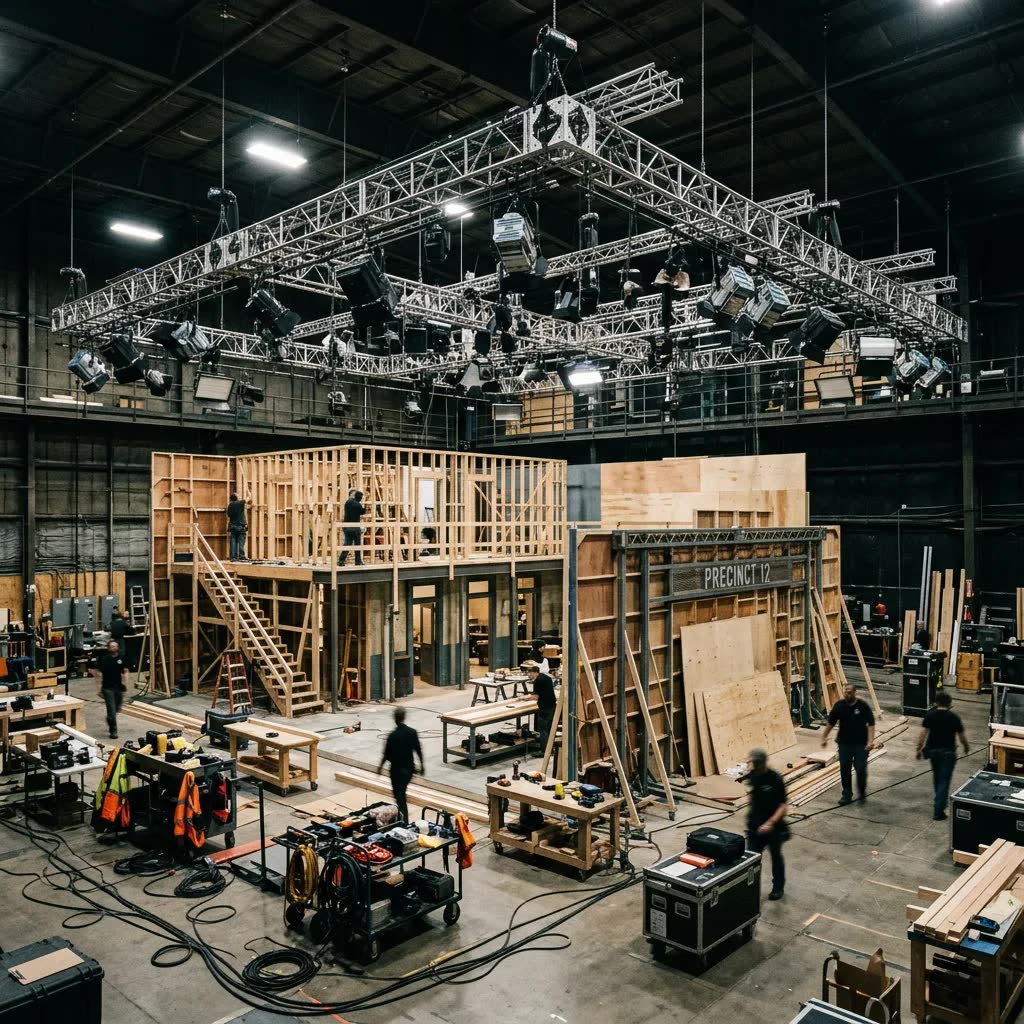
NEW YORK — Inside a cavernous Brooklyn soundstage last week, a crew of nearly a hundred moved with the practiced choreography of people who do this every day: gaffers rigging lights three stories up, carpenters framing the false walls of a fictional precinct house, a sound mixer hunched over a cart of equipment. The scene is being repeated across the borough, where soundstages are booked to capacity and a wave of new construction is racing to keep up with the demand for space to shoot television.
Industry groups and city officials describe a production boom that has strained the city's physical capacity to house it. Streaming platforms and networks, drawn by a mix of tax incentives, deep local talent, and the inimitable backdrop of the city itself, have kept the stages full for months on end. "We are turning away shows because we simply do not have the rooms to put them in," one studio operator said. "That is a good problem, but it is a real one."
The response has been a flurry of soundstage construction along the borough's industrial waterfront and in converted warehouses, projects that boosters tout as engines of middle-class employment. Film and television production supports a large ecosystem of unionized crew jobs — electricians, set builders, drivers, caterers — that pay well and do not require a college degree, a combination increasingly rare in the city's economy. Advocates argue that every new stage translates into hundreds of steady paychecks.
The optimism is tempered by hard-won caution. The industry is famously cyclical, and veterans remember previous booms that collapsed when budgets tightened or productions decamped to cities offering richer incentives. Some crew members, flush with work now, worry aloud about what happens if the streaming spending spree contracts, leaving a borough full of expensive new soundstages and a workforce dependent on keeping them occupied. "The work is incredible right now," one grip said. "Ask me again in two years."
The expansion has also stirred the familiar tensions that follow the film industry wherever it sets up. Neighbors near active locations grumble about blocked streets, idling trucks, and the loss of parking to production vehicles, even as many acknowledge the jobs and spending the shoots bring. City officials have tried to smooth the friction with clearer permitting and community notification, aware that public patience is a resource as finite as stage space.
For now, the borough is riding the wave. On the Brooklyn stage last week, a production assistant barely out of college described the whiplash of steady work after years of scraping by. "My friends who moved away for tech jobs make fun of me," she said, watching the precinct-house set take shape around her. "Then they come visit and I show them what we built in a warehouse, and they stop laughing. This whole world runs on people they've never heard of. I'm one of them now."