A Day-Into-Night Warehouse Festival Puts Local DJs Center Stage
A Bushwick electronic-music festival built around homegrown talent draws a sun-soaked afternoon crowd that stays through a sweat-drenched, bass-heavy night.
By Aspen Young · July 27, 2026 · 4 min read
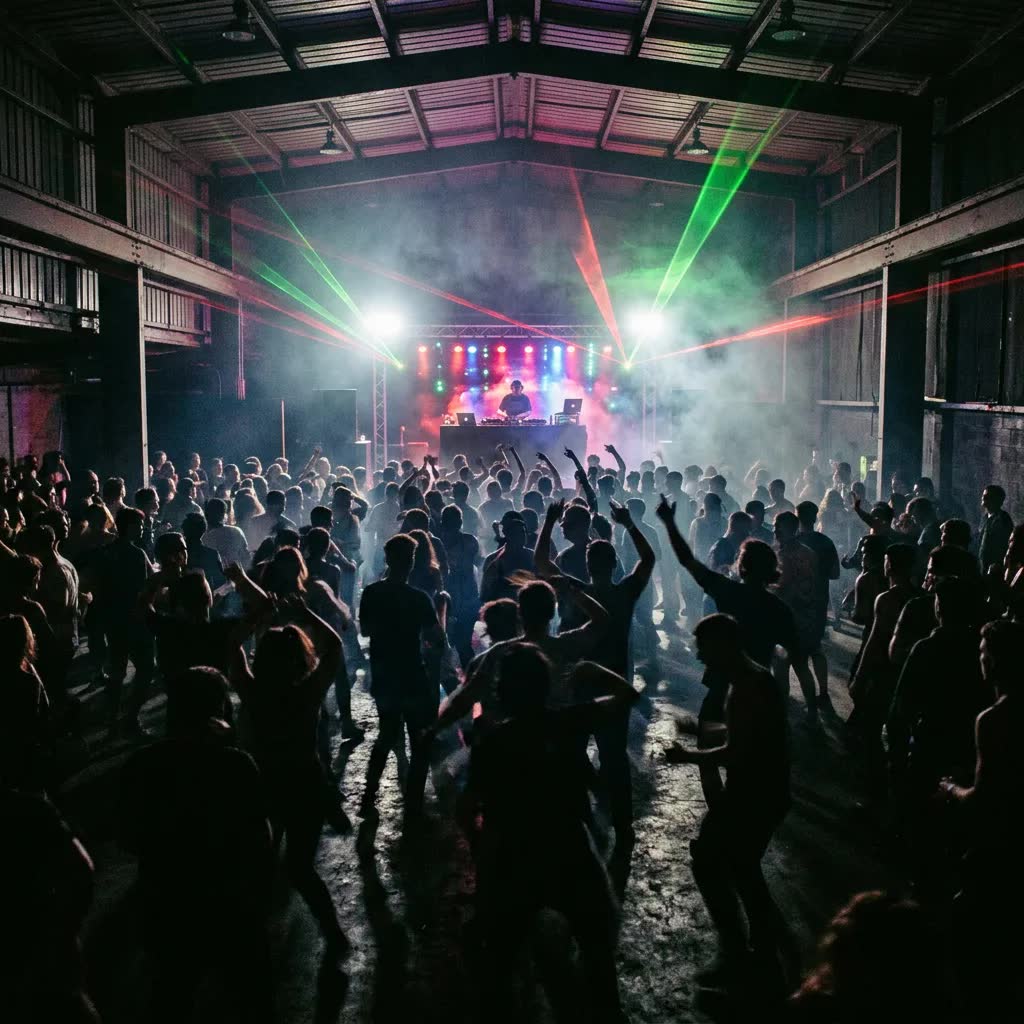
NEW YORK — It began in daylight, almost gently, with a crowd sprawled across a Bushwick warehouse yard as an afternoon DJ set drifted over the concrete. By midnight the same space was a churning, low-lit cavern of bass and bodies, the sun long gone and the crowd transformed into something looser and louder. The day-into-night arc was by design: a homegrown electronic-music festival built, its organizers say, around the deliberately unglamorous premise of showcasing the city's own DJs rather than flying in headliners from abroad.
The festival is part of a wider current in the city's dance-music underground, which has spent years pushing back against a circuit dominated by expensive international acts and toward the local artists who actually sustain the scene the other fifty weekends a year. "The talent is right here," one organizer said. "People in this city will drop a fortune to see some famous DJ fly in for an hour and leave. Meanwhile the person who's been holding down this exact warehouse every month for a decade plays to a half-empty room. We flipped that."
The lineup drew entirely from performers based in the city, arranged so that lesser-known artists played the sunny early slots and built toward a peak-hours finale from the scene's local veterans. The programming choice was a gamble — early crowds are notoriously thin — but the yard filled steadily through the afternoon, helped by cheap tickets, food stalls, and the simple pleasure of dancing outdoors before the heat of the day gave way to evening.
Warehouse events have a fraught history in the city, long shadowed by concerns about safety, permitting, and the perennial tension between an underground that prizes its outlaw spirit and authorities that prize crowd-control paperwork. The organizers of this festival were at pains to emphasize that they had done things by the book, with permits, licensed security, water stations, and clearly marked exits, a professionalism they framed not as a betrayal of the underground but as the price of keeping it alive.
The economics of dance music, like every corner of live performance, remain precarious, and the organizers were candid that the festival's margins were razor-thin. Keeping ticket prices low enough to draw a young, cash-strapped crowd meant relying on bar sales and sponsorships, and one bad-weather day could have wiped out the whole endeavor. They pulled it off, they said, on volunteer labor and the goodwill of a scene that wanted the event to exist.
As the last set built toward its close in the small hours, the crowd — soaked, euphoric, and largely composed of people who lived within a few subway stops — showed no sign of thinning. "This is the whole point," the organizer shouted over the bass, gesturing at the packed floor. "Nobody here flew in. Nobody here's leaving on a jet at dawn. These are just our people, in our neighborhood, dancing to our DJs. That's the festival."