Wall Street Braces as Goldman Sachs Unveils Fully Autonomous AI Trading Desk
Goldman's new algorithmic unit executes billions in equities trades per day without human sign-off — and competitors are scrambling to catch up.
By James Reisman · August 16, 2026 · 5 min read
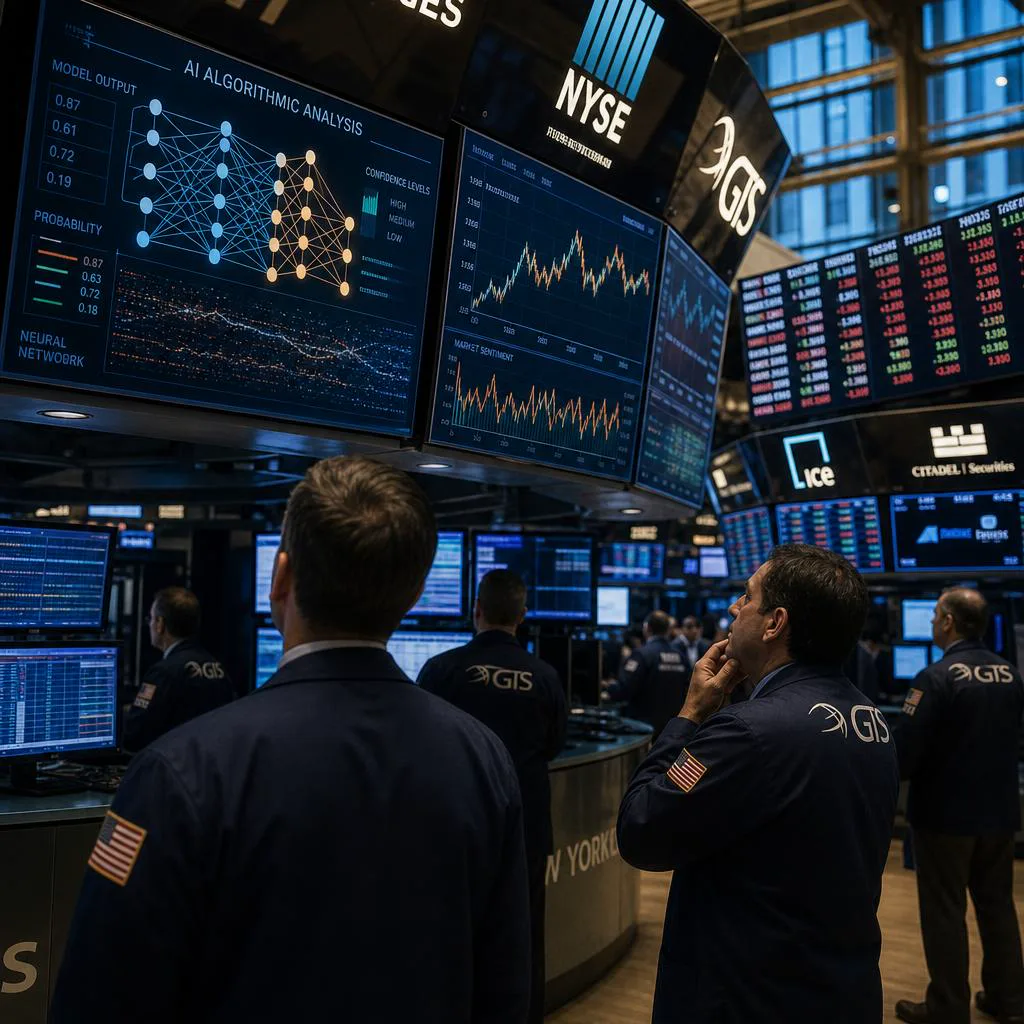
Goldman Sachs on Friday pulled back the curtain on what insiders are calling the most consequential shift in equity trading since the advent of high-frequency algorithms two decades ago: an autonomous artificial intelligence desk that executes billions of dollars in U.S. and European equities trades each day without requiring a human trader to approve individual orders.
The system, developed over three years by a team of roughly 200 engineers and quantitative researchers, uses a large language model fine-tuned on decades of proprietary Goldman trade data combined with a reinforcement-learning engine that adjusts its risk parameters in real time based on macroeconomic signals, earnings transcripts, central-bank communications, and satellite imagery of supply chains.
"We are not removing humans from trading," Chief Executive David Solomon said at an investor briefing in Lower Manhattan on Friday morning. "We are removing humans from the parts of trading where human emotion has historically been our biggest liability." Solomon said the desk had been running in shadow mode since January, generating hypothetical returns that outpaced the firm's legacy equities division by 14 percentage points on a risk-adjusted basis.
The announcement sent a jolt through an industry already rattled by the relentless encroachment of algorithmic systems. Shares of publicly traded market-making firms fell as much as 4 percent in morning trading before recovering. Morgan Stanley and Citadel declined to comment on whether they had comparable projects in development; two people familiar with the matter said both firms had accelerated internal AI programs in recent months.
Regulators are watching closely. The Securities and Exchange Commission issued a statement Friday afternoon noting that it was "monitoring developments in autonomous trading systems" and would convene a roundtable in September with major broker-dealers to discuss disclosure obligations and circuit-breaker requirements for AI-driven desks. The SEC declined to say whether Goldman had sought pre-approval for the system.
Critics on Wall Street and in academia warned that concentrating so much autonomous decision-making in a single large model creates new systemic risks. "When a human trader panics and sells, other humans can recognize the behavior and step in," said Dr. Alicia Voss, a professor of financial engineering at Columbia's engineering school. "When an AI trained on similar data responds to the same signal in the same way, you could get correlated blow-ups across the whole market simultaneously."
Goldman executives pushed back on that characterization, saying the system's risk controls include hard daily loss limits, sector concentration caps, and a human override panel staffed around the clock. The firm also noted that the desk currently handles only a portion of its total equity flow and that full deployment would be phased in over 18 months pending internal review.
The broader debate about AI and labor on Wall Street has simmered for years, but Friday's announcement brought it to a boil. The firm's equities trading headcount has declined by roughly 30 percent over the past five years. Asked whether the new desk would accelerate further reductions, Solomon said only that the firm's "human capital needs are constantly evolving."