A Carnegie Hall Night Will Return Uptown on 35mm at New York Film Festival
Paul Thomas Anderson’s concert film about Brooklyn musician Cameron Winter adds an unusually local loop to NYFF’s Spotlight program.
By Evelyn Torres · September 9, 2026 · 5 min read
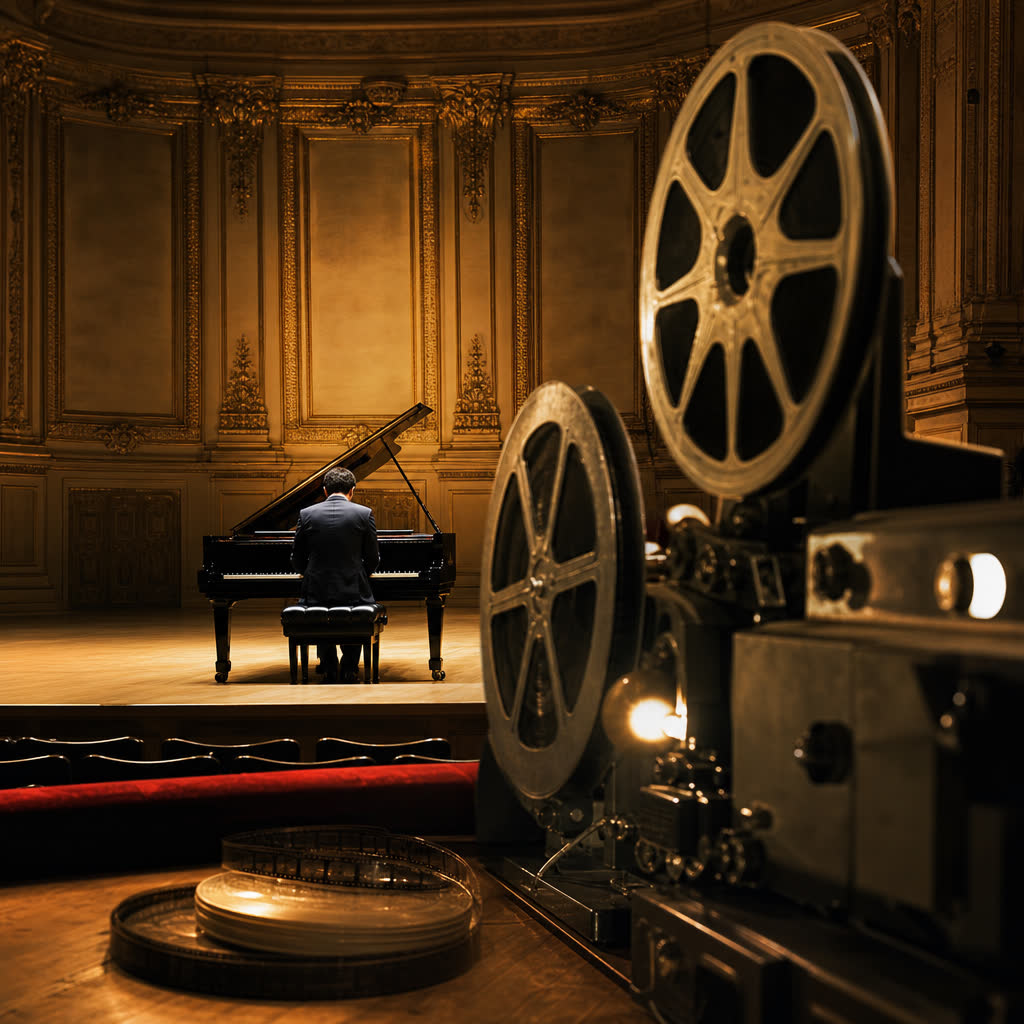
NEW YORK — One New York performance is preparing for a second life a few blocks away, transformed from a concert into a movie and projected in the format used to capture it.
Cameron Winter at Carnegie Hall, directed by Paul Thomas Anderson, will have its world premiere Oct. 1 at Alice Tully Hall during the 64th New York Film Festival. Film at Lincoln Center announced the addition Aug. 31, and Variety reported the same day that Anderson and Winter are expected to attend. The screening will be on 35mm.
The premiere is not a same-day announcement, but it remains a timely addition as the festival moves toward the start of public single-ticket sales on Sept. 15. Film at Lincoln Center says the festival runs from Sept. 25 through Oct. 12 and has placed the concert film in its Spotlight section. As New Yorkers sort through that expanding program, Anderson’s film stands out for being rooted not only in the city but in a specific night of its musical life.
The movie documents Winter’s sold-out solo performance at Carnegie Hall on Dec. 11, 2025. Winter, who fronts the Brooklyn band Geese and also records as a solo artist, accompanied himself on a Steinway grand piano, according to Film at Lincoln Center. Anderson and his crew filmed the performance on 16mm and 35mm. Variety reports that Ariel Rechtshaid recorded and produced the music for the film.
The result creates a compact Manhattan circuit: an event staged at Carnegie Hall will reappear less than a mile away at Lincoln Center, before an audience watching an analog record of the original room. Concert films often expand access to an event by carrying it far beyond its venue. This premiere initially does something more intimate. It asks a New York audience to reconsider a New York performance in another New York cultural institution.
That local loop also brings together two artists working across categories. Winter’s profile encompasses his role in Geese and his solo work. Anderson is best known as a narrative filmmaker, but music-centered projects have been a recurring part of his career. Film at Lincoln Center notes that his first music documentary, Junun, had its world premiere at the festival’s 53rd edition. The organization also lists Boogie Nights, Punch-Drunk Love and Inherent Vice among Anderson films selected for earlier editions of NYFF.
The new film’s crew further connects independent film and music production. Variety says filmmaker and actor Benny Safdie is a co-producer; Sara Murphy, Erica Frauman and Maggie Ambrose are producers. Janus Films and Criterion are handling the release, according to Film at Lincoln Center. SPIN reported Aug. 25 that the companies acquired North American rights and that a 35mm theatrical tour is scheduled to begin Nov. 20, with tickets due to go on sale Sept. 17.
Those plans mean the NYFF event is both a premiere and the opening stage of a broader release strategy. The public screening in Alice Tully Hall gives the film a high-profile launch, while the later tour preserves the format as part of the attraction. At a time when most moving images are encountered digitally, the promise of 35mm makes the material object of the film part of how it is being presented.
That choice is particularly apt for a concert movie. Live music depends on the knowledge that a moment cannot be reproduced exactly; film promises a record, but never a duplicate. Shooting on two celluloid gauges introduces texture and visible mediation rather than pretending the camera simply delivers the concert untouched. The premiere’s 35mm projection will carry that decision through to the audience.
Film at Lincoln Center artistic director Dennis Lim described Anderson as a filmmaker with an instinctive feel for music and called the work a document of Winter’s Carnegie Hall performance. His praise appears in both the organization’s announcement and Variety’s report. That is the festival presenting its own selection, not an independent review; viewers will make their own judgments after the premiere.
The film joins a festival program with several prominent New York debuts. Variety reports that NYFF will open Sept. 25 with the North American premiere of James Gray’s Paper Tiger. The outlet also identifies Tony Gilroy’s Behemoth! as the centerpiece and Ava DuVernay’s documentary 14th as the closing-night selection. Against those narrative and documentary features, a 72-minute concert film, as SPIN describes it, offers a smaller-scale study of performer, camera and room.
Practical details are still important for prospective attendees. Film at Lincoln Center says pass holders and members receive presale access according to membership level, while general-public single tickets go on sale at noon Eastern on Sept. 15. The organization lists Anderson and Winter as attending the Oct. 1 premiere, though festival appearances can be subject to change.
For New York’s film and music audiences, the appeal is unusually concrete. The movie does not merely bring a distant performance to the city. It returns a hometown musician’s Carnegie Hall set to an uptown screen, filtered through one director’s eye and preserved on film. In a festival defined by premieres from around the world, this one travels only a few blocks to become new again.