Cape Verde's Dream Run and Its 39 Year Old Wall
On their World Cup debut, the tiny island nation reached the knockout round unbeaten, carried by a journeyman goalkeeper who waited four decades for the stage and now faces Messi's Argentina.
By Siyu Xiang · June 26, 2026 · 7 min read
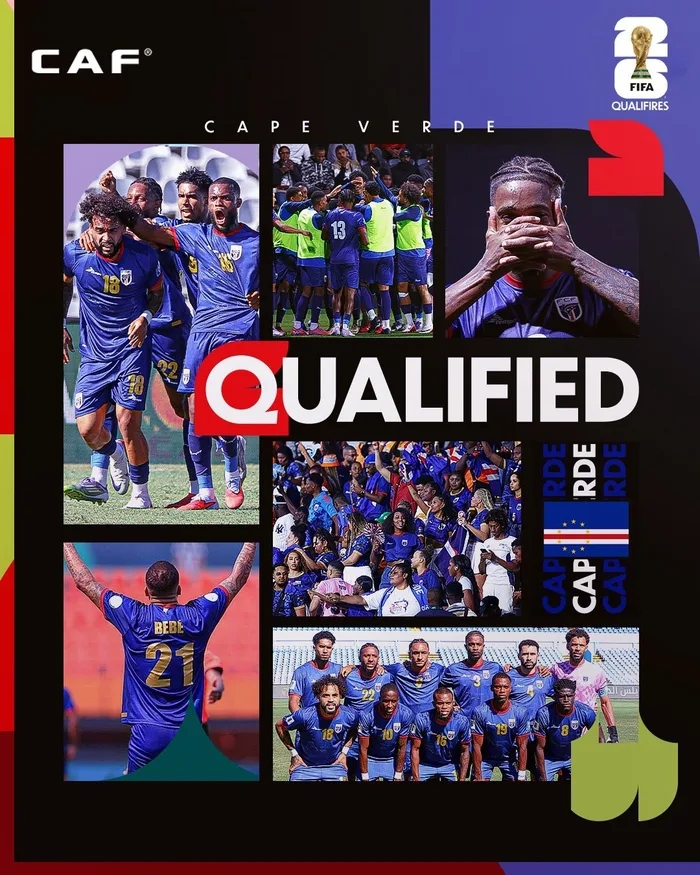
One of the smallest nations ever to reach a World Cup has become one of the hardest to beat. Cape Verde, an archipelago of roughly half a million people off the coast of West Africa, arrived at the 2026 tournament as a debutant and leaves the group stage unbeaten, having drawn all three of its matches to finish second in a group it shared with Spain, Uruguay, and Saudi Arabia. The reward for that improbable run is a place in the round of 32 and, with it, the most intimidating assignment in the draw: a meeting with Lionel Messi and defending champions Argentina on July 3.
The numbers tell a story of remarkable resilience. Cape Verde opened against Spain, ranked among the very best teams in the world, and held them to a scoreless draw. They then twice came from behind, or held firm, in a 2-2 result with Uruguay, before closing the group with another goalless stalemate against Saudi Arabia on June 26 that sealed second place behind Spain. Three matches, three draws, three points, and crucially not a single loss. By advancing, the side affectionately known at home as the Blue Sharks became the first team making its World Cup debut to reach the knockout stage in well over a decade, and by population the smallest nation ever to climb out of a World Cup group.
If one figure embodies the run, it is the goalkeeper. Josimar Dias, known universally as Vozinha, turns 40 later this year and has spent his career as the very definition of a journeyman, with stops in Cape Verde, Angola, Moldova, Portugal, Cyprus, and Slovakia. He did not even turn professional until he was 25. In Atlanta on June 15, against a Spanish side stacked with talent, he produced the performance of his life, making seven saves to preserve a clean sheet and earning the player of the match award as Spain piled up shots without reward. At 39 years old, he became the oldest goalkeeper to keep a clean sheet at a World Cup since the great Peter Shilton and Dino Zoff, and against Saudi Arabia he did it again, joining that same exclusive company of keepers over 40 to record multiple shutouts at the tournament.
The nickname carries its own small poignancy. Vozinha means ‘little voice’ in Portuguese, a name he has said was pinned on him by older boys who used to beat him on the pitch and tease that he would go home to complain to his grandparents. He adopted it for good after arriving at a club where a teammate already shared his given name. In an interview with FIFA earlier this year, he explained that since everyone back home knew him as Vozinha, that was the name he would wear. After the Spain match, by his own account, he wept, telling reporters it was an honor to represent his country and speaking of the grandparents who raised him but did not live to see the moment, and of his mother, who he said could not obtain a visa in time to attend.
The reaction to that debut was its own phenomenon. By widely reported accounts, Vozinha entered the tournament with roughly 50,000 Instagram followers and saw that figure surge into the millions within days, lifted by a wave of attention across Brazilian and Portuguese broadcasts and a grassroots campaign to celebrate his display. It is a strikingly modern coda to a thoroughly old fashioned football story, a player who spent two decades in the game's quieter corners suddenly finding a global audience at an age when most of his peers have long since retired.
It is worth being honest about what Cape Verde has and has not done. Three draws is not three wins, and a team that has yet to record a victory or, in two of three matches, even score, will start as a heavy underdog against an Argentina side that won its group with a perfect record. Romance aside, the gulf in resources, depth, and pedigree between a half million person island nation and the reigning world champions is vast, and Messi, now the tournament's all time leading scorer, is precisely the kind of player who punishes a defense that has been pinned back for ninety minutes. A realistic preview would make Cape Verde a long shot, and it would be a disservice to pretend otherwise.
And yet the deeper point of this story does not depend on what happens on July 3. Cape Verde has already done the improbable simply by being here and by refusing to lose, and Vozinha has already authored the kind of narrative that outlives any single result, a man who waited his entire adult life for ninety minutes on this stage and then would not be beaten. Win or lose against Argentina, the tournament has been enriched by a tiny nation that plays without fear and by a 39 year old who reminds anyone watching that a breakthrough has no expiry date. If they fall to Messi, they will go home having outperformed every expectation placed on them. If they somehow do not, it will be among the great upsets the competition has seen. Either way, the Blue Sharks have already won something that does not show up in the standings.