Cargo Bikes Replace Delivery Vans on Manhattan's Narrow Streets
Startups and legacy grocers alike are piloting electric cargo bikes to cut emissions and bypass traffic in congested Lower Manhattan corridors.
By Malik Johnson · December 21, 2025 · 4 min read
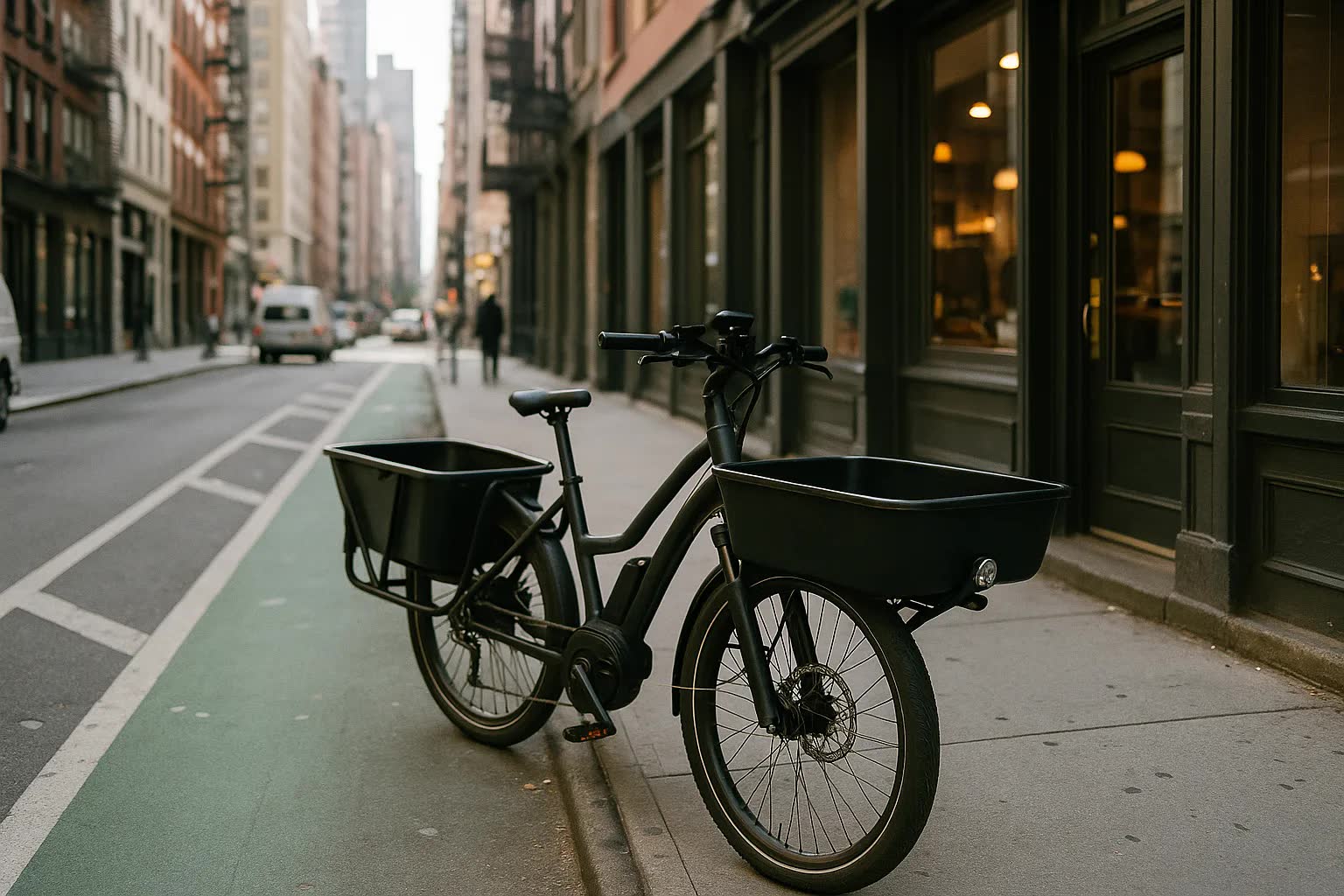
NEW YORK — On Manhattan's narrow Lower streets, where delivery vans used to double-park under fire escapes and outside bodegas, a quieter, more nimble army is rolling in: electric cargo bikes. From the cobbled blocks of Tribeca to the squeeze of Mulberry Street in Little Italy, startups and long-standing grocers are piloting two- and three-wheeled carriers that promise faster drop-offs, lower emissions and fewer traffic snarls in the island's tightest commercial corridors.
For decades the logistical default for neighborhood deliveries has been the high-sided van, a vehicle ill-suited to streets designed before the automobile. On lanes like Canal Street and the Bowery, drivers circle for parking, sanitation trucks block lanes, and commercial blocks become islands of idling engines. Residents in Greenwich Village and SoHo have complained for years about noise and diesel exhaust; merchants say deliveries are the lifeblood of storefronts but that vans can slow business by creating congestion for customers on foot.
The new bikes combine pedal power with batteries, insulated cargo boxes and often a modular approach to loading. Startups such as Hudson Haul and CycleCart have introduced units with refrigerated compartments the size of a small van and electric assist that allows a rider to climb the ramps at the South Street Seaport without dismounting. "We can carry roughly the same volume as a small van for most grocery routes, but we can make twice as many stops in a morning because we aren't fighting to find curb space," said Elena Cruz, head of operations at Hudson Haul, who oversees routes across the Financial District and Lower Manhattan.
Legacy businesses that depend on frequent, same-day deliveries are testing the bikes alongside the startups. GreenPort Grocers, a family-owned market on Pearl Street near the Brooklyn Bridge, replaced some morning van runs with cargo bikes this fall, and Manhattan Market Co-op in the West Village has begun customer deliveries only by bike on weekends. "We sold the idea to my parents as a way to keep the market on these old narrow blocks," said Marcus Delroy, owner of GreenPort Grocers. "Customers in our neighborhood love that their produce arrives cooler and quicker, and I don't have to pay for as many parking tickets."
Early pilot numbers suggest a meaningful operational shift. In pilots run this year by a coalition of 14 startups and 22 legacy stores, cargo bikes completed on average 18 deliveries per rider per four-hour shift, compared with 10 to 12 for small vans in similarly congested routes. Average door-to-door times fell by 35 percent in zones such as Tribeca and the South Street Seaport. Fleet operators reported per-delivery greenhouse gas emissions reductions of roughly 60 percent, while capital costs for an electric cargo bike ranged between $4,500 and $9,000 versus $25,000 to $40,000 for a used delivery van, not including insurance and fuel.
The transition is not just mechanical; it has a municipal dimension. The city Department of Transportation has opened agreements for micro-depot locations and curb-space pilots, and local community boards in neighborhoods from Chinatown to Battery Park City are weighing where bikes can load safely. "We need to integrate these bikes into curb management policies and protect riders in busy commercial strips," said Inez Kaur, policy director for the Manhattan Bike Alliance. "Allocating small stretches of curb for consolidated loading is a low-cost way to reduce double-parking and keep sidewalks clear."
Riders say the work is demanding but often preferable to the unpredictability of van routes. "I can get into spots a truck never could and I don't spend half my shift searching for legal parking," said Jamal Reed, 29, a cargo-bike rider for CycleCart who runs morning routes in Nolita and the Lower East Side. "There are winter days when it's brutal, but most riders say the pay is better balanced with the hours because of the higher stop density." Safety advocates caution that speed and narrow turns present risks, and riders point to the need for better protected lanes on avenues that feed into neighborhood streets.
For businesses the math is more complex than simply swapping a van for a bike. Beyond acquisition costs, grocers and restaurants must invest in charging infrastructure, storage for overnight parking, and software that optimizes multi-stop routes. Several startups offer subscription models that bundle a bike, maintenance and route software for monthly fees that range from $550 to $1,200. Some restaurateurs say cargo bikes are ideal for compact orders but still need vans for palletized goods or large catering loads, prompting hybrid fleets that mix bikes for last-mile work with vans for bulk movement.
Neighborhood reaction has been pragmatic: merchants welcome quicker turnarounds and residents note quieter streets during morning rushes, but not all storefronts see an immediate benefit. In parts of the Lower East Side and around Canal Street, street vendors and curb demand remain high, forcing operators to coordinate with building managers for timed deliveries. Cultural landmarks such as the South Street Seaport and the Stone Street dining district have been trial sites for consolidated micro-depots, which allow a single bike to serve several nearby stores in quick succession and avoid clogging landmarked blocks.
If the pilots continue to show steady efficiency gains, city planners and operators say cargo bikes could become a permanent fixture in Manhattan's delivery ecosystem. Next year, several coalitions plan to expand their fleets, add charging hubs near subway-accessible micro-depots, and lobby for more dedicated loading bays on narrow streets. The shift will likely be incremental, officials and business owners say, but with pressure to cut emissions and move goods faster, the sight of boxy electric bikes threading past double-parked vans may be the new normal in Lower Manhattan by the end of the decade.