The Great Lawn Fills for a Free Summer Concert, and the City Exhales
Tens of thousands spread blankets across Central Park for the return of the free open-air orchestra series, a warm-weather ritual that felt, this year, like a citywide reset.
By Marcus Bell · July 8, 2026 · 4 min read
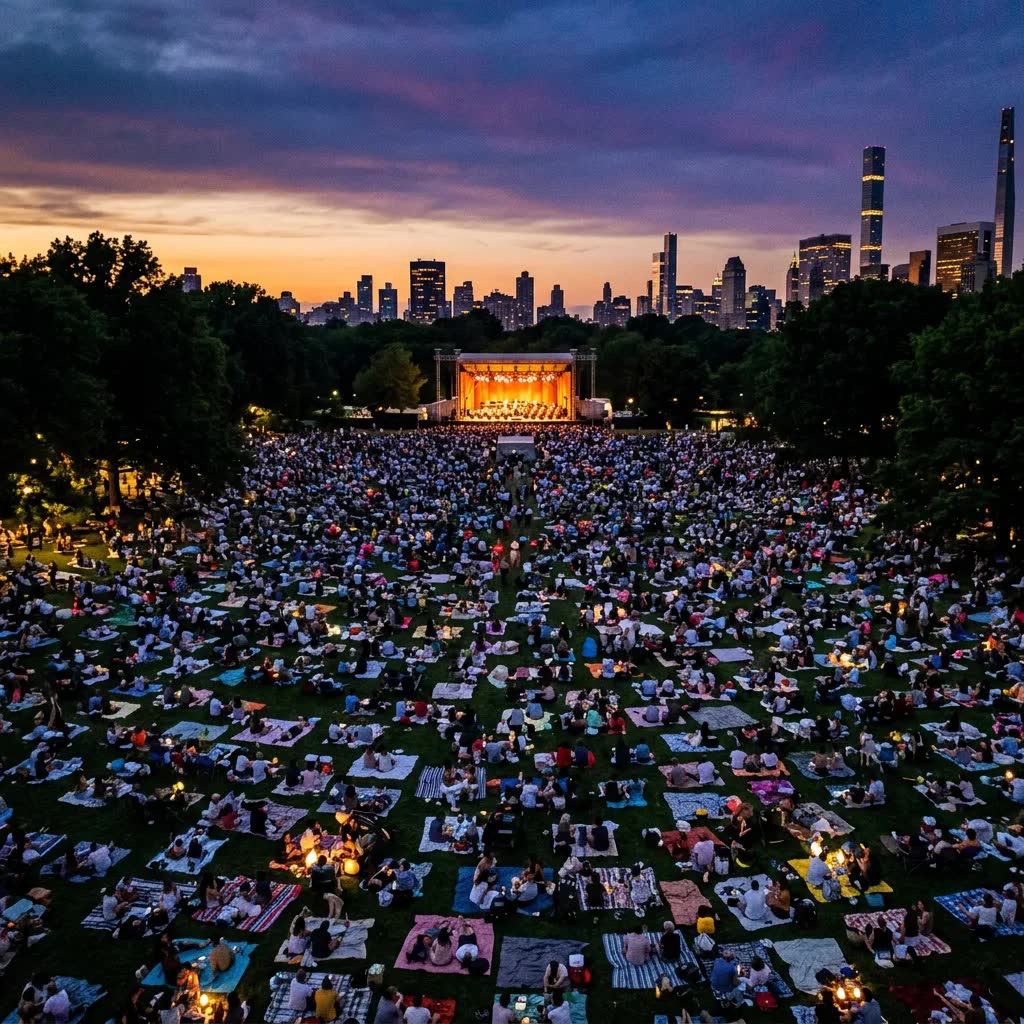
NEW YORK — By late afternoon the Great Lawn had become an improvised city of blankets, its green expanse quilted with picnic spreads, folding chairs, and the low hum of tens of thousands of New Yorkers settling in for the evening. They had come for the return of the free summer orchestra series, a warm-weather ritual in which a full symphony sets up beneath the sky and plays for anyone willing to claim a patch of grass. This year, organizers said, the crowd was among the largest in memory.
The concert is free, egalitarian, and gloriously chaotic in the way only a mass gathering in Central Park can be. Families staked out territory hours in advance. Couples uncorked wine as the light softened over the trees. Groups of friends played cards and passed around containers of food until, just after dusk, the first sustained notes rolled across the lawn and a hush — imperfect, but real — settled over the enormous audience.
"There's nothing else quite like it," said the series' longtime program director, watching the crowd assemble from near the stage. "You've got people who go to the concert hall every week lying on the same grass as people who've never heard a live orchestra in their lives. Nobody paid, nobody has a better seat than anyone else, everybody's looking at the same sky. For one night the whole thing is genuinely free and genuinely shared."
The program leaned toward crowd-pleasing warhorses, building to a fireworks-accompanied finale that drew a roar from the lawn. But the evening's most striking moments came in the quieter passages, when the ambient sounds of the park — a distant siren, a child's laugh, the rustle of thousands of people trying to be still — wove themselves into the music in ways no concert hall could reproduce. The orchestra, its members have said, has learned to embrace rather than resist the city's intrusions.
The series has grown into a significant logistical undertaking, requiring coordination among the parks department, the police, sanitation crews, and the nonprofit that stages the concerts. Organizers have worked in recent years to reduce the mountain of waste the events once left behind, adding more bins and volunteers and gently nudging the crowd toward cleaning up after itself. The lawn, by most accounts, survived the night in better shape than in summers past.
As the final fireworks faded and the crowd began its slow, contented migration toward the park's exits, the program director lingered a moment longer. "People carry a lot of stress in this city," she said, watching the sea of blankets empty out into the summer dark. "For a couple of hours tonight, a hundred thousand of them put it down at the same time. That's the whole reason we do it."