Charter Revision Commission Weighs Altering Mayoral Term Limits and Oversight Powers
A blue-ribbon panel of civic leaders and politicians debates sweeping changes to the city charter ahead of a possible ballot referendum.
By Mateo Ruiz · January 7, 2026 · 4 min read
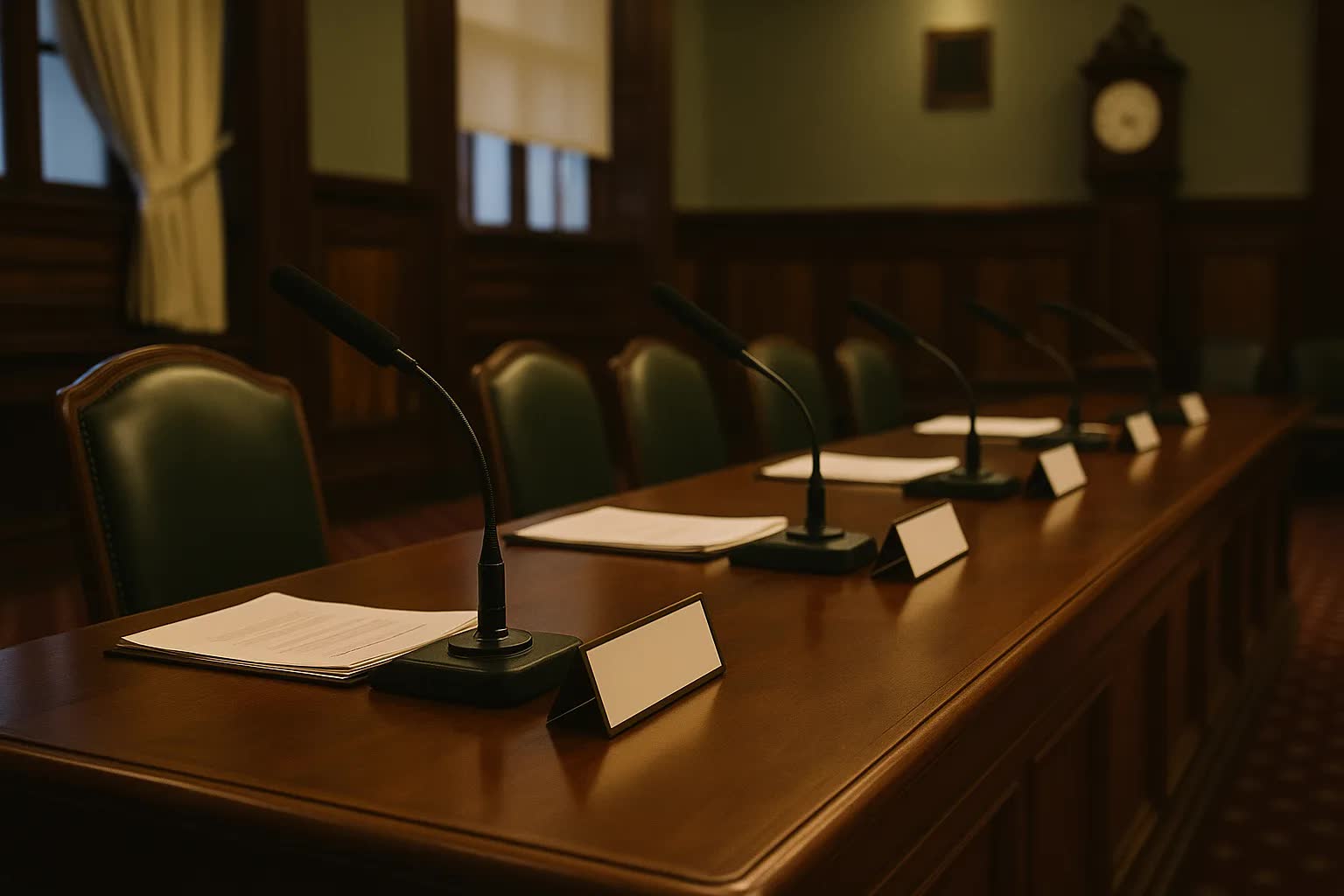
NEW YORK — A city-appointed charter revision commission opened its public inquiry this week weighing a package of sweeping changes that would alter how New York City elects and supervises its mayors and how local government holds power to account, a debate that quickly spilled out of the Manhattan hearing room near Foley Square and into neighborhood halls from Jackson Heights to DUMBO and East New York.
The blue-ribbon panel, a mix of civic leaders, former elected officials and legal scholars, is considering proposals that range from tweaking mayoral term limits to expanding oversight powers over city agencies, with the potential to put multiple measures before voters as soon as next November. "We are trying to thread the needle between executive continuity and democratic accountability," said Evelyn Park, chair of the Charter Revision Commission and a former city law professor, at a Monday meeting in the Municipal Building.
Among the options under discussion are allowing a mayor to serve a third consecutive four-year term under narrow circumstances, a redesign of the office that would stagger terms for citywide officials, and the creation of a new independent inspector general with explicit powers over land-use approvals and procurement. Commissioners also debated giving the City Council stronger subpoena and confirmation powers for mayoral appointments, an idea that supporters say would rebalance authority citywide and opponents say would encourage gridlock in places such as the Lower East Side where zoning battles have stalled for years.
"Voters ought to know whether they're choosing a mayor who will be unchecked or one who will face meaningful review," said Rosa Delgado, director of East Harlem Residents for Accountability, after a packed hearing at the 125th Street branch of the public library. Delgado, whose group has tracked development proposals on Lexington Avenue and the East 116th Street corridor, urged the commission to couple any extension of executive time horizons with concrete oversight reforms and transparency requirements.
The commission itself is organized around numbers: 25 appointed commissioners, 12 borough and neighborhood hearings on the calendar between January and May, and 45 separate amendment drafts already filed by members and public petitioners. Staff estimates released Tuesday show about 60 percent of the proposals touch on oversight or checks on executive power, while the remainder concern election mechanics, redistricting and government ethics. Officials projected an initial implementation cost for new oversight offices of roughly $18 million annually, and warned that more elaborate enforcement powers could raise that price tag.
Business and labor voices lined up on opposite sides of the debate at a hearing in Brooklyn Borough Hall. The Greater Manhattan Business Alliance urged stability, with its president, Jonah Reed, arguing that longer mayoral terms could help complete long-running infrastructure projects along the East River waterfront and the Prospect Expressway. "Big projects take time to execute and see through," Reed said. Unions and community groups countered that stronger oversight of contracting and planning would prevent abuses and prioritize neighborhood needs, a concern echoed by Thomas Kline, president of Transit Workers Local 198.
Legal scholars cautioned the commission to consider state constitutional limits and the likely judicial scrutiny of any change that concentrates power. Several commissioners flagged the need for clear statutory language if the plan includes a new inspector general or expanded subpoena authority, noting that similar structural changes in cities such as Philadelphia and Chicago have produced protracted litigation. "We have to draft amendments that can survive court review while still being operable in the day-to-day life of city government," said Malik Ortiz, a commissioner and former municipal judge.
Public testimony painted a neighborhood-level picture of possible consequences. At a packed session in Jackson Heights, parents from PS 69 worried that longer mayoral tenures could mean fewer chances to pivot on school funding formulas, while at a nighttime forum in Red Hook small-business owners said stronger council confirmation powers might slow permitting for storefront upgrades on Van Brunt Street. In DUMBO, preservationists argued that an inspector general focused on land use could curtail speculative developments along the Brooklyn waterfront, while in Jamaica, Queens, community housing advocates warned about the risk of entrenching patronage if oversight is not paired with strict ethics rules.
Several commissioners and outside analysts said the commission must also weigh political math. Securing a place on the fall ballot will require finalizing ballot language and meeting the city's legal deadlines; following that, passage requires a simple majority of voters in a citywide referendum. Staff briefings show the commission can submit multiple, separate ballot questions, which could fragment support: an internal simulation prepared for the panel suggested a comprehensive package combining term-limit changes and oversight expansion would pass in 52 percent of modeled electorates, while a standalone term-limit change without new checks would win only 41 percent.
The commission is scheduled to take testimony neighborhood by neighborhood through May, and members say they aim to produce a finalized slate of amendments to present to voters for the November 2026 referendum. Next public meetings are slated for Jan. 20 at City Hall and Jan. 27 at the Queens Library in Flushing. "This is about shaping governance for the next generation of New Yorkers," Park said. "We intend to move carefully, but decisively, so voters can make informed choices at the ballot box next year."