China Institute Marks Centennial Gala as Leaders Highlight the Importance of People-to-People Exchange
Nearly 700 guests gathered in New York City to celebrate the organization's 100-year commitment to U.S.-China cultural understanding.
By Ivy Liu · May 28, 2026 · 5 min read
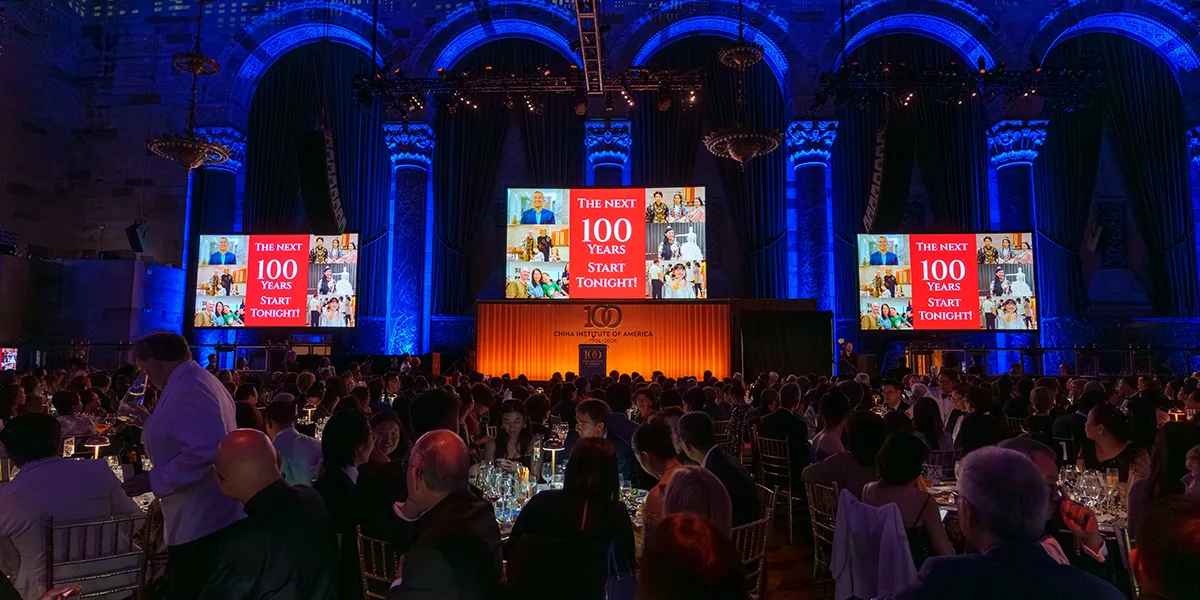
NEW YORK — The China Institute celebrated its 100th anniversary with a Centennial Gala in New York City on May 28, bringing together nearly 700 guests from the worlds of government, business, academia, culture, and philanthropy to honor the organization's century-long commitment to fostering understanding between the United States and China. The gilded ballroom rang with speeches, performances, and toasts that collectively traced the arc of a nonprofit institution that has outlasted wars, diplomatic ruptures, and cultural revolutions — and that its supporters believe has never been more necessary.
Founded in 1926, the China Institute is one of the oldest nonprofit organizations in the United States dedicated to promoting Chinese culture and strengthening mutual understanding between the American and Chinese peoples. Born in the era of nativist immigration restrictions and long before formal diplomatic relations between Washington and Beijing, the institute built its reputation through language instruction, art exhibitions, and public programming that consistently treated China as a civilization worthy of serious engagement. The centennial event also marked the launch of a year-long series of celebrations commemorating the institution's historic milestone.
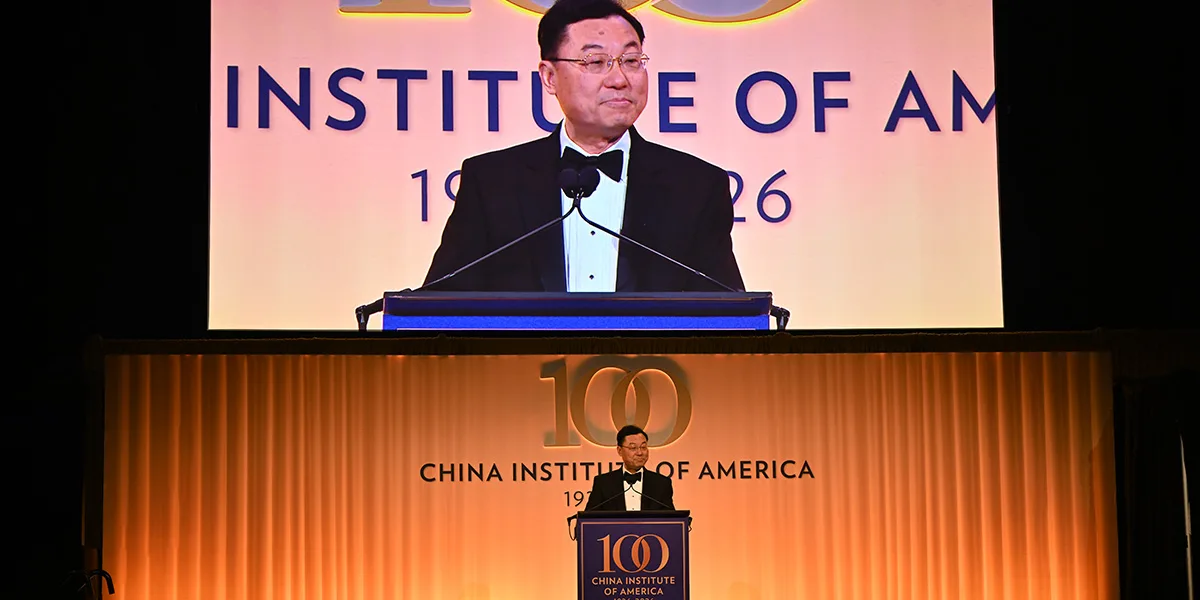
In remarks delivered during the gala, Chinese Ambassador to the United States Xie Feng underscored the enduring role of cultural exchange in bilateral relations. "A century of winds and rains has only made China Institute more steadfast in its founding mission," the ambassador said. "Since its establishment, despite shifting international circumstances and the ups and downs in China-U.S. relations, generations of Chinese and American founders, successors, and friends have remained committed to the vision of bridging cultures and fostering understanding." His remarks drew sustained applause from a room that included former diplomats, scholars, and executives who have spent careers navigating the complexities of the world's most consequential bilateral relationship.
David J. Firestein, President and CEO of the George H.W. Bush Foundation for U.S.-China Relations, was among the evening's most cited voices, emphasizing what he called the stabilizing function of cultural exchange at a moment when governmental channels are strained. "I think cultural exchange is incredibly important and will always be important," Firestein said. "Countries have differences, and they see their national interests and the world in different ways. But people-to-people engagement and cultural engagement between two countries are a very important source of stability and ballast in a bilateral relationship. When people get along and know each other, governments tend to have more constructive relationships as well."
Ronald Diamond, President of Conair Corporation and a longtime supporter of the institute, offered a more personal note, connecting the gala's purpose to broader anxieties about technology's erosion of human contact. "The world is changing, and technology is becoming more and more prevalent in our lives," Diamond said. "People may actually have fewer opportunities for direct communication. That is why bringing people together and exchanging views is so important. As Presidents Bush and Nixon both emphasized, cultural exchange, the exchange of ideas, and openness to the world are all extremely important causes." His remarks underscored a throughline of the evening: that in an age of digital intermediation, physical proximity and shared experience retain irreplaceable value.
Maisie Ho, Director of the Hong Kong Economic and Trade Office in New York, also took the podium to address the crowd, framing cultural diplomacy as the bedrock of any durable relationship between nations. "People-to-people understanding is the most important foundation of the U.S.-China relationship," she said. "Through cultural exchange, we foster understanding, connection, and friendship." Her remarks resonated in a room where multiple languages were spoken and where the guest list itself represented the breadth of the institute's network across the diaspora and the broader field of international relations.
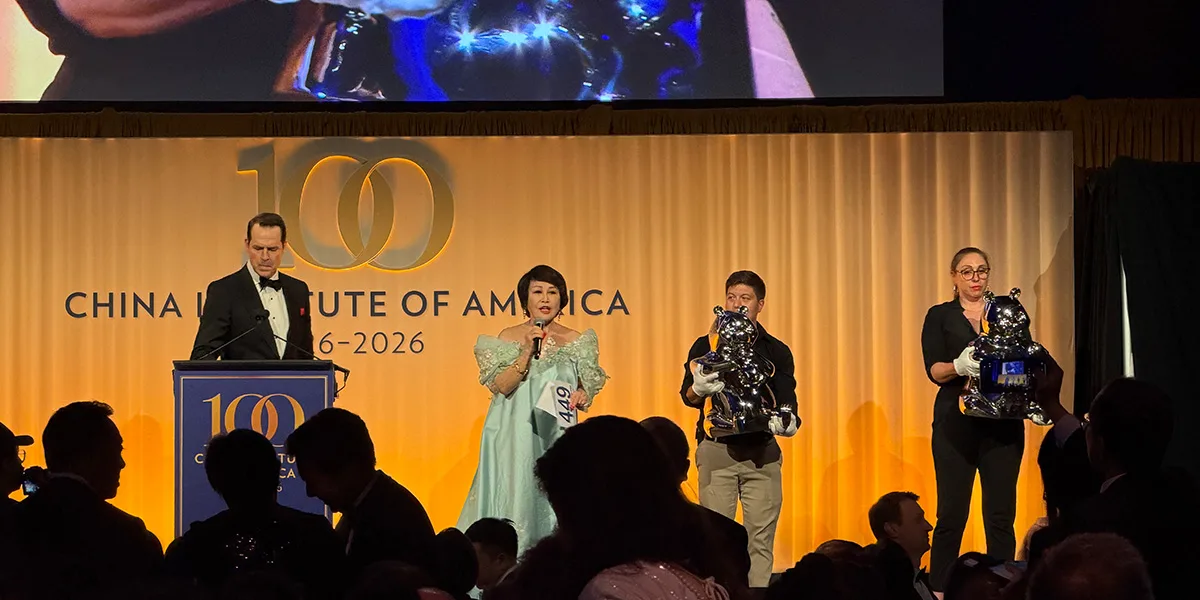
Former New York City Mayor Eric Adams, whose tenure included significant engagement with Chinese American communities across the five boroughs, praised the significance of the occasion and gestured toward unfinished work. "This gala is extremely important because it allows us to reflect on 100 years of U.S.-China relations," Adams said. "After 100 years, we have accomplished a great deal, but there is still so much more that we can do together." His presence underscored the institute's deep roots in the civic fabric of New York, a city that is home to one of the largest Chinese American populations in the Western Hemisphere.
Organizers said the centennial celebration is not only a tribute to the China Institute's first century of achievements, but also a commitment to continuing its mission in the years ahead. A series of centennial events — including performances in Central Park, film screenings at Lincoln Center, and programs highlighting Chinese and Chinese American designers — is planned throughout the coming year. Each event is designed to reach audiences beyond the institute's established donor and alumni base, introducing the organization's work to newer generations of New Yorkers who may have little context for the long history of U.S.-China cultural contact.
As speakers throughout the evening emphasized, despite challenges and changing global circumstances, cultural exchange and people-to-people connections remain essential to building mutual understanding and fostering a more constructive relationship between the United States and China. The China Institute enters its second century with an endowment bolstered by the gala's fundraising and a program calendar that stretches across disciplines, neighborhoods, and communities. Whether that mission gains traction in an era of renewed great-power competition will depend, its leaders suggest, on the same stubborn faith in human connection that animated its founders a hundred years ago.