City Council Weighs Stiffer Fines as Curbside Composting Enforcement Lags
Council members clashed over whether to escalate penalties for buildings that ignore the citywide composting mandate or to focus on outreach and free bins.
By Omar Haddad · July 15, 2026 · 4 min read
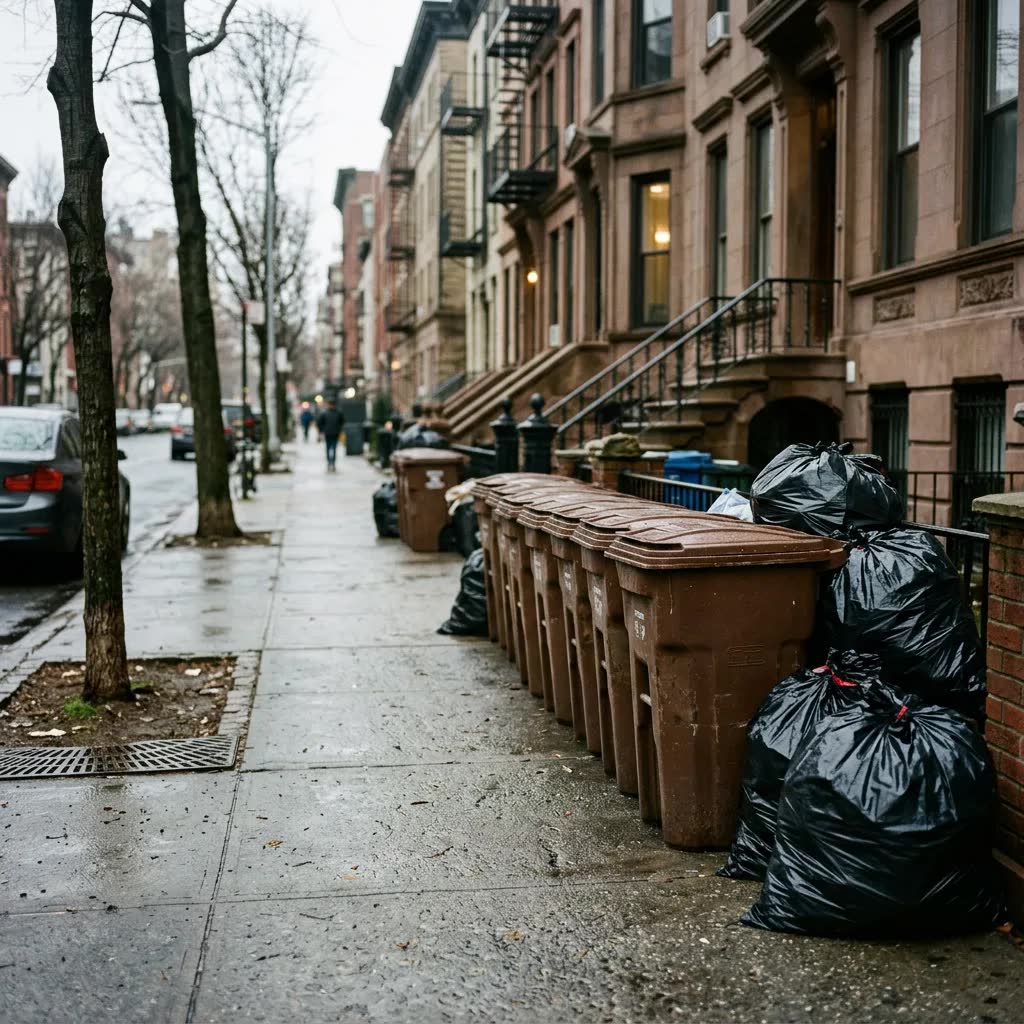
NEW YORK — The City Council on Wednesday took up a contentious proposal to raise fines on residential buildings that repeatedly fail to separate food scraps and yard waste, reigniting a debate over whether the city's curbside composting mandate should be enforced with a heavier hand. Under the plan, buildings with four or more units could face escalating penalties for repeat violations, a shift from the current system that critics say has generated many warnings but relatively little behavioral change.
Supporters of tougher enforcement argued that composting participation has plateaued in several neighborhoods and that the mandate risks becoming symbolic without real consequences. "We passed a law, and a law without teeth is just a suggestion," said one council member from Brooklyn, who noted that diverting organic waste from landfills was central to the city's climate and rodent-mitigation goals. She cited sanitation figures showing that a large share of collected trash in some districts still consists of compostable material.
Opponents on the Council countered that fines would fall hardest on lower-income tenants and building staff rather than on the residents whose habits the policy aims to change. Several members from the Bronx and Queens said many buildings still lack adequate bins, clear signage, or reliable pickup, and they argued that penalizing noncompliance before fixing those gaps would breed resentment. "You cannot fine your way to a culture change," one member said, calling instead for expanded free-bin distribution and multilingual outreach.
Sanitation officials who testified acknowledged uneven results, saying participation was strong in some brownstone neighborhoods but weak in dense apartment corridors where shared trash rooms make separation harder to monitor. They said the department had expanded collection routes but conceded that enforcement staffing remained thin, leaving many violations undetected. Officials asked the Council for additional funding regardless of whether the fine structure changed.
Tenant advocates and some environmental groups found themselves on opposite sides, with the former warning about cost burdens and the latter pressing for accountability. A compromise floated late in the hearing would delay higher fines for a year while the city guarantees bins and pickup in every district, then phase in penalties only where service is demonstrably reliable. Council leadership said no vote would be scheduled until that framework could be studied further.