City Hall Sets Fall Hearings on School Repairs and Street Cooling
The City Council will examine how the administration is pacing capital work and deploying heat relief as members prepare the first major budget check-in of the new fiscal year.
By Nora Castillo · August 24, 2026 · 5 min read
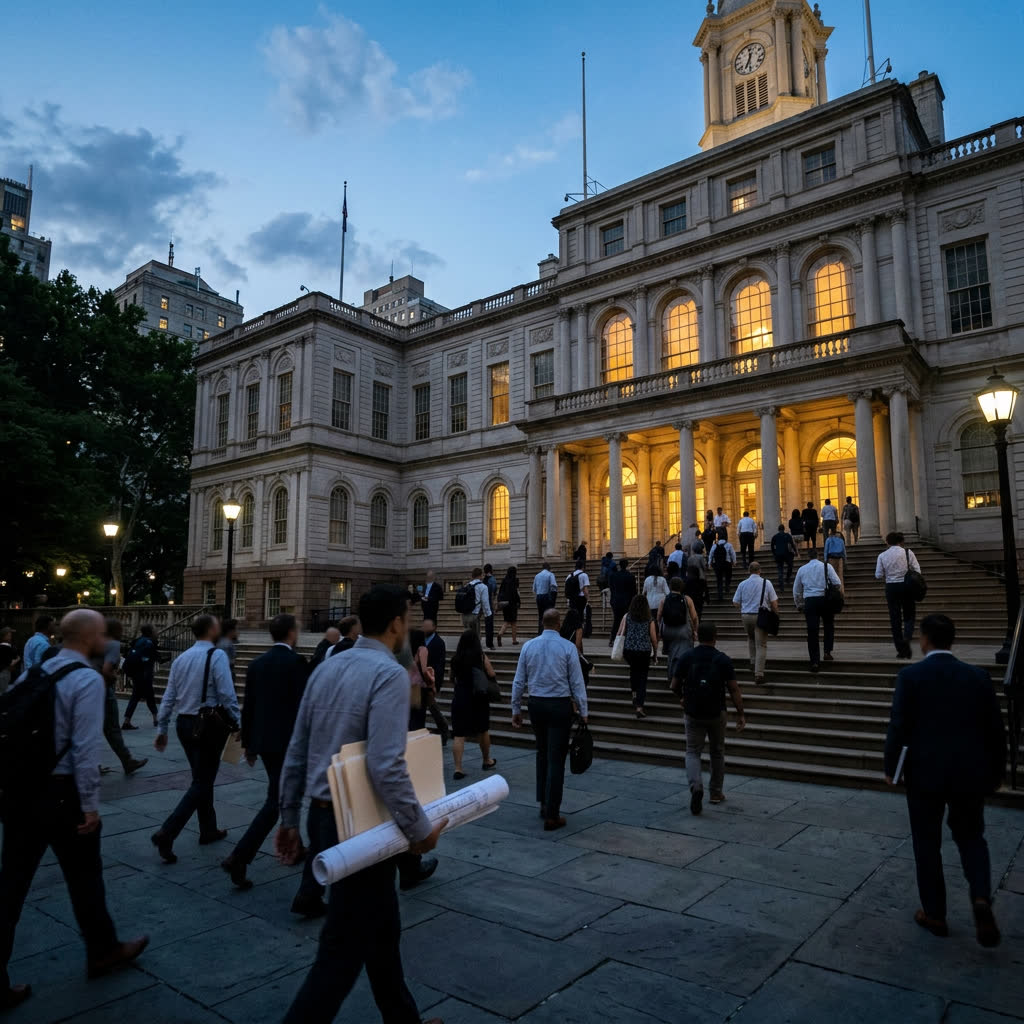
NEW YORK — City Council leaders on Monday laid out a fall oversight calendar focused on school-building repairs, neighborhood cooling measures and the pace of capital spending, setting up the first sustained review of Mayor Zohran Mamdani's new fiscal-year budget. The hearings will begin after Labor Day and continue through October, when the administration traditionally updates revenue and expense estimates. Council staff said the schedule is intended to identify projects that are slipping early enough for agencies to redirect money or revise timelines before winter.
The opening hearing will examine ventilation, roof and plumbing work in public school buildings as students return to classrooms. Members are seeking borough-level lists showing which projects were completed over the summer, which remain under construction and how temporary arrangements will work where repairs extend into the school year. The review will also cover the criteria used to prioritize buildings, with particular attention to recurring leaks and classrooms that have had difficulty staying cool during hot weather.
A second set of sessions will focus on the city's heat response, including shaded bus stops, drinking fountains, tree maintenance and reflective surfaces installed on streets and roofs. The mayor's office said in a statement that agencies are carrying out the adopted budget and will provide the council with updated project schedules. The administration has treated affordability and neighborhood services as central policy areas, while emphasizing that multiyear capital work must account for contracting time, utility coordination and seasonal construction limits.
City Council Speaker Julie Menin's office said the agenda would pair agency testimony with accounts from residents, school staff and community organizations. The council is not reopening the entire budget, but it can press agencies to transfer funds, improve reporting or adjust program rules. Any larger changes would likely become part of the midyear budget modification, a process that requires negotiations between City Hall and the council.
The distinction between money committed and work completed is expected to be a recurring issue. Capital appropriations can remain available across several years, and a project may be counted as funded before design, bidding and construction are finished. Council analysts plan to ask agencies to separate newly authorized projects from those that have entered procurement and those with crews already on site, providing a clearer view of what residents can expect to see this fall.
Marisol Vega, a fictional parent coordinator at Harbor View Community School in Brooklyn, said families often struggle to interpret broad capital plans when a specific repair date changes. She said a public dashboard organized by building and project stage would help parents plan around noise, closed rooms and temporary entrances. Her school is not cited as having an emergency condition; she described the concern as one of communication during routine work.
Good-government specialists said the early timing could make the hearings more useful than a review held after the fiscal year ends. Elias Morton, a fictional municipal-budget researcher at the nonpartisan Civic Ledger Project, said contract registration, design changes and interagency permits frequently explain the gap between an announcement and visible construction. Publishing those milestones, he said, would allow the public to distinguish ordinary administrative delays from projects that need intervention.
Members will also revisit district-level service requests involving damaged tree pits, broken fountains and heat-prone pedestrian corridors. Those items cross several departments, which can make responsibility difficult to track. The council plans joint hearings where agency roles overlap, rather than asking residents to follow separate proceedings on parks, transportation, environmental protection and school construction.
The oversight calendar does not commit the council or administration to a specific budget change. Committee chairs are expected to release document requests before the first hearing, and agency responses will be posted through the council's public records system. Findings from the sessions could inform the November financial plan and the broader preliminary-budget debate that begins early next year.