Columbia Lab Wins Federal Grant to Design Energy-Sipping AI Chips
Researchers on the Morningside Heights campus are chasing processors that could run advanced AI at a fraction of today's power, with backing from a national semiconductor initiative.
By Aspen Young · July 17, 2026 · 5 min read
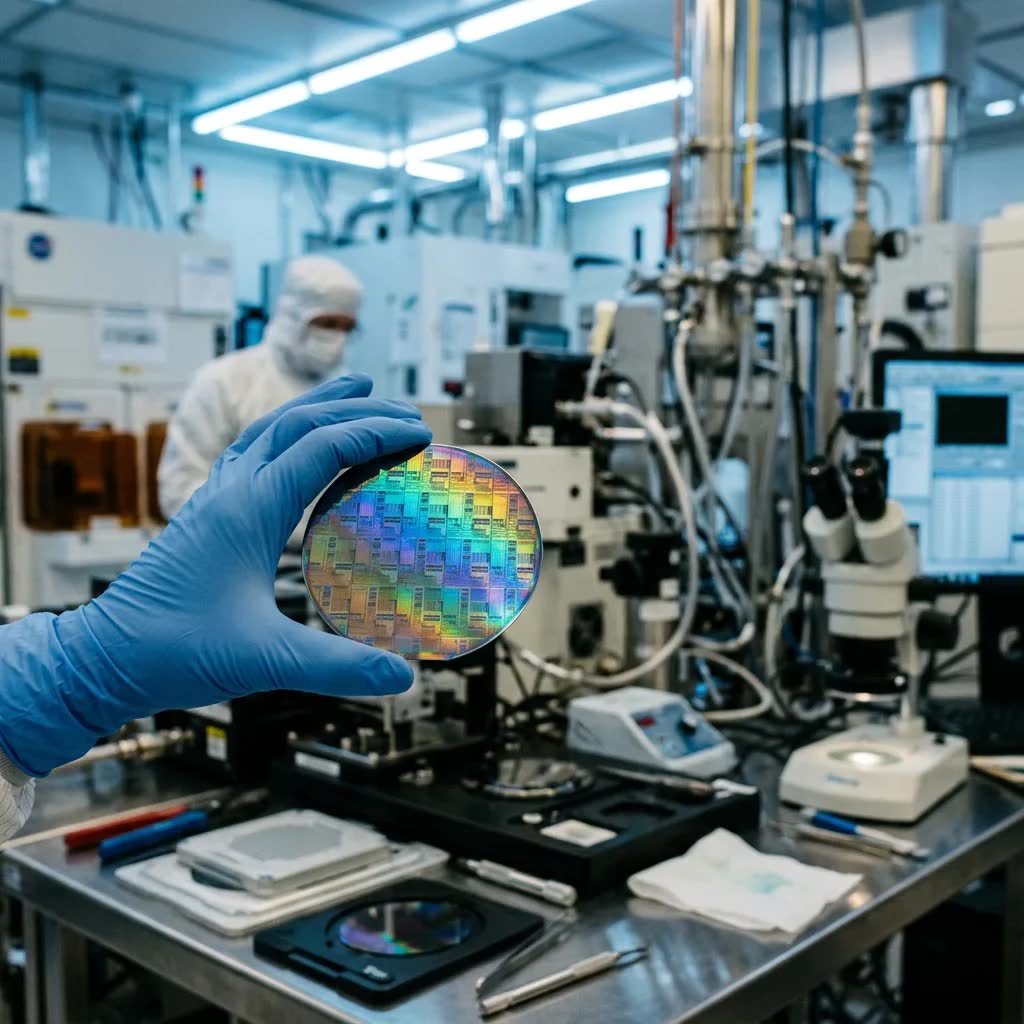
NEW YORK — A research lab at Columbia University has won a multimillion-dollar federal grant to design a new generation of computer chips built to run artificial intelligence using dramatically less electricity, part of a national push to strengthen American semiconductor research. The award, spread over several years, will fund a team of engineers and graduate students pursuing chip architectures inspired loosely by the efficiency of the human brain.
The problem the lab is attacking is stark: the most advanced AI systems consume prodigious amounts of energy, and much of that power is spent shuttling data back and forth between memory and processors. The Columbia researchers are exploring designs that perform computation closer to where data is stored, an approach they say could slash energy use for certain AI tasks. "The brain runs on about the power of a dim light bulb," the lab's director said. "Our chips run on the power of a small town. That gap is our whole research program."
The grant reflects a broader national strategy to rebuild domestic expertise in chip design and manufacturing after decades in which much of the industry migrated overseas. University labs like Columbia's are seen as feeders for that ecosystem, training the engineers and generating the early-stage ideas that companies later commercialize. "You can't have a semiconductor industry without a pipeline of people who know how to design the things," one program administrator said.
New York officials have sought to position the state as a hub for this revival, pointing to a corridor of semiconductor investment upstate and to the concentration of research universities in the city. City economic-development leaders said the Columbia grant, while modest in the scheme of the industry, reinforced New York's case as a place where chip innovation happens. "Talent clusters where the research is," one official said, "and the research is increasingly here."
The lab's work remains firmly in the research phase, and its director cautioned that the road from a promising prototype to a manufacturable chip is long and littered with failed ideas. Novel architectures that shine in the laboratory often struggle to compete with the sheer momentum of established designs churned out by giant fabrication plants. "We're not going to out-manufacture anyone," the director said. "We're trying to out-think them on efficiency."
For the graduate students on the project, the grant means years of funded work at the frontier of a field suddenly flush with attention and money. Several said they had been drawn to hardware precisely because it felt less crowded than the rush into AI software. "Everybody wants to build the model," one doctoral candidate said. "Somebody has to build the thing the model runs on — and make it so it doesn't cook the planet."