Community Fridges Evolve Into Neighborhood Health Hubs Across the Boroughs
What began as pandemic-era food sharing has grown into a citywide network offering fresh produce, nutrition classes, and blood-pressure screenings.
By Anika Bose · July 22, 2026 · 4 min read
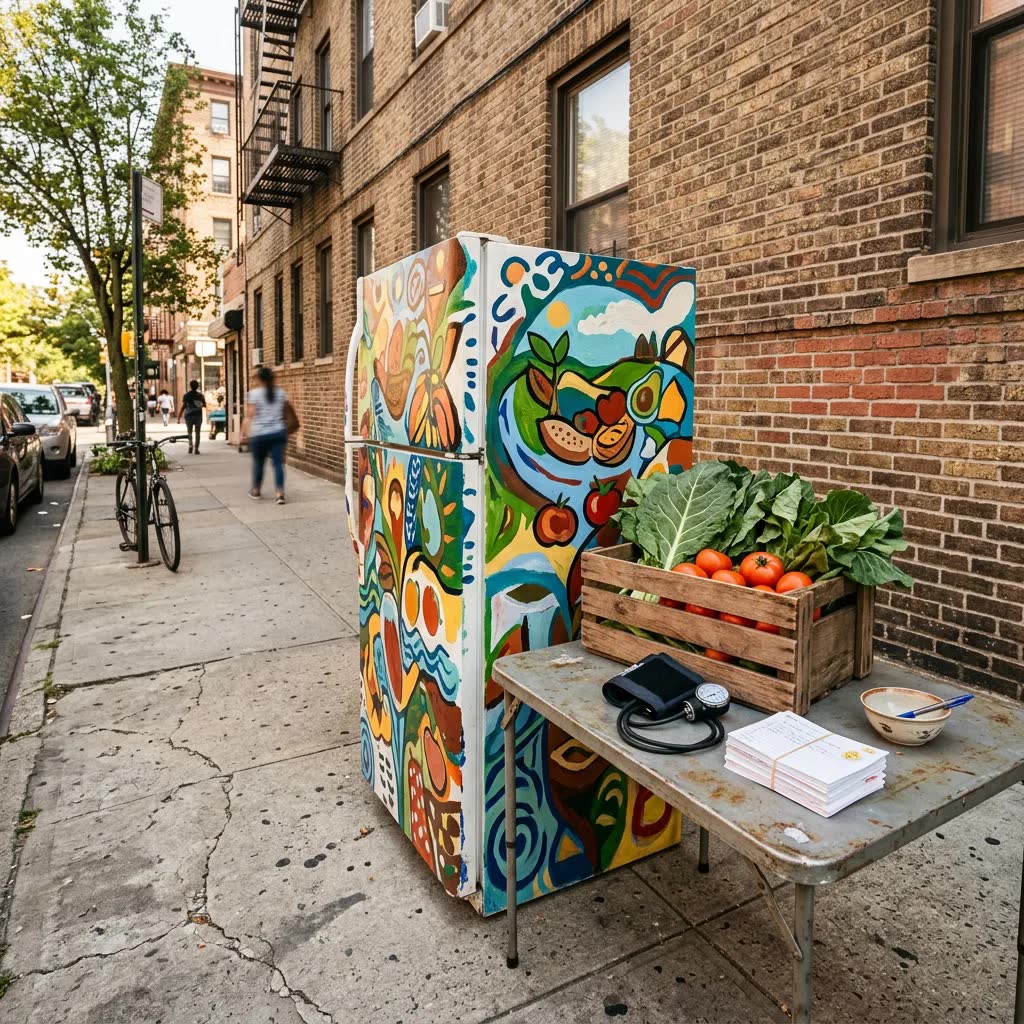
NEW YORK — The bright, hand-painted refrigerators that appeared on sidewalks during the pandemic — stocked by neighbors, emptied by whoever needed a meal — have quietly evolved into something more ambitious. Across the boroughs, dozens of these community fridges now anchor small health hubs, pairing free groceries with nutrition workshops, cooking demonstrations, and volunteer-run blood-pressure and blood-sugar screenings that meet residents where they already gather.
Organizers say the shift grew naturally out of what they were seeing at the fridges themselves. Volunteers noticed that the same people returning for food often had questions about managing diabetes, high blood pressure, or a child's picky eating, and that the nearest clinic felt distant and intimidating. "The fridge was already a place people trusted," said Darnell Whitfield, who helps run a hub in East Harlem. "So we asked: what if it could be a doorway to more than a meal?"
Public health advocates frame the model as a corrective to the geography of the city's food landscape, where entire neighborhoods have easy access to fried chicken and bodega snacks but must travel to reach fresh vegetables at a reasonable price. Diet-related conditions like Type 2 diabetes and hypertension cluster in exactly those areas, and the hubs try to attack both halves of the problem at once — putting produce within reach while teaching people how to use it.
On a recent Saturday in the Bronx, a folding table beside a fridge held a blood-pressure cuff, a stack of recipe cards, and a crate of donated collard greens and tomatoes. A nursing student took readings and gently flagged a handful of visitors whose numbers ran high, steering them toward a partner clinic for follow-up. Nearby, a volunteer walked a small crowd through a low-sodium bean stew, letting children taste as they went. "Kids will eat almost anything if they helped make it," she said.
The network's leaders are careful not to overstate what a sidewalk fridge can do. They cannot prescribe medication or replace a primary care doctor, and they depend on a fragile mix of donations and volunteer hours that could evaporate. But they argue the model's value lies in its ordinariness and trust. "We're not trying to be the hospital," Whitfield said. "We're trying to be the friendly nudge that gets someone to the hospital before it's an emergency."