Community Health Centers Strain Under Rise in Long COVID Cases
Clinics across the five boroughs report increasing demand for post-COVID care with limited specialists and long waits.
By Zoe Kaplan · March 27, 2026 · 4 min read
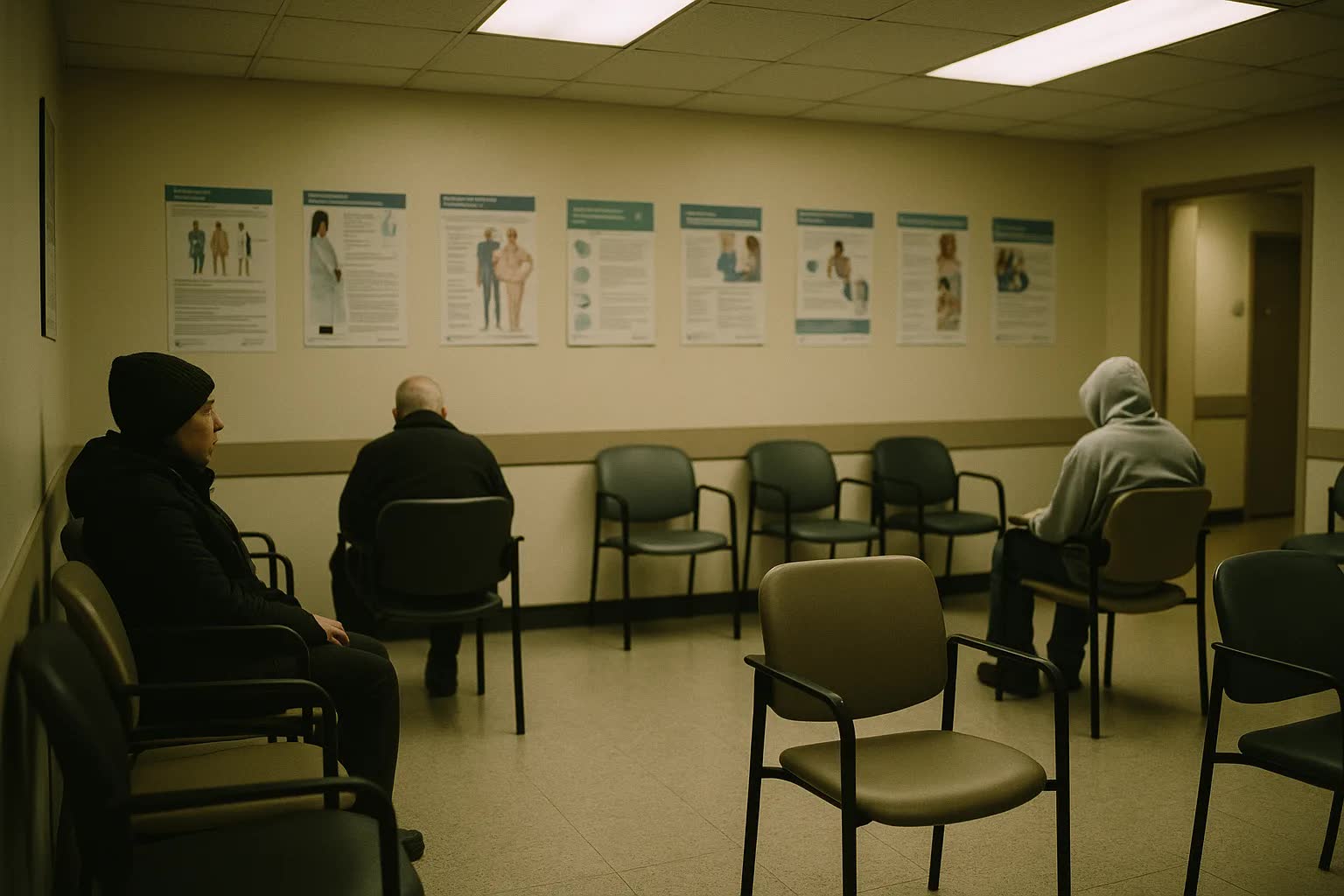
NEW YORK — Waiting rooms at community health centers from East Harlem to Sunset Park have become a barometer of a new public-health strain: a steady surge of New Yorkers seeking care for long COVID symptoms, overwhelming clinic schedules and exposing gaps in specialist care across the five boroughs.
At the East Harlem Community Health Center on 116th Street, a receptionist there said the clinic has added two half-day long COVID sessions each week to triage patients with persistent fatigue, chest pain and cognitive difficulties because regular appointment slots fill within hours. Patients describe symptoms that began months after a seemingly mild infection and have not abated, stretching the capacity of neighborhood primary care teams that must manage complex, multisystem complaints without easy access to rehabilitation or specialty services.
“We are treating more people with disabling post-COVID conditions than we could have imagined two years ago,” said Dr. Marina Lopez, medical director at East Harlem Community Health Center. “Most community clinics do not have a pulmonologist, cardiologist and neurocognitive therapist on site, so our primary-care physicians are trying to coordinate care that ideally would be managed by multidisciplinary teams.”
The demand is measurable. According to pooled internal reports from 68 community-based clinics across the city, long COVID–related visits rose about 42 percent between the first quarter of 2024 and the same period in 2025, from roughly 15,200 to 21,600 visits. Waitlists for dedicated post-COVID assessment programs now average 10 to 12 weeks; in some Queens neighborhoods such as Flushing and Jackson Heights, wait times exceed 16 weeks. The clinics report operating with an estimated 34 full-time specialists devoted to long COVID across all sites — a shortfall clinic directors put at about 60 percent when compared with recommended staffing models — and estimate a funding gap of at least $14 million to maintain expanded services through 2026.
At the Sunset Park Family Clinic on Fifth Avenue, staff have improvised with an integrated care model that pairs primary doctors with a part-time physical therapist and a telemedicine neuropsychologist, but the bandwidth is thin. “We’re trying to keep up with a flood of new patients while managing our usual panels,” said Amir Khan, director of patient services at Sunset Park Family Clinic. “When someone needs a cardiology workup or a formal cognitive assessment, they get referred out to a hospital system with a six- to eight-week wait — by the time they’re seen, they’ve often fallen farther behind at work or school.”
Providers say the crisis is uneven across neighborhoods. In the Bronx’s Morrisania neighborhood, clinicians report a higher proportion of working-age adults with breathlessness and exercise intolerance, while on the Upper West Side clinicians see more patients seeking evaluation for persistent palpitations. Language barriers and limited broadband in parts of Staten Island and parts of Brooklyn make telehealth follow-ups — a stopgap used by many clinics — a less reliable option for older adults and immigrant communities in Corona and Elmhurst.
Structural issues complicate care. Community health centers are accustomed to managing chronic disease, but long COVID patients often require coordinated pulmonary rehab, neurocognitive testing, cardiology diagnostics and social support for disability paperwork. Billing rules from some insurers do not cover extended case management, and short-term grants that funded early post-COVID pilots have mostly expired. As a result, at least three smaller clinics in Queens and Staten Island have scaled back dedicated services, according to clinic directors who tracked program changes last year.
Local nonprofits and neighborhood groups have stepped in with support programs: a peer-led recovery group meets at a church basement on Bedford Avenue, a mobile rehab van has been piloted in the Rockaways, and a community college in Morrisania is offering training modules for rehab aides. Yet those efforts remain fragmentary. “Community organizations are doing the emotional labor and continuity work that the system hasn’t funded,” said Lila Rios, a community organizer who coordinates a peer-support network in Brownsville. “That patchwork can’t substitute for funded, evidence-based clinical care.”
Clinicians warn of broader consequences if the current demand continues unchecked: reduced workforce participation among affected New Yorkers, increased short- and long-term disability claims and higher emergency department use for uncontrolled symptoms. A handful of clinics have begun training physician assistants and nurse practitioners in standardized post-COVID assessment protocols to increase capacity, but leaders say federal policy and sustained municipal investment will be critical to scale those efforts citywide.
City and state officials say they are evaluating proposals to expand funding and standardize care pathways, while several clinics are applying for federal grants that would support multidisciplinary teams and tele-rehabilitation. In the meantime, community centers are experimenting with stepped-care models that prioritize the sickest patients and build capacity through cross-training. Clinic directors say the hope is that a combination of targeted public funding, training pipelines and technology will reduce wait times and bring specialized care closer to neighborhoods from Flushing to Brownsville over the next 12 to 18 months.