Coney Island's Dawn Photographers Document the Boardwalk's Quiet Hours
A community of street and documentary photographers are chronicling the amusement area's in-between moments as a new visual archive.
By Mateo Ruiz · December 5, 2025 · 4 min read
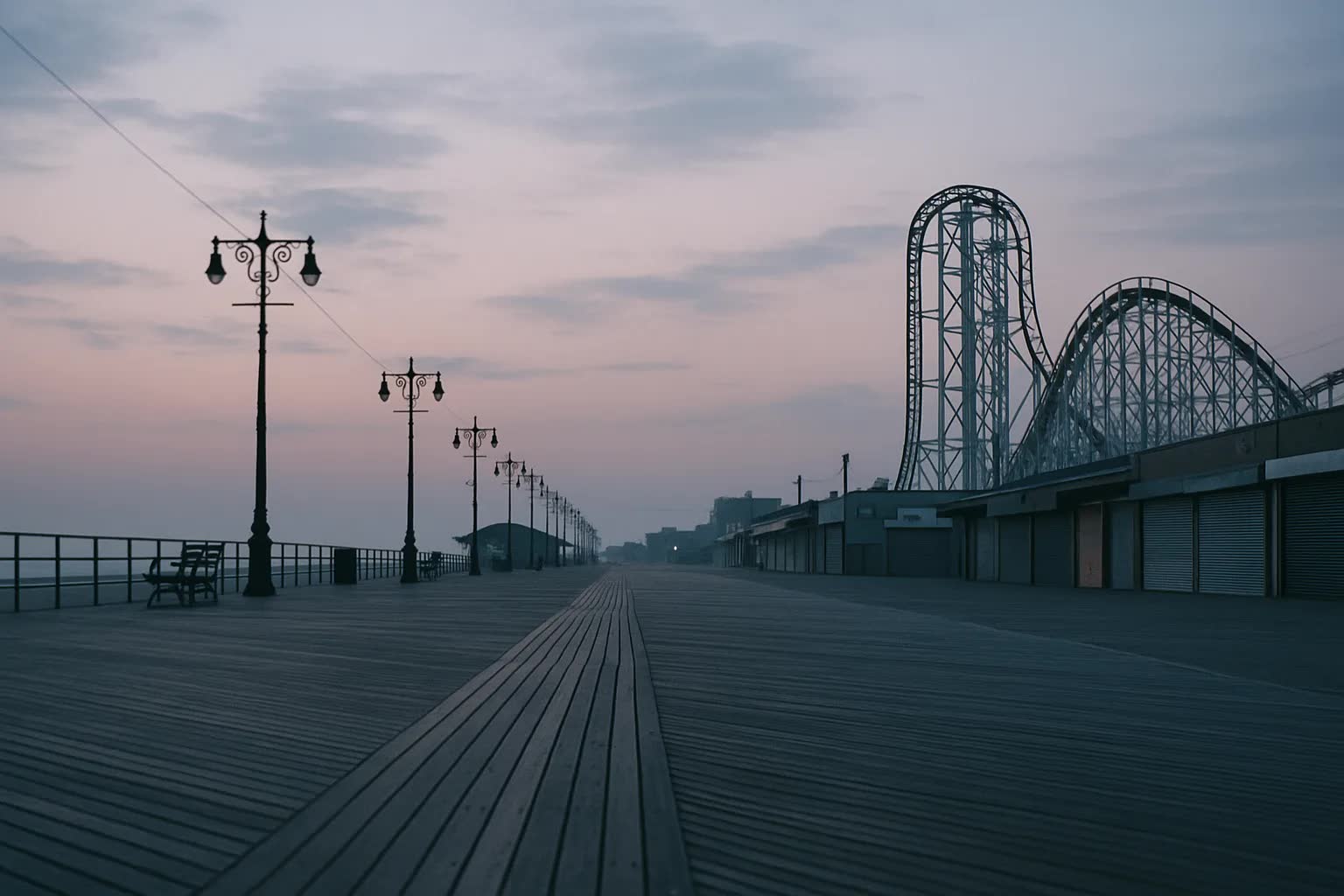
Before dawn each winter morning, the Coney Island boardwalk turns into a slow-moving stage for a peculiar corps of witnesses: photographers who come for the in-between hours when the amusement rides sleep, the vendors sweep up, and the city’s hum is reduced to the soft slap of waves against the seawall. From the steps of the Stillwell Avenue subway terminal to the sand outside the Luna Park fence, these image-makers — many hailing from Bensonhurst, Brighton Beach and Bay Ridge — catalog a borough that most New Yorkers only see in rush-hour fragments or in summer crowds, rendering a visual archive of a seaside neighborhood settling into itself.
What began as a handful of early-morning walks in 2018 has grown into a loose-knit community that calls itself the Coney Dawn Photographers Collective. They meet at 6 a.m., weekends and some weekdays, along Surf Avenue and at the corner of West 10th Street, then fan out with tripods, point-and-shoots and smartphones. The collective describes its purpose simply: to record the ordinary slippages of time on the boardwalk — the forgotten penny in a fountain, the last tarp on a closed-game booth, the pale, flaking paint on the Cyclone before the first scream of the season.
The group’s images are quiet by design. Members favor the long, low light of sunrise, shooting in series that capture the same stretch of boardwalk across months and seasons. "We are less interested in peak moments and more in the small continuities," said Iris Kaplan, co-founder of the Coney Dawn Photographers Collective. "The archive is about the city’s pauses as much as its performances — the custodianship of an old amusement district that still defines Brooklyn’s southern edge."
Participants range from veteran documentary shooters who cut their teeth covering neighborhood politics to teenagers from Brighton Beach experimenting with color temperature for the first time. Many gather at the Stillwell Avenue plaza, where the weary sculptures and the clock tower face the early trains, and decide routes by weather and tides. "Dawn is a civic hour here," said Dawud Malik, curator at the New Brighton Community Arts Center, who regularly brings students to the shoots. "You learn the Boardwalk’s rhythms: which game stalls open first, where the gulls sleep, how the light traces the Wonder Wheel and the faces of the fishermen on the pier."
The group has been systematic about its collecting. Since 2019 the collective has logged 4,372 images, of which 2,541 are high-resolution files preserved in a local digital repository; 62 people have joined at least one organized shoot; 28 members contribute images monthly; and the group estimates that 54 percent of their photos are taken between 5:30 a.m. and 8 a.m. They have staged six pop-up exhibitions around southern Brooklyn and loaned 42 prints to small businesses and schools for educational displays.
Beyond aesthetics, the project is staking a claim on memory. Archivists at a small nonprofit, the Surf Avenue Archive Project, say the collective’s photographs have filled gaps in municipal records about seasonal usage of the boardwalk and the effects of storms. Local shopkeepers rely on the images to show how facades looked in earlier years when applying for storefront grants. "We had a boardwalk vendor use one of our photos to win a city façade reimbursement," Kaplan said. "That felt like proving the archive’s worth in a very practical way."
Not all early-morning shoots are uncontroversial. The boardwalk hosts lifeguards, sanitation workers and occasional street patrols who sometimes question the presence of photographers before dawn. There are also occasional disputes with property managers over trespassing near closed rides or storage containers. The collective has tried to be explicit about permissions and place-making: they post schedules with local precincts, inform lifeguard captains when groups will be present and seek consent when shoots clearly include identifiable employees or private property.
The images themselves show a neighborhood of contrasts: rows of sandbags and tarpaulins by Brighton Beach bathhouses, the varnished red of a bench on the Riegelmann Boardwalk, the neon letters of a shuttered arcade reflected in pooled rainwater. On one series, a repeat frame of the Cyclone’s foot traffic over six years documents the slow return of patrons after the COVID-era closures; on another, photographs of the beachfront from West 10th Street trace a winter palette of slate and umber that reshapes how residents talk about public space in the off-season.
Exhibitions, both physical and online, have helped the project extend its reach. The collective has partnered with neighborhood schools and the New Brighton Community Arts Center to teach basic composition and oral-history practices to young residents, and their work has been used in neighborhood planning sessions about improving lighting and seating on the boardwalk. The collective is also cataloging metadata for each image — time, weather, lens, and featured location — so future researchers can track environmental and social changes across a living archive.
Looking ahead, the Coney Dawn Photographers Collective plans to digitize the remainder of its negatives, apply for a small cultural preservation grant and host a winter retrospective in a storefront gallery on Surf Avenue that will double as a community forum. "We think of this as a long game," Kaplan said. "This is about keeping a record for the people who live here now and those who will come after us." The boardwalk will still empty and refill with the tides; the collective intends to be there to watch, frame and preserve those passing hours.