Coney Island’s New Performance Art Circuit Blends Sideshow Tradition With Contemporary Dance
Local collectives are staging short-form site-specific pieces along the boardwalk that reimagine Coney Island’s carnival heritage.
By Aisha Bello · January 9, 2026 · 4 min read
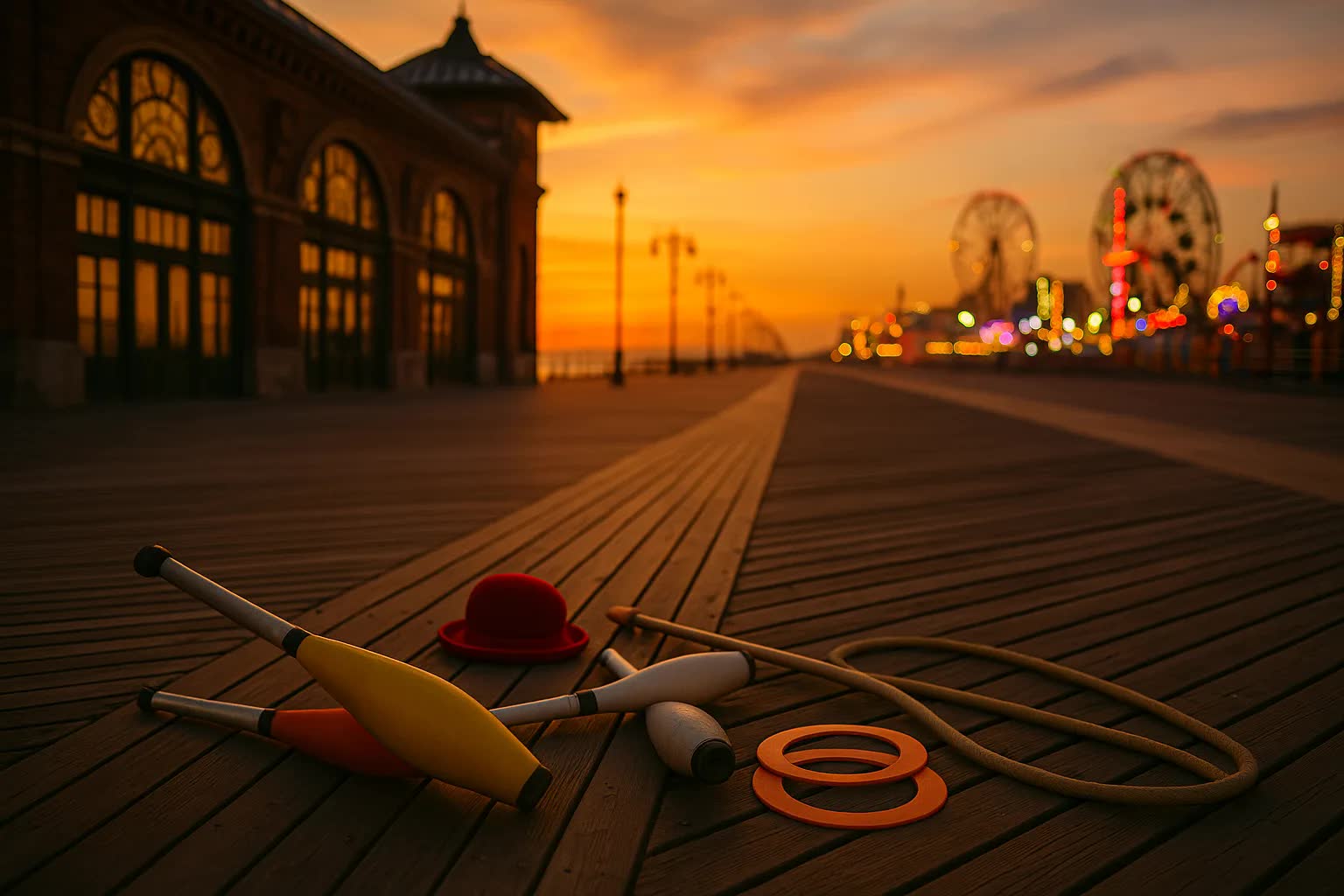
NEW YORK — On a cold January morning beneath the shadow of the Parachute Jump, a string of performers in sequined jackets and dust-smeared leotards moved through a carved-out corridor of the Riegelmann Boardwalk in a new circuit of short-form pieces that organizers say is designed to reconnect Coney Island’s carnival past with contemporary choreography for a modern, neighborhood audience.
The circuit, launched last summer and quietly continued through December, stitches six neighborhood sites — from the benches outside Nathan’s Famous and the alcoves near Luna Park’s Wonder Wheel to the stretch around the Stillwell Avenue subway plaza — into a walking route of three- to 15-minute performances by a rotating roster of collectives. Each site is chosen to exploit a local touchstone: a boardwalk railing becomes a ballet barre, an arcade entrance doubles as a thrust stage, and calliope recordings are squeezed through battery-powered speakers for effect.
"We want the work to feel inevitable to the place, not imported," said Marisol Vega, artistic director of Boardwalk Movement Lab, a Coney Island collective that helped curate the circuit. "When a dancer uses the ironwork of the railing, when a contortionist folds into a public bench, the audience recognizes the material history of the boardwalk and then watches it get unraveled and remade — and that surprises people in a good way."
Organizers provided concrete figures that map the project’s rapid growth: six lead collectives present an average of 28 performances across a one-mile stretch of boardwalk each weekend, with individual pieces averaging 9 minutes; weekend audiences ranged from 150 to 800 viewers depending on weather, and the program ran on a seed budget of $175,000 in 2025, about $60,000 of which came from two private arts grants and the rest from small-ticket sales and micro-donations collected on-site.
The aesthetic tilt toward sideshow tradition is deliberate. Costumers stitch battered carnival banners into contemporary performance wear, choreographers borrow gestures from vaudeville stock characters, and the sound design incorporates looped calliope and truck-serenade snares. "The sideshow was not just spectacle, it was social theater — a place where the city’s margins performed back to the center," said Dr. Lila Marquez, director and cultural historian at the Coney Island Heritage Project. "We’re not recreating freak shows, we’re recontextualizing the thermals of wonder and risk that made Coney Island a laboratory for popular entertainments."
Neighbors and businesses along Surf Avenue and the adjoining Brighton Beach blocks have greeted the circuit with a mix of curiosity and commerce. "When the dancers spun by my window, more people came into Neptune Snacks than during regular afternoons in October," said Alexei Petrov, owner of a family-run concession stand near West 15th Street. "It’s been good for business, and folks stop longer now; they buy a hot dog and watch a duet. That wasn’t happening before."
The project has required a tangle of city permits and agency coordination. Organizers worked with the Parks Department, the Department of Transportation and the 60th Precinct to secure daytime exemptions, crowd-control plans and sound limits; a senior parks planner who worked on the program and asked to be identified as Regina Park said scheduling and insurance were the thorniest issues. "We had to balance protecting the boardwalk’s physical infrastructure with giving artists enough latitude to make the work site-specific," Park said. "It took months of testing to agree on safe rigging points and to set a decibel threshold that wouldn’t drown out the waves or local residents."
Choreographic practice on the circuit has shifted toward brevity and spatial inventiveness. One signature piece, "Calliope Drift," created by choreographer Jonah Mekler, uses a quartet of movers and a twin set of carnival mirrors to compress a three-act narrative about migration and memory into 11 minutes. "You have the compression of the carnival game — quick, slick, and a little jolting — and you marry that with sustained, slow partnering work so there’s an emotional arc even in a short piece," Mekler said. "Site-specific work forces you to chase the city’s attention in new ways."
The circuit’s administrators are tracking engagement beyond immediate audience counts: they report offering 18 free community workshops in 2025 for local schools and seniors, partnering with two nearby arts organizations in Bensonhurst and Bay Ridge, and placing 22 neighborhood youth in paid apprenticeship slots. Organizers say those numbers are meant to anchor the performances in social infrastructure, not just boost weekend foot traffic, and they have budgeted for deeper outreach in 2026 with a projected operating need of $240,000 to expand programming into Brighton Beach and Sea Gate.
Organizers say the circuit will return for a longer run this spring and is planning a curated summer mini-festival that would extend the route and add marquee evening presentations held under permit near the boardwalk’s most recognizable monuments. "The conversation we started last year — about who gets to perform in public, whose histories are visible at the shore, and how these places can be generative rather than purely nostalgic — is only beginning," Vega said. "Next season will test whether site-specific work can become part of Coney Island’s living culture and not just a seasonal novelty."