One Year In, City Releases Mixed Report Card on Manhattan Congestion Toll
Officials say traffic below 60th Street has thinned and transit funding has grown, but businesses along the boundary report uneven effects.
By Marcus Bell · July 28, 2026 · 5 min read
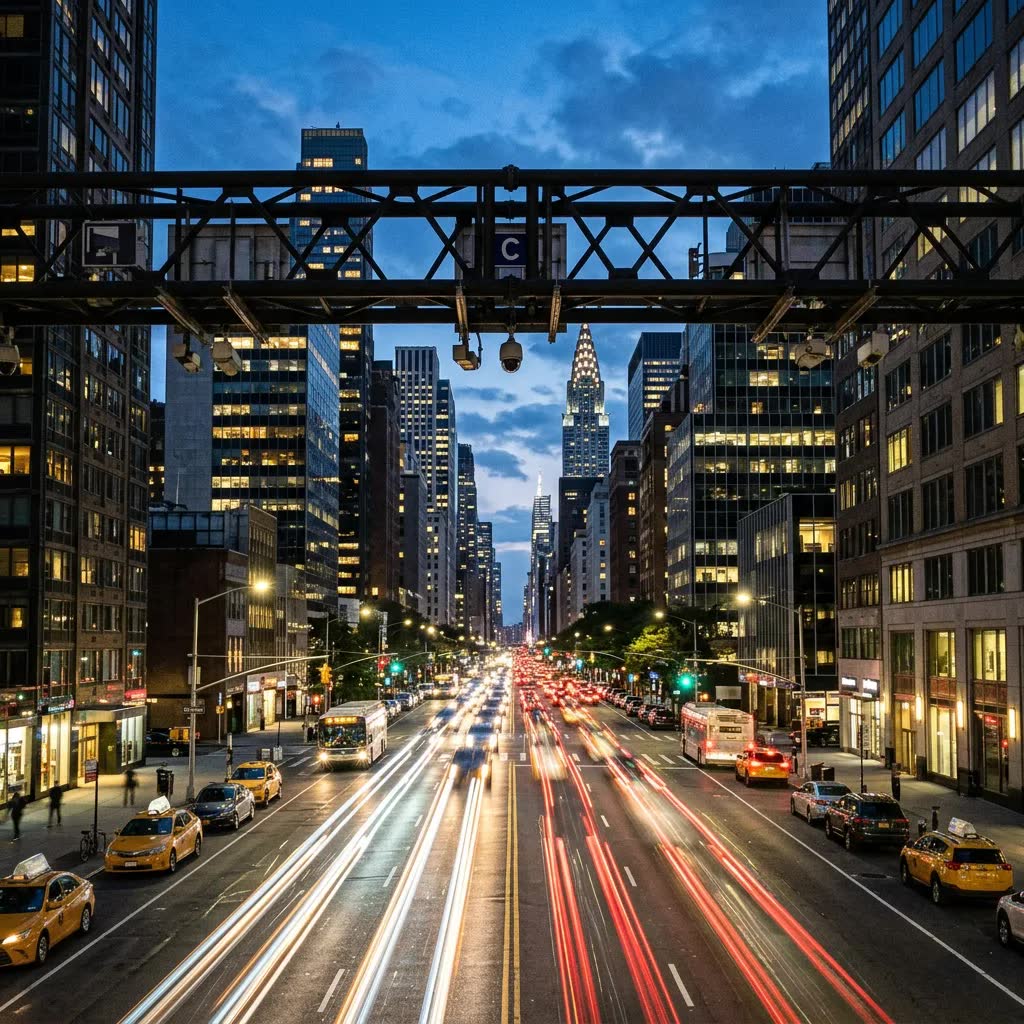
NEW YORK — A year after tolls took full effect on vehicles entering Manhattan's central business district, transportation officials on Tuesday released a review that portrayed the congestion program as broadly meeting its traffic and revenue goals while acknowledging persistent friction at its edges. The report found that vehicle entries below 60th Street had fallen by a low-double-digit percentage compared with the prior year, and that average travel speeds on several crosstown streets had improved modestly during peak hours.
The program's revenue, earmarked for transit improvements, has run slightly ahead of projections, officials said, allowing the transit authority to accelerate a handful of signal-modernization and station-accessibility projects. Backers of the toll pointed to the figures as vindication of a policy that endured years of legal and political battles before implementation. "The data show fewer cars, cleaner air along the busiest corridors, and money going where we promised," a transportation official said at a briefing.
Yet the review did not paper over the program's rough spots. Some businesses just outside the tolling zone reported increased traffic and parking pressure as drivers repositioned to avoid the charge, and a few delivery-dependent operators said added costs had squeezed already thin margins. The report recommended targeted mitigation, including expanded loading zones and adjusted delivery windows, to ease the burden on commercial traffic near the boundary.
Outer-borough commuters remained among the most vocal critics, with some arguing that the toll amounted to a regressive charge on those without convenient transit alternatives. Officials countered that the vast majority of people entering the zone already arrive by subway, bus, rail, or on foot, and that toll payers represent a relatively small and comparatively affluent slice of commuters. Nonetheless, the report urged continued investment in outer-borough transit to blunt the equity concerns.
Environmental and street-safety advocates largely praised the results, citing early indications of reduced roadway injuries and improved bus reliability within the zone. They urged the city to resist pressure to carve out new exemptions, warning that a patchwork of carve-outs could erode the program's benefits over time. Business groups, meanwhile, pressed for a formal review of the toll's impact on ground-floor retail before any rate adjustments.
Officials said the program's pricing structure would remain unchanged for now, but that a comprehensive evaluation, including public hearings, would take place before any consideration of future rate changes. "Year one tells us the fundamentals are working," the official said. "Year two is about fixing what isn't and proving this can keep delivering." The transit authority said it would publish detailed monthly data online to allow independent analysis.